 MedLens
Loading…
Generic name: Hydrocodone Bitartrate, Ibuprofen
tablet, film coated · Stat Rx USA
Dosage Form
tablet, film coated
Manufacturer
Stat Rx USA
This medication contains important usage instructions, warnings, and side effect information that you should review before use.
Carefully consider the potential benefits and risks of
REPREXAIN™ and other treatment options before deciding to use REPREXAIN™. Use
the lowest effective dose for the shortest duration consistent with individual
patient treatment goals (see WARNINGS).
REPREXAIN™
tablets are indicated for the short-term (generally less than 10 days)
management of acute pain. REPREXAIN™ is not indicated for the treatment of such
conditions as osteoarthritis or rheumatoid arthritis.
Carefully consider the potential benefits and risks of REPREXAIN™
(hydrocodone bitartrate and ibuprofen tablets) and other treatment options
before deciding to use REPREXAIN™. Use the lowest effective dose for the
shortest duration consistent with individual patient treatment goals (see WARNINGS).
After observing the response to initial therapy
with REPREXAIN™, the dose and frequency should be adjusted to suit an individual
patient’s needs.
For the short-term (generally less than 10 days) management
of acute pain, the recommended dose of REPREXAIN™ is one tablet every 4 to 6
hours, as necessary. Dosage should not exceed 5 tablets in a 24-hour period. It
should be kept in mind that tolerance to hydrocodone can develop with continued
use and that the incidence of untoward effects is dose related.
The lowest
effective dose or the longest dosing interval should be sought for each patient
(see WARNINGS), especially in the elderly. After
observing the initial response to therapy with REPREXAIN™, the dose and
frequency of dosing should be adjusted to suit the individual patient’s need,
without exceeding the total daily dose recommended.
REPREXAIN™ is contraindicated in patients with known
hypersensitivity to hydrocodone or ibuprofen. Patients known to be
hypersensitive to other opioids may exhibit cross-sensitivity to hydrocodone.
REPREXAIN™ should not be given to patients who have experienced asthma,
urticaria, or allergic-type reactions after taking aspirin or other NSAIDs.
Severe, rarely fatal, anaphylactic-like reactions to NSAIDs have been reported
in such patients (see WARNINGS – Anaphylactoid
Reactions, and PRECAUTIONS - Pre-existing
Asthma).
REPREXAIN™ is contraindicated for the treatment of
peri-operative pain in the setting of coronary artery bypass graft (CABG)
surgery (see WARNINGS).
REPREXAIN™ was administered to approximately 300 pain patients in
a safety study that employed dosages and a duration of treatment sufficient to
encompass the recommended usage (see DOSAGE AND
ADMINISTRATION). Adverse event rates generally increased with increasing
daily dose. The event rates reported below are from approximately 150 patients
who were in a group that received one tablet of REPREXAIN™ an average of three
to four times daily. The overall incidence rates of adverse experiences in the
trials were fairly similar for this patient group and those who received the
comparison treatment, acetaminophen 600 mg with codeine 60 mg.
The following
lists adverse events that occurred with an incidence of 1% or greater in
clinical trials of REPREXAIN™, without regard to the causal relationship of the
events to the drug. To distinguish different rates of occurrence in clinical
studies, the adverse events are listed as follows:
name
of adverse event = less than 3%
adverse events marked with an asterisk * =
3% to 9%
adverse event rates over 9% are in parentheses.
Body as a Whole
: Abdominal pain*;
Asthenia*; Fever; Flu syndrome; Headache (27%); Infection*; Pain.
Cardiovascular
: Palpitations;
Vasodilation.
Central Nervous System: Anxiety*;
Confusion; Dizziness (14%); Hypertonia; Insomnia*; Nervousness*; Paresthesia;
Somnolence (22%); Thinking abnormalities.
Digestive:
Anorexia; Constipation (22%); Diarrhea*; Dry mouth*; Dyspepsia (12%);
Flatulence*; Gastritis; Melena; Mouth ulcers; Nausea (21%); Thirst; Vomiting*.
Metabolic and Nutritional Disorders: Edema*.
Respiratory: Dyspnea; Hiccups; Pharyngitis;
Rhinitis.
Skin and Appendages: Pruritus*; Sweating*.
Special Senses: Tinnitus.
Urogenital
: Urinary frequency.
Incidence less
than 1%
Body as a Whole: Allergic reaction.
Cardiovascular: Arrhythmia;
Hypotension; Tachycardia.
Central Nervous System: Agitation; Abnormal
dreams; Decreased libido; Depression; Euphoria; Mood changes; Neuralgia; Slurred
speech; Tremor, Vertigo.
Digestive: Chalky stool; “Clenching teeth”;
Dysphagia; Esophageal spasm; Esophagitis; Gastroenteritis; Glossitis; Liver
enzyme elevation.
Metabolic and Nutritional: Weight decrease.
Musculoskeletal: Arthralgia; Myalgia.
Respiratory: Asthma; Bronchitis;
Hoarseness; Increased cough; Pulmonary congestion; Pneumonia; Shallow breathing;
Sinusitis.
Skin and Appendages: Rash; Urticaria.
Special Senses: Altered
vision; Bad taste; Dry eyes.
Urogenital: Cystitis;
Glycosuria; Impotence; Urinary incontinence; Urinary retention.
Misuse Abuse and Diversion of Opioids
REPREXAIN™ contains hydrocodone, an opioid agonist, and is a Schedule
III controlled substance. REPREXAIN™, and other opioids used in analgesia can be
abused and are subject to criminal diversion.
Addiction is a primary,
chronic, neurobiologic disease, with genetic, psychosocial, and environmental
factors influencing its development and manifestations. It is characterized by
behaviors that include one or more of the following: impaired control over drug
use, compulsive use, continued use despite harm, and craving. Drug addiction is
a treatable disease utilizing a multidisciplinary approach, but relapse is
common.
“Drug seeking” behavior is very common in addicts and drug abusers.
Drug-seeking tactics include emergency calls or visits near the end of office
hours, refusal to undergo appropriate examination, testing or referral, repeated
“loss” of prescriptions, tampering with prescriptions and reluctance to provide
prior medical records or contact information for other treating physician(s).
“Doctor shopping” to obtain additional prescriptions is common among drug
abusers and people suffering from untreated addiction.
Abuse and addiction
are separate and distinct from physical dependence and tolerance. Physical
dependence usually assumes clinically significant dimensions only after several
weeks of continued opioid use, although a mild degree of physical dependence may
develop after a few days of opioid therapy. Tolerance, in which increasingly
large doses are required in order to produce the same degree of analgesia, is
manifested initially by a shortened duration of analgesic effect, and
subsequently by decreases in the intensity of analgesia. The rate of development
of tolerance varies among patients. Physicians should be aware that abuse of
opioids can occur in the absence of true addiction and is characterized by
misuse for nonmedical purposes, often in combination with other psychoactive
substances. REPREXAIN™, like other opioids, may be diverted for non-medical use.
Record-keeping of prescribing information, including quantity, frequency, and
renewal requests is strongly advised.
Proper assessment of the patient,
proper prescribing practices, periodic re-evaluation of therapy, and proper
dispensing and storage are appropriate measures that help to limit abuse of
opioid drugs.
Following an acute overdosage, toxicity may result from
hydrocodone and/or ibuprofen.
Signs and Symptoms
Hydrocodone Component
Serious overdose with hydrocodone is
characterized by respiratory depression (a decrease in respiratory rate and/or
tidal volume, Cheyne-Stokes respiration, cyanosis) extreme somnolence
progressing to stupor or coma, skeletal muscle flaccidity, cold and clammy skin,
and sometimes bradycardia and hypotension. In severe overdosage, apnea,
circulatory collapse, cardiac arrest and death may occur.
Ibuprofen
Component
Symptoms include gastrointestinal irritation with erosion and
hemorrhage or perforation, kidney damage, liver damage, heart damage, hemolytic
anemia, agranulocytosis, thrombocytopenia, aplastic anemia, and meningitis.
Other symptoms may include headache, dizziness, tinnitus, confusion, blurred
vision, mental disturbances, skin rash, stomatitis, edema, reduced retinal
sensitivity, corneal deposits, and hyperkalemia.
Treatment
Primary attention should be given to the re-establishment of adequate
respiratory exchange through provision of a patent airway and the institution of
assisted or controlled ventilation. Naloxone, a narcotic antagonist, can reverse
respiratory depression and coma associated with opioid overdose or unusual
sensitivity to opioids, including hydrocodone. Therefore, an appropriate dose of
naloxone hydrochloride should be administered intravenously with simultaneous
efforts at respiratory resuscitation. Since the duration of action of
hydrocodone may exceed that of the naloxone, the patient should be kept under
continuous surveillance and repeated doses of the antagonist should be
administered as needed to maintain adequate respiration. Supportive measures
should be employed as indicated. Gastric emptying may be useful in removing
unabsorbed drug. In cases where consciousness is impaired it may be inadvisable
to perform gastric lavage. If gastric lavage is performed, little drug will
likely be recovered if more than an hour has elapsed since ingestion. Ibuprofen
is acidic and is excreted in the urine; therefore, it may be beneficial to
administer alkali and induce diuresis. In addition to supportive measures the
use of oral activated charcoal may help to reduce the absorption and
reabsorption of ibuprofen. Dialysis is not likely to be effective for removal of
ibuprofen because it is very highly bound to plasma proteins.
Patients should be informed of the following
information before initiating therapy with an NSAID and periodically during the
course of ongoing therapy. Patients should also be encouraged to read the
REPREXAIN™ Medication Guide that accompanies each prescription dispensed.
1. REPREXAIN™ (hydrocodone bitartrate and ibuprofen tablets), like
other opioid-containing analgesics, may impair mental and/or physical abilities
required for the performance of potentially hazardous tasks such as driving a
car or operating machinery; patients should be cautioned accordingly.
2.
Alcohol and other CNS depressants may produce an additive CNS depression, when
taken with this combination product, and should be avoided.
3. REPREXAIN™
(hydrocodone bitartrate and ibuprofen tablets) can be abused in a manner similar
to other opioid agonists, legal or illicit. REPREXAIN™ may be habit-forming.
Patients should take the drug only for as long as it is prescribed, in the
amounts prescribed, and no more frequently than prescribed.
4. REPREXAIN™,
like other NSAID-containing products, may cause serious CV side effects, such as
MI or stroke, which may result in hospitalization and even death. Although
serious CV events can occur without warning symptoms, patients should be alert
for the signs and symptoms of chest pain, shortness of breath, weakness,
slurring of speech, and should ask for medical advice when observing any
indicative sign or symptoms. Patients should be apprised of the importance of
this follow-up (see WARNINGS, Cardiovascular Effects).
5. REPREXAIN™, like other NSAID-containing products, can cause GI discomfort
and serious GI side effects, such as ulcers and bleeding, which may result in
hospitalization and even death. Although serious GI tract ulcerations and
bleeding can occur without warning symptoms, patients should be alert for the
signs and symptoms of ulcerations and bleeding, and should ask for medical
advice when observing any indicative sign or symptoms including epigastric pain,
dyspepsia, melena, and hematemesis. Patients should be apprised of the
importance of this follow-up (see WARNINGS, Gastrointestinal
Effects: Risk of Ulceration, Bleeding, and Perforation).
6.
REPREXAIN™, like other NSAID-containing products, can cause serious skin side
effects such as exfoliative dermatitis, SJS, and TEN, which may result in
hospitalizations and even death. Although serious skin reactions may occur
without warning, patients should be alert for the signs and symptoms of skin
rash and blisters, fever, or other signs of hypersensitivity such as itching,
and should ask for medical advice when observing any indicative signs or
symptoms. Patients should be advised to stop the drug immediately if they
develop any type of rash and contact their physicians as soon as possible.
7. Patients should promptly report signs or symptoms of unexplained weight
gain or edema to their physicians.
8. Patients should be informed of the
warning signs and symptoms of hepatotoxicity (e.g., nausea, fatigue, lethargy,
pruritus, jaundice, right upper quadrant tenderness, and “flu-like” symptoms).
If these occur, patients should be instructed to stop therapy and seek immediate
medical therapy.
9. Patients should be informed of the signs of an
anaphylactoid reaction (e.g., difficulty breathing, swelling of the face or
throat). If these occur, patients should be instructed to seek immediate
emergency help (see WARNINGS).
10. In late
pregnancy, as with other NSAIDs, REPREXAIN™ should be avoided because it may
cause premature closure of the ductus arteriosus.
11. Patients should be
instructed to report any signs of blurred vision or other eye symptoms.
Because serious GI tract ulcerations and bleeding can occur
without warning symptoms, physicians should monitor for signs or symptoms of GI
bleeding. Patients on long-term treatment with NSAIDs should have their CBC and
a chemistry profile checked periodically. If clinical signs and symptoms
consistent with liver or renal disease develop, systemic manifestations occur
(e.g., eosinophilia, rash, etc.) or if abnormal liver tests persist or worsen,
REPREXAIN™ should be discontinued.
The carcinogenic and mutagenic potential of REPREXAIN™ has
not been investigated. The ability of REPREXAIN™ to impair fertility has not
been assessed.
Pregnancy Category C.
Teratogenic
Effects: Reproductive studies conducted in rats and rabbits have not
demonstrated evidence of developmental abnormalities.
REPREXAIN™, administered to rabbits at 95 mg/kg (5.72 and 1.9 times the
maximum clinical dose based on body weight and surface area, respectively), a
maternally toxic dose, resulted in an increase in the percentage of litters and
fetuses with any major abnormality and an increase in the number of litters and
fetuses with one or more nonossified metacarpals (a minor abnormality).
REPREXAIN™, administered to rats at 166 mg/kg (10.0 and 1.66 times the maximum
clinical dose based on body weight and surface area, respectively), a maternally
toxic dose, did not result in any reproductive toxicity. However, animal
reproduction studies are not always predictive of human response. There are no
adequate and well-controlled studies in pregnant women. REPREXAIN™ should be
used during pregnancy only if the potential benefit justifies the potential risk
to the fetus.
Nonteratogenic Effects: Because
of the known effects of nonsteroidal anti-inflammatory drugs on the fetal
cardiovascular system (closure of the ductus arteriosus), use during pregnancy
(particularly late pregnancy) should be avoided. Babies born to mothers who have
been taking opioids regularly prior to delivery will be physically dependent.
The withdrawal signs include irritability and excessive crying, tremors,
hyperactive reflexes, increased respiratory rate, increased stools, sneezing,
yawning, vomiting, and fever. The intensity of the syndrome does not always
correlate with the duration of maternal opioid use or dose. There is no
consensus on the best method of managing withdrawal.
Labor and Delivery
As with other drugs known to inhibit
prostaglandin synthesis, an increased incidence of dystocia and delayed
parturition occurred in rats. Administration of REPREXAIN™ is not recommended
during labor and delivery. The effects of REPREXAIN™ on labor and delivery in
pregnant women are unknown.
It is not known whether hydrocodone is excreted in human milk. In
limited studies, an assay capable of detecting 1 mcg/mL did not demonstrate
ibuprofen in the milk of lactating mothers. However, because of the limited
nature of the studies, and because of the potential for serious adverse
reactions in nursing infants from REPREXAIN™, a decision should be made whether
to discontinue nursing or to discontinue the drug, taking into account the
importance of the drug to the mother.
The safety and effectiveness of REPREXAIN™ in pediatric patients
below the age of 16 have not been established.
In controlled clinical trials there was no difference in tolerability between patients less than 65 years of age and those more than or equal to 65, apart from an increased tendency of the elderly to develop constipation. However, because the elderly may be more sensitive to the renal and gastrointestinal effects of nonsteroidal anti-inflammatory agents as well as possible increased risk of respiratory depression with opioids, extra caution and reduced dosages should be used when treating the elderly with REPREXAIN™ (hydrocodone bitartrate and ibuprofen tablets).
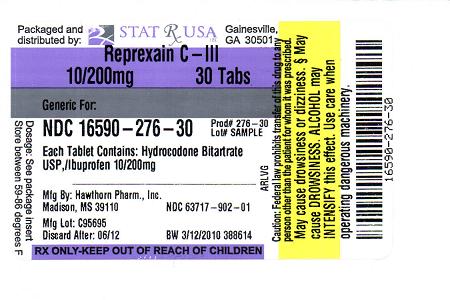
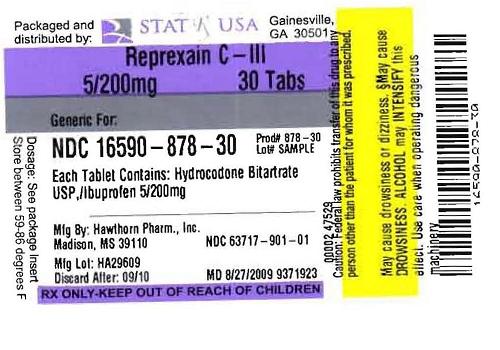
[image: MM3] Label Image
[image: MM4] REPREXAIN 10-200 MG LABEL
REPREXAIN™ (hydrocodone bitartrate and ibuprofen tablets) are
available as:
2.5 mg/200 mg: white capsule shaped, film coated tablets,
debossed “IP 116” on obverse and plain on reverse.
Bottles of 100: NDC
63717-900-01
Sample boxes of 10 tablets: NDC 63717-900-99
5 mg/200 mg:
white, oval shaped, film coated tablets, debossed “IP 146” on obverse and plain
on reverse.
Bottles of 100: NDC 63717-901-01
Sample boxes of 10 tablets:
NDC 63717-901-99
10 mg/200 mg: yellow, round shaped, film coated tablets,
debossed “IP 117” on obverse and plain on reverse.
Bottles of 100: NDC
63717-902-01
Sample boxes of 10 tablets: NDC 63717-902-99
Store at 25°C (77°F); excursions permitted to 15°-30°C
(59°-86°F). [See USP Controlled Room Temperature].
Dispense in a tight,
light-resistant container.
A Schedule CS-III Controlled Substance.
Manufactured For:
Hawthorn Pharmaceuticals, Inc.
Madison, MS 39110
Rev. 12/08 HI251
NDC 63717-900-01
Reprexain™ CIII
(hydrocodone bitartrate and ibuprofen tablet)
2.5 mg/200 mg
Rx only
100 Tablets
Hawthorn Pharmaceuticals, Inc.
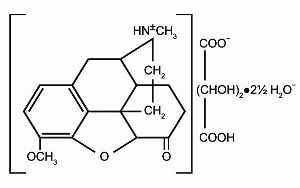
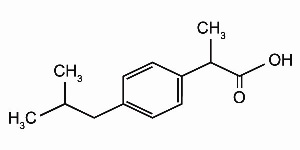
Each tablet contains:
Hydrocodone bitartrate USP, 2.5 mg
Ibuprofen USP, 200 mg
Usual Dosage: See package insert.
Dispense in light resistant container as defined in the USP.
Store at 25oC (77oF); excursions permitted to controlled room temperature 15o-30oC
(59o-86oF).
Mfd. for: Hawthorn Pharmaceuticals, Inc.
Madison, Ms 39110
HI200 11/05
Photos of the product and/or packaging supplied by the manufacturer.
In single-dose studies of post surgical pain (abdominal, gynecological, orthopedic), 940 patients were studied at doses of one or two tablets. REPREXAIN™ produced greater efficacy than placebo and each of its individual components given at the same dose. No advantage was demonstrated for the two-tablet dose.
Create a free account to view complete drug information, save medications, and more.
Free forever · No credit card required