 MedLens
Loading…
TABLET USP 100MG/650MG CS-CIV · Apotheca, Inc.
Dosage Form
TABLET USP 100MG/650MG CS-CIV
Manufacturer
Apotheca, Inc.
This medication contains important usage instructions, warnings, and side effect information that you should review before use.
Proproxyphene napsylate and acetaminophen tablets USP are intended for the management of mild to moderate pain. The dose should be individually adjusted according to severity of pain, patient response and patient size.
Propoxyphene napsylate and acetaminophen tablets USP (100 mg propoxyphene napsylate and 650 mg acetaminophen)
The usual dosage is one tablet every 4 hours orally as needed for pain. The maximum dose of propoxyphene napsylate and acetaminophen tablets USP is 6 tablets per day. Do not exceed the maximum daily dose.
Patients receiving propoxyphene and any CYP3A4 inhibitor should be carefully monitored for an extended period of time and dosage adjustments should be made if warranted.
Consideration should be given to a reduced total daily dosage in elderly patients and in patients with hepatic or renal impairment.
Propoxyphene napsylate and acetaminophen tablets are contraindicated in patients with known hypersensitivity to propoxyphene or acetaminophen.
Propoxyphene napsylate and acetaminophen tablets are contraindicated in patients with significant respiratory depression (in unmonitored settings or the absence of resuscitative equipment) and patients with acute or severe asthma or hypercarbia.
Propoxyphene napsylate and acetaminophen tablets are contraindicated in any patient who has or is suspected of having paralytic ileus.
During clinical trials, the most frequently reported adverse reactions were dizziness, sedation, nausea, and vomiting. Other adverse reactions include constipation, abdominal pain, skin rashes, lightheadedness, headache, weakness, euphoria, dysphoria, hallucinations, and minor visual disturbances.
The most frequently reported postmarketing adverse events have included completed suicide, accidental and intentional overdose, drug dependence, cardiac arrest, coma, drug ineffective, drug toxicity, nausea, respiratory arrest, cardio-respiratory arrest, death, vomiting, dizziness, convulsion, confusional state, and diarrhea.
Additional adverse experiences reported through postmarketing surveillance include:
Cardiac disorders: arrhythmia, bradycardia, cardiac/respiratory arrest, congestive arrest, congestive heart failure (CHF), tachycardia, myocardial infarction (MI)
Eye disorder: eye swelling, vision blurred
General disorder and administration site conditions: drug ineffective, drug interaction, drug tolerance, influenza type illness, drug withdrawal syndrome
Gastrointestinal disorder: gastrointestinal bleed, acute pancreatitis
Hepatobiliary disorder: hepatic steatosis, hepatomegaly, hepatocellular injury
Immune system disorder: hypersensitivity
Injury poisoning and procedural complications: drug toxicity, hip fracture, multiple drug overdose, narcotic overdose
Investigations: blood pressure decreased, heart rate elevated/abnormal
Metabolism and nutrition disorder: metabolic acidosis
Nervous system disorder: ataxia, coma, dizziness, somnolence, syncope
Psychiatric: abnormal behavior, confusional state, hallucinations, mental status change
Respiratory, thoracic, and mediastinal disorders: respiratory depression, dyspnoea
Skin and subcutaneous tissue disorder: rash, itch
Liver dysfunction has been reported in association with both active components of propoxyphene napsylate and acetaminophen tablets. Propoxyphene therapy has been associated with abnormal liver function tests and, more rarely, with instances of reversible jaundice (including cholestatic jaundice). Hepatic necrosis may result from acute overdose of acetaminophen (see OVERDOSAGE). In chronic ethanol abusers, this has been reported rarely with short-term use of acetaminophen dosages of 2.5 to 10 g/day. Fatalities have occurred.
There have also been postmarketing reports of renal papillary necrosis associated with chronic acetaminophen use, particularly when the dosage is greater than recommended and when combined with aspirin. Subacute painful myopathy has been reported following chronic propoxyphene overdosage.
Propoxyphene napsylate and acetaminophen tablets are a combination product containing propoxyphene and acetaminophen. Overdose of propoxyphene napsylate and acetaminophen tablets may present with the signs and symptoms of propoxyphene overdose, acetaminophen overdose or both. Fatalities within the first hour of overdosage are not uncommon.
In all cases of suspected overdosage, call your regional Poison Control Center to obtain the most up-to-date information about the treatment of overdose. This recommendation is made because, in general, information regarding the treatment of overdosage may change more rapidly than do package inserts.
Initial consideration should be given to the management of the CNS effects of propoxyphene overdosage. Resuscitative measures should be initiated promptly.
The manifestations of acute overdosage with propoxyphene are those of opioid overdosage. The patient is usually somnolent but may be stuporous or comatose and convulsing. Respiratory depression is characteristic. The ventilatory rate and/or tidal volume is decreased, which results in cyanosis and hypoxia. Pupils, initially pinpoint, may become dilated as hypoxia increases. Cheyne-Stokes respiration and apnea may occur. Blood pressure and heart rate are usually normal initially, but blood pressure falls and cardiac performance deteriorates, which ultimately results in pulmonary edema and circulatory collapse, unless the respiratory depression is corrected and adequate ventilation is restored promptly. Cardiac arrhythmias and conduction delay may be present. A combined respiratory-metabolic acidosis occurs owing to retained CO2 (hypercapnia) and to lactic acid formed during anaerobic glycolysis. Acidosis may be severe if large amounts of salicylates have also been ingested. Death may occur.
Treatment of Propoxyphene OverdosageAttention should be directed first to establishing a patent airway and to restoring ventilation. Mechanically assisted ventilation, with or without oxygen, may be required, and positive pressure respiration may be desirable if pulmonary edema is present. The opioid antagonist naloxone will markedly reduce the degree of respiratory depression, and should be administered promptly, preferably intravenously. The duration of action of the antagonist may be brief. If no response is observed after 10 mg of naloxone have been administered, the diagnosis of propoxyphene toxicity should be questioned.
In addition to the use of an opioid antagonist, the patient may require careful titration with an anticonvulsant to control convulsions. Activated charcoal can adsorb a significant amount of ingested propoxyphene. Dialysis is of little value in poisoning due to propoxyphene. Efforts should be made to determine whether other agents, such as alcohol, barbiturates, tranquilizers, or other CNS depressants, were also ingested, since these increase CNS depression as well as cause specific toxic effects or death.
Overdose of acetaminophen may cause dose-dependent potentially fatal hepatic toxicity. Early symptoms within 24 hours after the overdose may include anorexia, nausea, vomiting, diaphoresis, general malaise, and abdominal pain. The patient may then present no symptoms, but evidence of liver dysfunction may become apparent up to 72 hours after ingestion, with elevated serum transaminase and lactic dehydrogenase levels, an increase in serum bilirubin concentrations, and a prolonged prothrombin time. Death from hepatic failure may result 3 to 7 days after overdosage.
Because clinical and laboratory evidence of hepatic toxicity may not be apparent until 48 to 72 hours post-ingestion, liver function studies should be obtained initially and repeated at 24 hour intervals.
Acute renal failure may accompany the hepatic dysfunction and has been noted in patients who do not exhibit signs of fulminant hepatic failure. Typically, renal impairment is more apparent 6 to 9 days after ingestion of the overdose.
Treatment of Acetaminophen OverdosageIn all cases of suspected overdose, immediately call the Rocky Mountain Poison Center's toll-free number (800-525-6115) for assistance in diagnosis and for directions in the use of N-acetylcysteine as an antidote.
Patients' estimates of the quantity of a drug ingested are notoriously unreliable. Therefore, if an acetaminophen overdose is suspected, a serum acetaminophen assay should be obtained as early as possible, but no sooner than 4 hours following ingestion. The antidote, N-acetylcysteine, should be administered as early as possible, and within 16 hours of the overdose ingestion for optimal results.
Store at 20° to 25°C (68° to 77°F) [See USP Controlled Room Temperature].
Inform patients of the availability of a Medication Guide for propoxyphene napsylate and acetaminophen tablets USP that accompanies each prescription dispensed. Instruct patients to read the propoxyphene napsylate and acetaminophen Medication Guide prior to using propoxyphene napsylate and acetaminophen tablets USP.
Dispense in a tight, light-resistant container as defined in the USP, using a child-resistant closure.
Propoxyphene napsylate and acetaminophen tablets USP contain propoxyphene napsylate and acetaminophen.
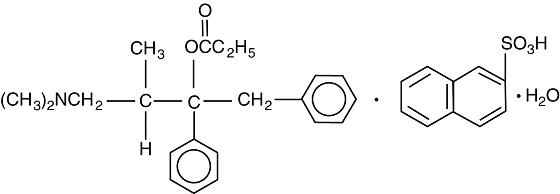
Propoxyphene napsylate is an odorless, white crystalline powder with a bitter taste. It is very slightly soluble in water, soluble in methanol, in ethanol, in chloroform, and in acetone. Chemically it is (αS,1R)-α-[2-(dimethylamino)-1-methylethyl]-α-phenylphenethyl propionate compound with 2-naphthalenesulfonic acid (1:1) monohydrate and can be represented by the following structural formula:
[image: MM1]
C22H29NO2•C10H8O3S•H2O M.W. 565.74
Propoxyphene napsylate differs from propoxyphene hydrochloride in that it allows more stable liquid dosage forms and tablet formulations. Because of differences in molecular weight, a dose of 100 mg (176.8 μmol) of propoxyphene napsylate is required to supply an amount of propoxyphene equivalent to that present in 65 mg (172.9 μmol) of propoxyphene hydrochloride.
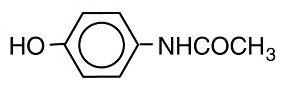
Acetaminophen, 4'-hydroxyacetanilide, is a non-opiate, non-salicylate analgesic and antipyretic which occurs as a white, odorless, crystalline powder, possessing a slightly bitter taste. Chemically, it is acetamide, N-(4-hydroxyphenyl)- and can structurally be represented by the following:
C8H9NO2 M.W. 151.16
Each pink tablet of propoxyphene napsylate and acetaminophen tablets contains 100 mg propoxyphene napsylate and 650 mg acetaminophen.
Propoxyphene napsylate and acetaminophen tablets, USP 100 mg/650 mg (PINK) contain the following inactive ingredients:
colloidal silicon dioxide,D and C
red No 27 aluminum lake, D and C yellow No 10 aluminum lake, hydroxypropyl
cellulose, hypromellose, magnesium stearate,
microcrystalline cellulose,
polyethylene glycol, povidone, pregelatinized starch, stearic acid, titanium
dioxide, and crospovidone.
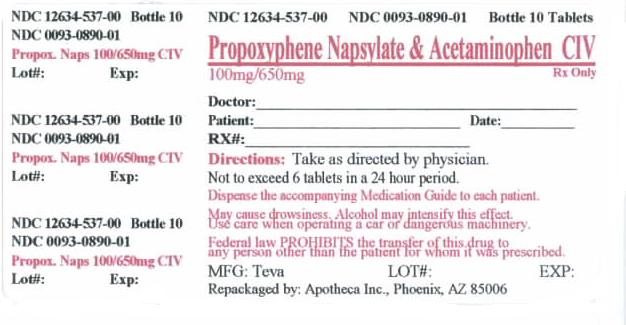
Photos of the product and/or packaging supplied by the manufacturer.
Propoxyphene is a centrally acting opiate analgesic. In vitro studies demonstrated propoxyphene and the metabolite norpropoxyphene inhibit sodium channels (local anesthetic effect) with norpropoxyphene being approximately 2 fold more potent than propoxyphene and propoxyphene approximately 10 fold more potent than lidocaine. Propoxyphene and norpropoxyphene inhibit the voltage-gated potassium current carried by cardiac rapidly activating delayed rectifier (hERG) channels with approximately equal potency. It is unclear if the effects on ion channels occur within therapeutic dose range.
Acetaminophen is a non-opiate, non-salicylate analgesic and antipyretic. The site and mechanism for the analgesic effect of acetaminophen has not been determined. The antipyretic effect of acetaminophen is mediated through activity in the hypothalamic heat-regulating centers. Acetaminophen inhibits prostaglandin synthetase. Therapeutic doses of acetaminophen have negligible effects on the cardiovascular or respiratory systems; however, toxic doses may cause circulatory failure and rapid, shallow breathing.
Peak plasma concentrations of propoxyphene are reached in 2 to 2.5 h. After a 65 mg oral dose of propoxyphene hydrochloride, peak plasma levels of 0.05 to 0.1 mcg/mL for propoxyphene and 0.1 to 0.2 mcg/mL for norpropoxyphene (major metabolite) are achieved. Repeated doses of propoxyphene at 6 h intervals lead to increasing plasma concentrations, with a plateau after the ninth dose at 48 h. Propoxyphene has a half-life of 6 to 12 h, whereas that of norpropoxyphene is 30 to 36 h.
Acetaminophen is absorbed from the gastrointestinal tract and has a plasma half-life of 1.25 to 3 h, which may be increased by liver damage and following overdosage.
DistributionPropoxyphene is about 80% bound to proteins and has a large volume of distribution, 16 L/kg.
Acetaminophen is relatively uniformly distributed throughout most body fluids. Binding of the drug to plasma proteins is variable; only 20% to 50% may be bound at the concentrations encountered during acute intoxication.
MetabolismPropoxyphene undergoes extensive first-pass metabolism by intestinal and hepatic enzymes. The major route of metabolism is cytochrome CYP3A4 mediated N-demethylation to norpropoxyphene, which is excreted by the kidneys. Ring hydroxylation and glucuronide formation are minor metabolic pathways.
Acetaminophen is extensively metabolized in the liver. Less than 5% of acetaminophen dose is excreted unchanged in the kidney. About 85% of an acetaminophen dose is metabolized by conjugation, mainly glucuronidation via UDP-glucuronosyltransferase (mainly UGT1A6) and to a lesser extent sulfation via sulfotransferase (mainly SLT1A1 and SLT1A3). The glucuronide and sulfate conjugates are nontoxic and are largely excreted in the urine and bile. About 8 to 10% of an acetaminophen dose is oxidized by cytochrome CYP2E1 to form the toxic reactive intermediate, N-acetyl-p-benzoquinone imine (NAPQI). NAPQI is further metabolized via glutathione (GSH) conjugation, yielding non-toxic thiol metabolites including cysteine, mercapturate, methylthioacetaminophen, and methanesulfinylacetaminophen that are excreted in the urine. Acetaminophen is also oxidized at a low percentage by cytochrome CYP2A6 to form inert catechols (e.g., methoxyacetaminophen).
ExcretionIn 48 h, approximately 20 to 25% of the administered dose of propoxyphene is excreted via the urine, most of which is free or conjugated norpropoxyphene. The renal clearance rate of propoxyphene is 2.6 L/min.
Elimination of acetaminophen is principally by liver metabolism (conjugation) and subsequent renal excretion of metabolites. Approximately 85% of an oral dose appears in the urine within 24 hours of administration, most as the glucuronide conjugate, with small amounts of other conjugates and unchanged drug.
After oral administration of propoxyphene in elderly patients (70 to 78 years), much longer half-lives of propoxyphene and norpropoxyphene have been reported (propropoxyphene 13 to 35 h, norpropoxyphene 22 to 41 h). In addition, the AUC was an average of 3 fold higher and the Cmax was an average of 2.5 fold higher in the elderly when compared to a younger (20 to 28 years) population. Longer dosage intervals may be considered in the elderly because the metabolism of propoxyphene may be reduced in this patient population. After multiple oral doses of propoxyphene in elderly patients (70 to 78 years), the Cmax of the metabolite (norpropoxyphene) was increased 5 fold.
Pediatric PatientsNeither propoxyphene alone nor in combination with acetaminophen has been studied in pediatric patients.
Hepatic ImpairmentNo formal pharmacokinetic study of either propoxyphene alone or in combination with acetaminophen has been conducted in patients with mild, moderate or severe hepatic impairment.
After oral administration of propoxyphene in patients with cirrhosis, plasma concentrations of propoxyphene were considerably higher and norpropoxyphene concentrations were much lower than in control patients. This is presumably because of a decreased first-pass metabolism of orally administered propoxyphene in these patients. The AUC ratio of norpropoxyphene: propoxyphene was significantly lower in patients with cirrhosis (0.5 to 0.9) than in controls (2.5 to 4).
Compared to healthy subjects, acetaminophen had a lower total clearance and longer half-life in patients with liver disease. Decreased metabolite formation clearance (8 to 42%) was observed in subjects with liver disease compared to healthy subjects after both single and multiple-doses (at steady state). In addition, there is an increase in the amount of acetaminophen excreted unchanged in the urine (4.7% vs. 2.5%) in patients with liver disease compared to healthy subjects after repeat doses, suggesting that more acetaminophen was excreted by renal elimination in the liver disease state.
Renal ImpairmentNo formal pharmacokinetic study of either propoxyphene alone or in combination with acetaminophen has been conducted in patients with mild, moderate or severe renal impairment.
After oral administration of propoxyphene in anephric patients, the AUC and Cmax values were an average of 76% and 88% greater, respectively. Dialysis removes only insignificant amounts (8%) of administered dose of propoxyphene.
Drug InteractionsThe metabolism of propoxyphene may be altered by strong CYP3A4 inhibitors (such as ritonavir, ketoconazole, itraconazole, troleandomycin, clarithromycin, nelfinavir, nefazadone, amiodarone, amprenavir, aprepitant, diltiazem, erythromycin, fluconazole, fosamprenavir, grapefruit juice, and verapamil) leading to enhanced propoxyphene plasma levels. On the other hand, strong CYP3A4 inducers such as rifampin may lead to enhanced metabolite (norpropoxyphene) levels.
Propoxyphene is also thought to possess CYP3A4 and CYP2D6 enzyme inhibiting properties. Coadministration with a drug that is a substrate of CYP3A4 or CYP2D6, may result in higher plasma concentrations and increased pharmacologic or adverse effects of that drug.
The efficacy of propoxyphene in combination with acetaminophen was studied in seven single-dose, randomized, double-blind, placebo-controlled trials in patients with mild to severe postpartum pain. One of the studies demonstrated that both propoxyphene and acetaminophen in the combination contributed to a greater reduction in pain than acetaminophen and propoxyphene alone and that propoxyphene was superior to placebo.
There is insufficient information available to assess efficacy of propoxyphene in combination with acetaminophen in patients with chronic pain.
Create a free account to view complete drug information, save medications, and more.
Free forever · No credit card required