 MedLens
Loading…
Tablets Rx only · Watson Laboratories, Inc.
Dosage Form
Tablets Rx only
Manufacturer
Watson Laboratories, Inc.
This medication contains important usage instructions, warnings, and side effect information that you should review before use.
Lactic acidosis is a rare, but serious, metabolic complication that can occur due to metformin accumulation during treatment with metformin; when it occurs, it is fatal in approximately 50% of cases. Lactic acidosis may also occur in association with a number of pathophysiologic conditions, including diabetes mellitus, and whenever there is significant tissue hypoperfusion and hypoxemia. Lactic acidosis is characterized by elevated blood lactate levels (>5 mmol/L), decreased blood pH, electrolyte disturbances with an increased anion gap, and an increased lactate/pyruvate ratio. When metformin is implicated as the cause of lactic acidosis, metformin plasma levels >5 mcg/mL are generally found.
The reported incidence of lactic acidosis in patients receiving metformin hydrochloride is very low (approximately 0.03 cases/1000 patient-years, with approximately 0.015 fatal cases/1000 patient-years). In more than 20,000 patient-years exposure to metformin in clinical trials, there were no reports of lactic acidosis. Reported cases have occurred primarily in diabetic patients with significant renal insufficiency, including both intrinsic renal disease and renal hypoperfusion, often in the setting of multiple concomitant medical/surgical problems and multiple concomitant medications. Patients with congestive heart failure requiring pharmacologic management, in particular those with unstable or acute congestive heart failure who are at risk of hypoperfusion and hypoxemia, are at increased risk of lactic acidosis. The risk of lactic acidosis increases with the degree of renal dysfunction and the patient’s age. The risk of lactic acidosis may, therefore, be significantly decreased by regular monitoring of renal function in patients taking metformin and by use of the minimum effective dose of metformin. In particular, treatment of the elderly should be accompanied by careful monitoring of renal function. Metformin treatment should not be initiated in patients ≥ 80 years of age unless measurement of creatinine clearance demonstrates that renal function is not reduced, as these patients are more susceptible to developing lactic acidosis. In addition, metformin should be promptly withheld in the presence of any condition associated with hypoxemia, dehydration or sepsis. Because impaired hepatic function may significantly limit the ability to clear lactate, metformin should generally be avoided in patients with clinical or laboratory evidence of hepatic disease. Patients should be cautioned against excessive alcohol intake, either acute or chronic, when taking metformin hydrochloride tablets, since alcohol potentiates the effects of metformin hydrochloride on lactate metabolism. In addition, metformin should be temporarily discontinued prior to any intravascular radiocontrast study and for any surgical procedure (see also PRECAUTIONS).
The onset of lactic acidosis often is subtle, and accompanied only by nonspecific symptoms such as malaise, myalgias, respiratory distress, increasing somnolence and nonspecific abdominal distress. There may be associated hypothermia, hypotension and resistant bradyarrhythmias with more marked acidosis. The patient and the patient's physician must be aware of the possible importance of such symptoms and the patient should be instructed to notify the physician immediately if they occur (see also PRECAUTIONS). Metformin hydrochloride tablets should be withdrawn until the situation is clarified. Serum electrolytes, ketones, blood glucose and, if indicated, blood pH, lactate levels and even blood metformin levels may be useful. Once a patient is stabilized on any dose level of metformin, gastrointestinal symptoms, which are common during initiation of therapy, are unlikely to be drug related. Later occurrence of gastrointestinal symptoms could be due to lactic acidosis or other serious disease.
Levels of fasting venous plasma lactate above the upper limit of normal but less than 5 mmol/L in patients taking metformin do not necessarily indicate impending lactic acidosis and may be explainable by other mechanisms, such as poorly controlled diabetes or obesity, vigorous physical activity or technical problems in sample handling. (See also PRECAUTIONS.)
Lactic acidosis should be suspected in any diabetic patient with metabolic acidosis lacking evidence of ketoacidosis (ketonuria and ketonemia).
Lactic acidosis is a medical emergency that must be treated in a hospital setting. In a patient with lactic acidosis who is taking metformin, the drug should be discontinued immediately and general supportive measures promptly instituted. Because metformin hydrochloride is dialyzable (with a clearance of up to 170 mL/min under good hemodynamic conditions), prompt hemodialysis is recommended to correct the acidosis and remove the accumulated metformin. Such management often results in prompt reversal of symptoms and recovery. (See also CONTRAINDICATIONS and PRECAUTIONS.)
Metformin hydrochloride tablets, as monotherapy, are indicated as an adjunct to diet and exercise to improve glycemic control in patients with type 2 diabetes. Metformin is indicated in patients 10 years of age and older.
Metformin may be used concomitantly with a sulfonylurea or insulin to improve glycemic control in adults (17 years of age and older).
There is no fixed dosage regimen for the management of hyperglycemia in patients with type 2 diabetes with metformin or any other pharmacologic agent. Dosage of metformin must be individualized on the basis of both effectiveness and tolerance, while not exceeding the maximum recommended daily doses. The maximum recommended daily dose of metformin is 2550 mg in adults and 2000 mg in pediatric patients (10-16 years of age).
Metformin should be given in divided doses with meals and should be started at a low dose, with gradual dose escalation, both to reduce gastrointestinal side effects and to permit identification of the minimum dose required for adequate glycemic control of the patient.
During treatment initiation and dose titration (see Recommended Dosing Schedule), fasting plasma glucose should be used to determine the therapeutic response to metformin and identify the minimum effective dose for the patient. Thereafter, glycosylated hemoglobin should be measured at intervals of approximately three months. The therapeutic goal should be to decrease both fasting plasma glucose and glycosylated hemoglobin levels to normal or near normal by using the lowest effective dose of metformin hydrochloride tablets, either when used as monotherapy or in combination with a sulfonylurea or insulin.
Monitoring of blood glucose and glycosylated hemoglobin will also permit detection of primary failure, i.e., inadequate lowering of blood glucose at the maximum recommended dose of medication, and secondary failure, i.e., loss of an adequate blood glucose lowering response after an initial period of effectiveness.
Short-term administration of metformin may be sufficient during periods of transient loss of control in patients usually well-controlled on diet alone.
Metformin hydrochloride tablets are contraindicated in patients with:
Renal disease or renal dysfunction (e.g., as suggested by serum creatinine levels ≥ 1.5 mg/dL [males], ≥ 1.4 mg/dL [females] or abnormal creatinine clearance) which may also result from conditions such as cardiovascular collapse (shock), acute myocardial infarction, and septicemia (see WARNINGS and PRECAUTIONS).
Congestive heart failure requiring pharmacologic treatment.
Known hypersensitivity to metformin hydrochloride.
Acute or chronic metabolic acidosis, including diabetic ketoacidosis, with or without coma. Diabetic ketoacidosis should be treated with insulin.
Metformin should be temporarily discontinued in patients undergoing radiologic studies involving intravascular administration of iodinated contrast materials, because use of such products may result in acute alteration of renal function. (See also PRECAUTIONS.)
Glyburide: In a single-dose interaction study in type 2 diabetes subjects, co-administration of metformin and glyburide did not result in any changes in either metformin pharmacokinetics or pharmacodynamics. Decreases in glyburide AUC and Cmax were observed, but were highly variable. The single-dose nature of this study and the lack of correlation between glyburide blood levels and pharmacodynamic effects, makes the clinical significance of this interaction uncertain (see DOSAGE AND ADMINISTRATION: Concomitant Metformin Hydrochloride and Oral Sulfonylurea Therapy in Adult Patients).
Furosemide: A single-dose, metformin-furosemide drug interaction study in healthy subjects demonstrated that pharmacokinetic parameters of both compounds were affected by co-administration. Furosemide increased the metformin plasma and blood Cmax by 22% and blood AUC by 15%, without any significant change in metformin renal clearance. When administered with metformin, the Cmax and AUC of furosemide were 31% and 12% smaller, respectively, than when administered alone, and the terminal half-life was decreased by 32%, without any significant change in furosemide renal clearance. No information is available about the interaction of metformin and furosemide when co-administered chronically.
Nifedipine: A single-dose, metformin-nifedipine drug interaction study in normal healthy volunteers demonstrated that co-administration of nifedipine increased plasma metformin Cmax and AUC by 20% and 9%, respectively, and increased the amount excreted in the urine. Tmax and half-life were unaffected. Nifedipine appears to enhance the absorption of metformin. Metformin had minimal effects on nifedipine.
Cationic Drugs: Cationic drugs (e.g., amiloride, digoxin, morphine, procainamide, quinidine, quinine, ranitidine, triamterene, trimethoprim, and vancomycin) that are eliminated by renal tubular secretion theoretically have the potential for interaction with metformin by competing for common renal tubular transport systems. Such interaction between metformin and oral cimetidine has been observed in normal healthy volunteers in both single- and multiple-dose, metformin-cimetidine drug interaction studies, with a 60% increase in peak metformin plasma and whole blood concentrations and a 40% increase in plasma and whole blood metformin AUC. There was no change in elimination half-life in the single-dose study. Metformin had no effect on cimetidine pharmacokinetics. Although such interactions remain theoretical (except for cimetidine), careful patient monitoring and dose adjustment of metformin and/or the interfering drug is recommended in patients who are taking cationic medications that are excreted via the proximal renal tubular secretory system.
Other: Certain drugs tend to produce hyperglycemia and may lead to loss of glycemic control. These drugs include thiazides and other diuretics, corticosteroids, phenothiazines, thyroid products, estrogens, oral contraceptives, phenytoin, nicotinic acid, sympathomimetics, calcium channel blocking drugs, and isoniazid. When such drugs are administered to a patient receiving metformin, the patient should be closely observed to maintain adequate glycemic control.
In healthy volunteers, the pharmacokinetics of metformin and propranolol and metformin and ibuprofen were not affected when co-administered in single-dose interaction studies.
Metformin is negligibly bound to plasma proteins and is, therefore, less likely to interact with highly protein-bound drugs such as salicylates, sulfonamides, chloramphenicol, and probenecid, as compared to the sulfonylureas, which are extensively bound to serum proteins.
In a U.S. double-blind clinical study of metformin in patients with type 2 diabetes, a total of 141 patients received metformin therapy (up to 2550 mg per day) and 145 patients received placebo. Adverse reactions reported in greater than 5% of the metformin patients, and that were more common in metformin- than placebo-treated patients, are listed in Table 7.
| Metformin Monotherapy | Placebo | ||
| n=141 | n=145 | ||
| * Reactions that were more common in metformin- than placebo-treated patients. | |||
| Adverse Reaction | % of patients | ||
| Diarrhea | 53.2 | 11.7 | |
| Nausea/Vomiting | 25.5 | 8.3 | |
| Flatulence | 12.1 | 5.5 | |
| Asthenia | 9.2 | 5.5 | |
| Indigestion | 7.1 | 4.1 | |
| Abdominal Discomfort | 6.4 | 4.8 | |
| Headache | 5.7 | 4.8 |
Diarrhea led to discontinuation of study medication in 6% of patients treated with metformin. Additionally, the following adverse reactions were reported in ≥1 to ≤5% of metformin patients and were more commonly reported with metformin than placebo: abnormal stools, hypoglycemia, myalgia, lightheaded, dyspnea, nail disorder, rash, sweating increased, taste disorder, chest discomfort, chills, flu syndrome, flushing, palpitation.
Studies in lactating rats show that metformin is excreted into milk and reaches levels comparable to those in plasma. Similar studies have not been conducted in nursing mothers. Because the potential for hypoglycemia in nursing infants may exist, a decision should be made whether to discontinue nursing or to discontinue the drug, taking into account the importance of the drug to the mother. If metformin is discontinued, and if diet alone is inadequate for controlling blood glucose, insulin therapy should be considered.
The safety and effectiveness of metformin for the treatment of type 2 diabetes have been established in pediatric patients ages 10-16 years (studies have not been conducted in pediatric patients below the age of 10 years). Use of metformin in this age group is supported by evidence from adequate and well-controlled studies of metformin in adults with additional data from a controlled clinical study in pediatric patients ages 10-16 years with type 2 diabetes, which demonstrated a similar response in glycemic control to that seen in adults. (See CLINICAL PHARMACOLOGY: Pediatric Clinical Studies.) In this study, adverse effects were similar to those described in adults. (See ADVERSE REACTIONS: Pediatric Patients.) A maximum daily dose of 2000 mg is recommended. (See DOSAGE AND ADMINISTRATION: Recommended Dosing Schedule: Pediatrics.)
Controlled clinical studies of metformin hydrochloride tablets did not include sufficient numbers of elderly patients to determine whether they respond differently from younger patients, although other reported clinical experience has not identified differences in responses between the elderly and younger patients. Metformin is known to be substantially excreted by the kidney and because the risk of serious adverse reactions to the drug is greater in patients with impaired renal function, it should only be used in patients with normal renal function (see CONTRAINDICATIONS, WARNINGS, and CLINICAL PHARMACOLOGY: Pharmacokinetics). Because aging is associated with reduced renal function, metformin should be used with caution as age increases. Care should be taken in dose selection and should be based on careful and regular monitoring of renal function. Generally, elderly patients should not be titrated to the maximum dose of metformin (see also WARNINGS and DOSAGE AND ADMINISTRATION).
Overdose of metformin hydrochloride has occurred, including ingestion of amounts greater than 50 grams. Hypoglycemia was reported in approximately 10% of cases, but no causal association with metformin hydrochloride has been established. Lactic acidosis has been reported in approximately 32% of metformin overdose cases (see WARNINGS). Metformin is dialyzable with a clearance of up to 170 mL/min under good hemodynamic conditions. Therefore, hemodialysis may be useful for removal of accumulated drug from patients in whom metformin overdosage is suspected.
Patients should be informed of the potential risks and advantages of metformin and of alternative modes of therapy. They should also be informed about the importance of adherence to dietary instructions, of a regular exercise program, and of regular testing of blood glucose, glycosylated hemoglobin, renal function and hematologic parameters.
The risks of lactic acidosis, its symptoms, and conditions that predispose to its development, as noted in the WARNINGS and PRECAUTIONS sections, should be explained to patients. Patients should be advised to discontinue metformin immediately and to promptly notify their health practitioner if unexplained hyperventilation, myalgia, malaise, unusual somnolence or other nonspecific symptoms occur. Once a patient is stabilized on any dose level of metformin, gastrointestinal symptoms, which are common during initiation of therapy, are unlikely to be drug related. Later occurrence of gastrointestinal symptoms could be due to lactic acidosis or other serious disease.
Patients should be counseled against excessive alcohol intake, either acute or chronic, while receiving metformin.
Metformin hydrochloride tablets alone do not usually cause hypoglycemia, although it may occur when metformin is used in conjunction with oral sulfonylureas and insulin. When initiating combination therapy, the risks of hypoglycemia, its symptoms and treatment, and conditions that predispose to its development should be explained to patients and responsible family members.
(See Patient Information Printed Below.)
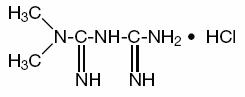
Metformin hydrochloride is an oral antihyperglycemic drug used in the management of type 2 diabetes. Metformin hydrochloride (N,N-dimethylimidodicarbonimidic diamide hydrochloride) is not chemically or pharmacologically related to any other classes of oral antihyperglycemic agents. The structural formula is as shown:
[image: MM1]Metformin hydrochloride is a white to off-white crystalline compound with a molecular formula of C4H11N5• HCl and a molecular weight of 165.63. Metformin hydrochloride is freely soluble in water and is practically insoluble in acetone, ether and chloroform. The pKa of metformin is 12.4. The pH of a 1% aqueous solution of metformin hydrochloride is 6.68.
Metformin hydrochloride tablets contain 500 mg, 850 mg or 1000 mg of metformin hydrochloride. Each tablet contains the inactive ingredients magnesium stearate, microcrystalline cellulose and povidone. In addition, the coating for each tablet contains hypromellose, lactose monohydrate, red iron oxide, titanium dioxide, triacetin, vanillin and yellow iron oxide.
Metformin Hydrochloride Tablets 500 mg are unscored, capsule shaped, light peach film-coated tablets imprinted WPI on one side and 2713 on the other side and are supplied in bottles of 100, 500 and 1000.
Metformin Hydrochloride Tablets 850 mg are unscored, capsule shaped, light peach film-coated tablets imprinted WPI on one side and 2775 on the other side and are supplied in bottles of 60, 100 and 250.
Metformin Hydrochloride Tablets 1000 mg are capsule shaped, light peach film-coated tablets with a bisect line on both sides, imprinted WPI and WPI on one side and 2455 on the other side and are supplied in bottles of 100, 500 and 1000.
Storage
Store at controlled room temperature 20°-25°C (68°-77°F). [See USP.]
Dispense in a light-resistant container.
Photos of the product and/or packaging supplied by the manufacturer.
Long-term carcinogenicity studies have been performed in rats (dosing duration of 104 weeks) and mice (dosing duration of 91 weeks) at doses up to and including 900 mg/kg/day and 1500 mg/kg/day, respectively. These doses are both approximately three times the maximum recommended human daily dose on a body surface area basis. No evidence of carcinogenicity with metformin was found in either male or female mice. Similarly, there was no tumorigenic potential observed with metformin in male rats. However, an increased incidence of benign stromal uterine polyps was seen in female rats treated with 900 mg/kg/day.
No evidence of a mutagenic potential of metformin was found in the following in vitro tests: Ames test (S. typhimurium), gene mutation test (mouse lymphoma cells), or chromosomal aberrations test (human lymphocytes). Results in the in vivo mouse micronucleus test were also negative.
Fertility of male or female rats was unaffected by metformin administration at doses as high as 600 mg/kg/day, which is approximately three times the maximum recommended human daily dose based on body surface area comparisons.
METFORMIN HYDROCHLORIDE TABLETS
Read this information carefully before you start taking this medicine and each time you refill your prescription. There may be new information. This information does not take the place of your doctor’s advice. Ask your doctor or pharmacist if you do not understand some of this information or if you want to know more about this medicine.
What is metformin?
Metformin is used to treat type 2 diabetes. This is also known as non-insulin-dependent diabetes mellitus. People with type 2 diabetes are not able to make enough insulin or respond normally to the insulin their bodies make. When this happens, sugar (glucose) builds up in the blood. This can lead to serious medical problems including kidney damage, amputations, and blindness. Diabetes is also closely linked to heart disease. The main goal of treating diabetes is to lower your blood sugar to a normal level.
High blood sugar can be lowered by diet and exercise, by a number of medicines taken by mouth, and by insulin shots. Before you take metformin, try to control your diabetes by exercise and weight loss. While you take your diabetes medicine, continue to exercise and follow the diet advised for your diabetes. No matter what your recommended diabetes management plan is, studies have shown that maintaining good blood sugar control can prevent or delay complications of diabetes, such as blindness.
Metformin helps control your blood sugar in a number of ways. These include helping your body respond better to the insulin it makes naturally, decreasing the amount of sugar your liver makes, and decreasing the amount of sugar your intestines absorb. Metformin does not cause your body to make more insulin. Because of this, when taken alone, it rarely causes hypoglycemia (low blood sugar), and usually does not cause weight gain. However, when it is taken with a sulfonylurea or with insulin, hypoglycemia is more likely to occur, as is weight gain.
WARNING: A small number of people who have taken metformin have developed a serious condition called lactic acidosis. Lactic acidosis is caused by a buildup of lactic acid in the blood. This happens more often in people with kidney problems. Most people with kidney problems should not take metformin. (See “What are the side effects of metformin?”)
Who should not take metformin?
Some conditions increase your chance of getting lactic acidosis, or cause other problems if you take metformin. Most of the conditions listed below can increase your chance of getting lactic acidosis.
Do not take metformin if you:
have kidney problems
have liver problems
have heart failure that is treated with medicines, such as Lanoxin® (digoxin) or Lasix® (furosemide)
drink a lot of alcohol. This means you binge drink for short periods or drink all the time
are seriously dehydrated (have lost a lot of water from your body)
are going to have an x-ray procedure with injection of dyes (contrast agents)
are going to have surgery
develop a serious condition, such as heart attack, severe infection, or a stroke
are 80 years or older and you have NOT had your kidney function tested
Tell your doctor if you are pregnant or plan to become pregnant. Metformin may not be right for you. Talk with your doctor about your choices. You should also discuss your choices with your doctor if you are nursing a child.
Can metformin hydrochloride tablets be used in children?
Metformin has been shown to effectively lower glucose levels in children (ages 10 to 16 years) with type 2 diabetes. Metformin has not been studied in children younger than 10 years old. Metformin hydrochloride tablets have not been studied in combination with other oral glucose-control medicines or insulin in children. If you have any questions about the use of metformin hydrochloride tablets in children, talk with your doctor or other healthcare provider.
How should I take metformin hydrochloride tablets?
Your doctor will tell you how much medicine to take and when to take it. You will probably start out with a low dose of the medicine. Your doctor may slowly increase your dose until your blood sugar is better controlled. You should take metformin with meals.
Your doctor may have you take other medicines along with metformin to control your blood sugar. These medicines may include insulin shots. Taking metformin with insulin may help you better control your blood sugar while reducing the insulin dose.
Continue your exercise and diet program and test your blood sugar regularly while taking metformin. Your doctor will monitor your diabetes and may perform blood tests on you from time to time to make sure your kidneys and your liver are functioning normally. There is no evidence that metformin causes harm to the liver or kidneys.
Tell your doctor if you:
have an illness that causes severe vomiting, diarrhea or fever, or if you drink a much lower amount of liquid than normal. These conditions can lead to severe dehydration (loss of water in your body). You may need to stop taking metformin for a short time.
plan to have surgery or an x-ray procedure with injection of dye (contrast agent). You may need to stop taking metformin hydrochloride tablets for a short time.
start to take other medicines or change how you take a medicine. Metformin can affect how well other drugs work, and some drugs can affect how well metformin works. Some medicines may cause high blood sugar.
What should I avoid while taking metformin hydrochloride tablets?
Do not drink a lot of alcoholic drinks while taking metformin. This means you should not binge drink for short periods, and you should not drink a lot of alcohol on a regular basis. Alcohol can increase the chance of getting lactic acidosis.
What are the side effects of metformin?
Lactic Acidosis. In rare cases, metformin can cause a serious side effect called lactic acidosis. This is caused by a build-up of lactic acid in your blood. This build-up can cause serious damage. Lactic acidosis caused by metformin is rare and has occurred mostly in people whose kidneys were not working normally. Lactic acidosis has been reported in about one in 33,000 patients taking metformin over the course of a year. Although rare, if lactic acidosis does occur, it can be fatal in up to half the people who develop it.
It is also important for your liver to be working normally when you take metformin. Your liver helps remove lactic acid from your blood.
Make sure you tell your doctor before you use metformin if you have kidney or liver problems. You should also stop using metformin and call your doctor right away if you have signs of lactic acidosis. Lactic acidosis is a medical emergency that must be treated in a hospital.
Signs of lactic acidosis are:
feeling very weak, tired, or uncomfortable
unusual muscle pain
trouble breathing
unusual or unexpected stomach discomfort
feeling cold
feeling dizzy or lightheaded
suddenly developing a slow or irregular heartbeat
If your medical condition suddenly changes, stop taking metformin and call your doctor right away. This may be a sign of lactic acidosis or another serious side effect.
Other Side Effects. Common side effects of metformin include diarrhea, nausea, and upset stomach. These side effects generally go away after you take the medicine for a while. Taking your medicine with meals can help reduce these side effects. Tell your doctor if the side effects bother you a lot, last for more than a few weeks, come back after they’ve gone away, or start later in therapy. You may need a lower dose or need to stop taking the medicine for a short period or for good.
About 3 out of every 100 people who take metformin have an unpleasant metallic taste when they start taking the medicine. It lasts for a short time.
Metformin rarely causes hypoglycemia (low blood sugar) by itself. However, hypoglycemia can happen if you do not eat enough, if you drink alcohol, or if you take other medicines to lower blood sugar.
General advice about prescription medicines
If you have questions or problems, talk with your doctor or other healthcare provider. You can ask your doctor or pharmacist for the information about metformin that is written for healthcare professionals. Medicines are sometimes prescribed for purposes other than those listed in a patient information leaflet. Do not use metformin for a condition for which it was not prescribed. Do not share your medicine with other people.
Watson Laboratories, Inc.
Corona, CA 92880 USA
Create a free account to view complete drug information, save medications, and more.
Free forever · No credit card required