 MedLens
Loading…
TABLETS safely and effectively. See full prescribing information for ATORVASTATIN CALCIUM TABLETSATORVASTATIN CALCIUM tablets, for oral useInitial U.S. Approval: 1996 · Lupin Pharmaceuticals, Inc.
Dosage Form
TABLETS safely and effectively. See full prescribing information for ATORVASTATIN CALCIUM TABLETSATORVASTATIN CALCIUM tablets, for oral useInitial U.S. Approval: 1996
Manufacturer
Lupin Pharmaceuticals, Inc.
This medication contains important usage instructions, warnings, and side effect information that you should review before use.
Atorvastatin calcium is indicated:
Atorvastatin calcium tablets, USP are white to off white, elliptical, film-coated, and are available in four strengths (see Table 1).
|
Tablet Strength
|
Identifying Features
|
| 10 mg of atorvastatin |
"LU" on one side and "A16" on the other |
| 20 mg of atorvastatin |
"LU" on one side and "A17" on the other |
| 40 mg of atorvastatin |
"LU" on one side and "A18" on the other |
| 80 mg of atorvastatin |
"LU" on one side and "A19" on the other |
The following important adverse reactions are described below and elsewhere in the labeling:
• Myopathy and Rhabdomyolysis [see Warnings and Precautions (5.1)]
• Immune-Mediated Necrotizing Myopathy [see Warnings and Precautions (5.2)]
• Hepatic Dysfunction [see Warnings and Precautions (5.3)]
• Increases in HbA1c and Fasting Serum Glucose Levels [see Warnings and Precautions (5.4)]
Risk Summary
Discontinue Atorvastatin calcium when pregnancy is recognized. Alternatively, consider the ongoing therapeutic needs of the individual patient. Atorvastatin calcium decreases synthesis of cholesterol and possibly other biologically active substances derived from cholesterol; therefore, Atorvastatin calcium may cause fetal harm when administered to pregnant patients based on the mechanism of action [see Clinical Pharmacology (12.1)]. In addition, treatment of hyperlipidemia is not generally necessary during pregnancy. Atherosclerosis is a chronic process and the discontinuation of lipid-lowering drugs during pregnancy should have little impact on the outcome of long-term therapy of primary hyperlipidemia for most patients.
Available data from case series and prospective and retrospective observational cohort studies over decades of use with statins in pregnant women have not identified a drug-associated risk of major congenital malformations. Published data from prospective and retrospective observational cohort studies with Atorvastatin calcium use in pregnant women are insufficient to determine if there is a drug-associated risk of miscarriage (see Data). In animal reproduction studies, no adverse developmental effects were observed in pregnant rats or rabbits orally administered atorvastatin at doses that resulted in up to 30 and 20 times, respectively, the human exposure at the maximum recommended human dose (MRHD) of 80 mg, based on body surface area (mg/m2). In rats administered atorvastatin during gestation and lactation, decreased postnatal growth and development delay were observed at doses ≥ 6 times the MRHD (see Data).
The estimated background risk of major birth defects and miscarriage for the indicated population is unknown. In the U.S. general population, the estimated background risk of major birth defects and miscarriage in clinically recognized pregnancies is 2 to 4% and 15 to 20%, respectively.
Data
Human Data:
A Medicaid cohort linkage study of 1152 statin-exposed pregnant women compared to 886,996 controls did not find a significant teratogenic effect from maternal use of statins in the first trimester of pregnancy, after adjusting for potential confounders – including maternal age, diabetes mellitus, hypertension, obesity, and alcohol and tobacco use – using propensity score-based methods. The relative risk of congenital malformations between the group with statin use and the group with no statin use in the first trimester was 1.07 (95% confidence interval 0.85 to 1.37) after controlling for confounders, particularly pre-existing diabetes mellitus. There were also no statistically significant increases in any of the organ-specific malformations assessed after accounting for confounders. In the majority of pregnancies, statin treatment was initiated prior to pregnancy and was discontinued at some point in the first trimester when pregnancy was identified. Study limitations include reliance on physician coding to define the presence of a malformation, lack of control for certain confounders such as body mass index, use of prescription dispensing as verification for the use of a statin, and lack of information on non-live births.
Animal Data:
Atorvastatin was administered to pregnant rats and rabbits during organogenesis at oral doses up to 300 mg/kg/day and 100 mg/kg/day, respectively. Atorvastatin was not teratogenic in rats at doses up to 300 mg/kg/day or in rabbits at doses up to 100 mg/kg/day. These doses resulted in multiples of about 30 times (rat) or 20 times (rabbit) the human exposure at the MRHD based on surface area (mg/m2). In rats, the maternally toxic dose of 300 mg/kg resulted in increased post-implantation loss and decreased fetal body weight. At the maternally toxic doses of 50 and 100 mg/kg/day in rabbits, there was increased post-implantation loss, and at 100 mg/kg/day fetal body weights were decreased.
In a study in pregnant rats administered 20, 100, or 225 mg/kg/day from gestation day 7 through to lactation day 20 (weaning), there was decreased survival at birth, postnatal day 4, weaning, and post-weaning in pups of mothers dosed with 225 mg/kg/day, a dose at which maternal toxicity was observed. Pup body weight was decreased through postnatal day 21 at 100 mg/kg/day, and through postnatal day 91 at 225 mg/kg/day. Pup development was delayed (rotarod performance at 100 mg/kg/day and acoustic startle at 225 mg/kg/day; pinnae detachment and eye-opening at 225 mg/kg/day). These doses correspond to 6 times (100 mg/kg) and 22 times (225 mg/kg) the human exposure at the MRHD, based on AUC.
Atorvastatin crosses the rat placenta and reaches a level in fetal liver equivalent to that of maternal plasma.
The safety and effectiveness of Atorvastatin calcium as an adjunct to diet to reduce LDL-C have been established pediatric patients 10 years of age and older with HeFH. Use of Atorvastatin calcium for this indication is based on a double-blind, placebo-controlled clinical trial in 187 pediatric patients 10 years of age and older with HeFH. In this limited controlled trial, there was no significant effect on growth or sexual maturation in the boys or girls, or on menstrual cycle length in girls.
The safety and effectiveness of Atorvastatin calcium as an adjunct to other LDL-C-lowering therapies to reduce LDL-C have been established pediatric patients 10 years of age and older with HoFH. Use of Atorvastatin calcium for this indication is based on a trial without a concurrent control group in 8 pediatric patients 10 years of age and older with HoFH [see Clinical Studies (14)].
The safety and effectiveness of Atorvastatin calcium have not been established in pediatric patients younger than 10 years of age with HeFH or HoFH, or in pediatric patients with other types of hyperlipidemia (other than HeFH or HoFH).
Of the total number of atorvastatin calcium -treated patients in clinical trials, 15,813 (40%) were ≥65 years old and 2,800 (7%) were ≥75 years old. No overall differences in safety or effectiveness were observed between these patients and younger patients
Advanced age (≥65 years) is a risk factor for atorvastatin calcium -associated myopathy and rhabdomyolysis. Dose selection for an elderly patient should be cautious, recognizing the greater frequency of decreased hepatic, renal, or cardiac function, and of concomitant disease or other drug therapy and the higher risk of myopathy. Monitor geriatric patients receiving Atorvastatin calcium for the increased risk of myopathy [see Warnings and Precautions (5.1) and Clinical Pharmacology (12.3)].
No specific antidotes for atorvastatin calcium are known. Contact Poison Control (1-800-222-1222) for latest recommendations. Due to extensive drug binding to plasma proteins, hemodialysis is not expected to significantly enhance atorvastatin calcium clearance.
Advise the patient to read the FDA-approved patient labeling (Patient Information).
Myopathy and Rhabdomyolysis
Advise patients that atorvastatin calcium may cause myopathy and rhabdomyolysis. Inform patients that the risk is also increased when taking certain types of medication or consuming large quantities of grapefruit juice and they should discuss all medication, both prescription and over the counter, with their healthcare provider. Instruct patients to promptly report any unexplained muscle pain, tenderness or weakness particularly if accompanied by malaise or fever [see Warnings and Precautions (5.1), Drug Interactions (7.1)].
Hepatic Dysfunction
Inform patients that atorvastatin calcium may cause liver enzyme elevations and possibly liver failure. Advise patients to promptly report fatigue, anorexia, right upper abdominal discomfort, dark urine or jaundice [see Warnings and Precautions (5.3)].
Increases in HbA1c and Fasting Serum Glucose Levels
Inform patients that increases in HbA1c and fasting serum glucose levels may occur with atorvastatin calcium. Encourage patients to optimize lifestyle measures, including regular exercise, maintaining a healthy body weight, and making healthy food choices [see Warnings and Precautions (5.4)].
Pregnancy
Advise pregnant patients and patients who can become pregnant of the potential risk to a fetus. Advise patients to inform their healthcare provider of a known or suspected pregnancy to discuss if atorvastatin calcium should be discontinued [see Use in Specific Populations (8.1)].
Lactation
Advise patients that breastfeeding is not recommended during treatment with atorvastatin calcium tablets [see Contraindications (4) and Use in Specific Populations (8.2)].
The brands listed are trademarks of their respective owners and are not trademarks of Lupin Pharmaceuticals, Inc. The makers of these brands are not affiliated with and do not endorse Lupin Pharmaceuticals, Inc. or its products.
Manufactured for:
Lupin Pharmaceuticals, Inc.
Baltimore, Maryland 21202
United States
Manufactured by:
Lupin Limited
Nagpur 441 108
INDIA
Revised: July 2023
Atorvastatin calcium is a synthetic lipid-lowering agent. Atorvastatin is an inhibitor of 3-hydroxy-3-methylglutaryl-coenzyme A (HMG-CoA) reductase. This enzyme catalyzes the conversion of HMG-CoA to mevalonate, an early and rate-limiting step in cholesterol biosynthesis.
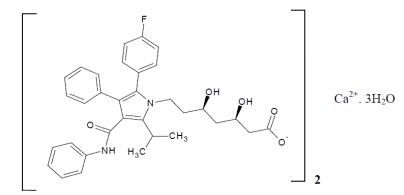
Atorvastatin calcium is1H-Pyrrole-1-heptanoic acid, 2-(4-fluorophenyl)- β, δ-dihydroxy-5-(1-methylethyl)-3-phenyl-4-[(phenylamino)carbonyl]-calcium salt (2:1), trihydrate [R-(R*,R*)]-. The empirical formula of atorvastatin calcium is C66H68CaF2N4O10.3H2O and its molecular weight is 1209.42. Its structural formula is:
[image: MM1]Atorvastatin calcium is a white to off-white crystalline powder that is insoluble in aqueous solutions of pH 4.5 and below. Atorvastatin calcium is very slightly soluble in distilled water and pH 7.5 phosphate buffer; sparingly soluble in methanol.
Atorvastatin calcium tablets, USP for oral administration contain 10, 20, 40, or 80 mg of atorvastatin and the following inactive ingredients: anhydrous lactose, calcium carbonate, colloidal silicon dioxide, croscarmellose sodium, hydroxypropyl cellulose, magnesium stearate, microcrystalline cellulose, Opadry AMB OY-B-28920 White (lecithin, polyvinyl alcohol, talc, titanium dioxide, xanthan gum) and sodium lauryl sulphate.
Atorvastatin calcium tablets, USP meet USP Dissolution Test 6.
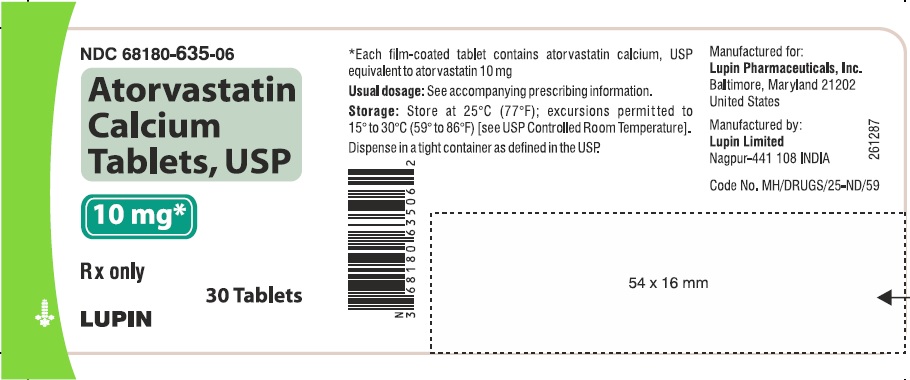
ATORVASTATIN CALCIUM TABLETS, USP
Rx Only
10 mg
NDC 68180-635-06
30 TABLETS
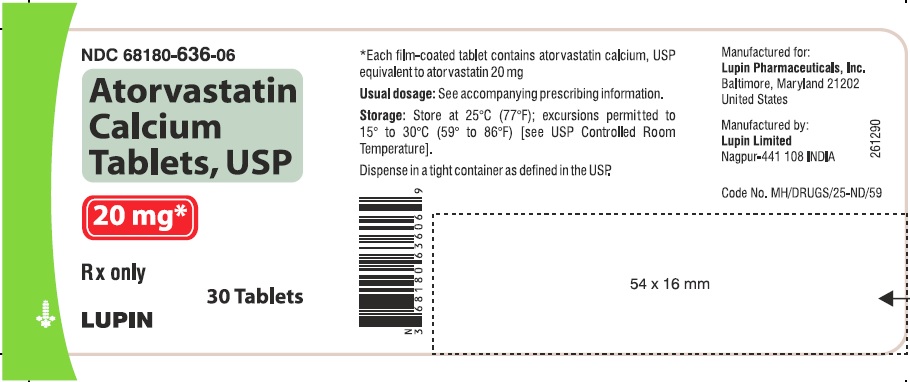
[image: MM5]ATORVASTATIN CALCIUM TABLETS, USP
Rx Only
20 mg
NDC 68180-636-06
30 TABLETS
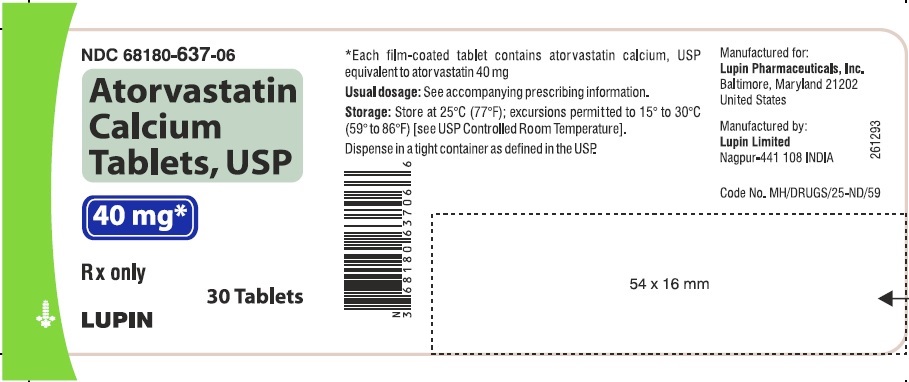
[image: MM6]ATORVASTATIN CALCIUM TABLETS, USP
Rx Only
40 mg
NDC 68180-637-06
30 TABLETS
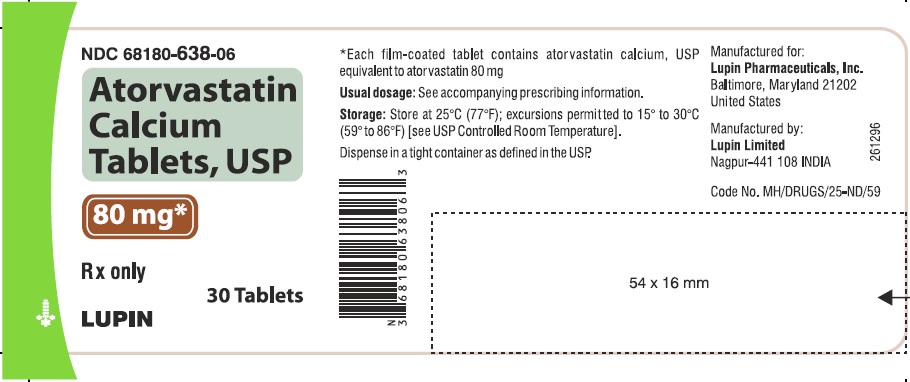
[image: MM7]ATORVASTATIN CALCIUM TABLETS, USP
Rx Only
80 mg
NDC 68180-638-06
30 TABLETS
[image: MM8]10 mg tablets (10 mg of atorvastatin): white to off white, elliptical, film coated tablets debossed with "LU" on one side and "A16" on the other side.
NDC 68180-635-06 bottles of 30
NDC 68180-635-09 bottles of 90
NDC 68180-635-02 bottles of 500
20 mg tablets (20 mg of atorvastatin): white to off white, elliptical, film coated tablets debossed with "LU" on one side and "A17" on the other side.
NDC 68180-636-06 bottles of 30
NDC 68180-636-09 bottles of 90
NDC 68180-636-02 bottles of 500
40 mg tablets (40 mg of atorvastatin): white to off white, elliptical, film coated tablets debossed with "LU" on one side and "A18" on the other side.
NDC 68180-637-06 bottles of 30
NDC 68180-637-09 bottles of 90
NDC 68180-637-02 bottles of 500
80 mg tablets (80 mg of atorvastatin): white to off white, elliptical, film coated tablets debossed with "LU" on one side and "A19" on the other side.
NDC 68180-638-06 bottles of 30
NDC 68180-638-09 bottles of 90
NDC 68180-638-02 bottles of 500
Storage
Store at 25°C (77°F); excursions permitted to 15° to 30°C (59° to 86°F) [see USP Controlled Room Temperature]
Photos of the product and/or packaging supplied by the manufacturer.
Atorvastatin calcium is a selective, competitive inhibitor of HMG-CoA reductase, the rate-limiting enzyme that converts 3-hydroxy-3- methylglutaryl-coenzyme A to mevalonate, a precursor of sterols, including cholesterol. In animal models, atorvastatin calcium lowers plasma cholesterol and lipoprotein levels by inhibiting HMG-CoA reductase and cholesterol synthesis in the liver and by increasing the number of hepatic LDL receptors on the cell surface to enhance uptake and catabolism of LDL; atorvastatin calcium also reduces LDL production and the number of LDL particles.
Atorvastatin calcium, as well as some of its metabolites, are pharmacologically active in humans. The liver is the primary site of action and the principal site of cholesterol synthesis and LDL clearance. Drug dosage, rather than systemic drug concentration, correlates better with LDL-C reduction. Individualization of drug dosage should be based on therapeutic response [see Dosage and Administration (2) ].
Absorption
Atorvastatin calcium is rapidly absorbed after oral administration; maximum plasma concentrations occur within 1 to 2 hours. Extent of absorption increases in proportion to atorvastatin calcium dose. The absolute bioavailability of atorvastatin (parent drug) is approximately 14% and the systemic availability of HMG-CoA reductase inhibitory activity is approximately 30%. The low systemic availability is attributed to presystemic clearance in gastrointestinal mucosa and/or hepatic first-pass metabolism. Although food decreases the rate and extent of drug absorption by approximately 25% and 9%, respectively, as assessed by Cmax and AUC, LDL-C reduction is similar whether atorvastatin calcium is given with or without food. Plasma atorvastatin calcium concentrations are lower (approximately 30% for Cmax and AUC) following evening drug administration compared with morning. However, LDL-C reduction is the same regardless of the time of day of drug administration.
Distribution
Mean volume of distribution of atorvastatin calcium is approximately 381 liters. Atorvastatin calcium is ≥98% bound to plasma proteins. A blood/plasma ratio of approximately 0.25 indicates poor drug penetration into red blood cells.
Elimination
Metabolism
Atorvastatin calcium is extensively metabolized to ortho- and parahydroxylated derivatives and various beta-oxidation products. In vitro inhibition of HMG-CoA reductase by ortho- and parahydroxylated metabolites is equivalent to that of atorvastatin calcium. Approximately 70% of circulating inhibitory activity for HMG-CoA reductase is attributed to active metabolites. In vitro studies suggest the importance of atorvastatin calcium metabolism by cytochrome P450 3A4, consistent with increased plasma concentrations of atorvastatin calcium in humans following co-administration with erythromycin, a known inhibitor of this isozyme [see Drug Interactions (7.1) ]. In animals, the ortho-hydroxy metabolite undergoes further glucuronidation.
Excretion
Atorvastatin calcium and its metabolites are eliminated primarily in bile following hepatic and/or extra-hepatic metabolism; however, the drug does not appear to undergo enterohepatic recirculation. Mean plasma elimination half-life of atorvastatin calcium in humans is approximately 14 hours, but the half-life of inhibitory activity for HMG-CoA reductase is 20 to 30 hours due to the contribution of active metabolites. Less than 2% of a dose of atorvastatin calcium is recovered in urine following oral administration.
Specific Populations
Geriatric: Plasma concentrations of atorvastatin calcium are higher (approximately 40% for Cmax and 30% for AUC) in healthy elderly subjects (age ≥65 years) than in young adults.
Pediatric: Apparent oral clearance of atorvastatin in pediatric subjects appeared similar to that of adults when scaled allometrically by body weight as the body weight was the only significant covariate in atorvastatin population PK model with data including pediatric HeFH patients (ages 10 years to 17 years of age, n=29) in an open-label, 8-week study.
Gender: Plasma concentrations of atorvastatin calcium in women differ from those in men (approximately 20% higher for Cmax and 10% lower for AUC); however, there is no clinically significant difference in LDL-C reduction with atorvastatin calcium between men and women.
Renal Impairment: Renal disease has no influence on the plasma concentrations or LDL-C reduction of atorvastatin calcium [see Use in Specific Populations (8.6)].
While studies have not been conducted in patients with end-stage renal disease, hemodialysis is not expected to significantly enhance clearance of atorvastatin calcium since the drug is extensively bound to plasma proteins.
Hepatic Impairment: In patients with chronic alcoholic liver disease, plasma concentrations of atorvastatin calcium are markedly increased. Cmax and AUC are each 4-fold greater in patients with Childs-Pugh A disease. Cmax and AUC are approximately 16-fold and 11-fold increased, respectively, in patients with Childs-Pugh B disease [see Use in Specific Populations (8.7)].
Drug Interactions: Atorvastatin is a substrate of the hepatic transporters, OATP1B1 and OATP1B3 transporter. Metabolites of atorvastatin are substrates of OATP1B1. Atorvastatin is also identified as a substrate of the efflux transporter BCRP, which may limit the intestinal absorption and biliary clearance of atorvastatin.
|
& Represents ratio of treatments (co-administered drug plus atorvastatin vs. atorvastatin alone). |
|||
|
# See Sections 5.1 and 7 for clinical significance. |
|||
|
* Greater increases in AUC (ratio of AUC up to 2.5) and/or Cmax (ratio of Cmax up to 1.71) have been reported with excessive grapefruit consumption (≥ 750 mL to 1.2 liters per day). |
|||
|
** Ratio based on a single sample taken 8 to 16 h post dose. |
|||
|
† Due to the dual interaction mechanism of rifampin, simultaneous co-administration of atorvastatin with rifampin is recommended, as delayed administration of atorvastatin after administration of rifampin has been associated with a significant reduction in atorvastatin plasma concentrations. |
|||
|
‡ The dose of saquinavir plus ritonavir in this study is not the clinically used dose. The increase in atorvastatin exposure when used clinically is likely to be higher than what was observed in this study. Therefore, caution should be applied and the lowest dose necessary should be used. |
|||
|
a Once daily |
|||
|
b Twice daily |
|||
|
c Single dose |
|||
|
d Three times daily |
|||
|
e Four times daily |
|||
|
f Every 8 hours |
|||
|
Co-administered drug and dosing regimen
|
Atorvastatin
|
||
|
Dose (mg)
|
Ratio of AUC&
|
Ratio of Cmax&
|
|
|
#Cyclosporine 5.2 mg/kg/day, stable dose |
10 mg QDa for 28 days |
8.69 |
10.66 |
|
#Tipranavir 500 mg BIDb/ritonavir 200 mg BIDb, 7 days |
10 mg, SDc
|
9.36 |
8.58 |
|
#Glecaprevir 400 mg QDa/pibrentasvir 120 mg QDa, 7 days |
10 mg QDa for 7 days |
8.28 |
22.00 |
|
#Telaprevir 750 mg q8hf, 10 days |
20 mg, SDc
|
7.88 |
10.60 |
|
#,‡Saquinavir 400 mg BIDb/ ritonavir 400 mg BIDb, 15 days |
40 mg QDa for 4 days |
3.93 |
4.31 |
|
#Elbasvir 50 mg QDa/grazoprevir 200 mg QDa, 13 days |
10 mg SDc
|
1.94 |
4.34 |
|
#Simeprevir 150 mg QDa , 10 days |
40 mg SDc
|
2.12 |
1.70 |
|
#Clarithromycin 500 mg BIDb, 9 days |
80 mg QDa for 8 days |
4.54 |
5.38 |
|
#Darunavir 300 mg BIDb/ritonavir 100 mg BIDb, 9 days |
10 mg QDa for 4 days |
3.45 |
2.25 |
|
#Itraconazole 200 mg QDa, 4 days |
40 mg SDc
|
3.32 |
1.20 |
| #Letermovir 480 mg QDa, 10 days |
20 mg SDc
|
3.29 |
2.17 |
|
#Fosamprenavir 700 mg BIDb/ritonavir 100 mg BIDb, 14 days |
10 mg QDa for 4 days |
2.53 |
2.84 |
|
#Fosamprenavir 1400 mg BIDb, 14 days |
10 mg QDa for 4 days |
2.30 |
4.04 |
|
#Nelfinavir 1250 mg BIDb, 14 days |
10 mg QDa for 28 days |
1.74 |
2.22 |
|
#Grapefruit Juice, 240 mL QDa,*
|
40 mg, SDc
|
1.37 |
1.16 |
| Diltiazem 240 mg QDa, 28 days |
40 mg, SDc
|
1.51 |
1.00 |
| Erythromycin 500 mg QIDe, 7 days |
10 mg, SDc
|
1.33 |
1.38 |
| Amlodipine 10 mg, single dose |
80 mg, SDc
|
1.18 |
0.91 |
| Cimetidine 300 mg QIDe, 2 weeks |
10 mg QDa for 2 weeks |
1.00 |
0.89 |
| Colestipol 10 g BIDb, 24 weeks |
40 mg QDa for 8 weeks |
NA |
0.74** |
| Maalox TC® 30 mL QIDe, 17 days |
10 mg QDa for 15 days |
0.66 |
0.67 |
| Efavirenz 600 mg QDa, 14 days |
10 mg for 3 days |
0.59 |
1.01 |
|
#Rifampin 600 mg QDa, 7 days (co-administered)†
|
40 mg SDc
|
1.12 |
2.90 |
|
#Rifampin 600 mg QDa, 5 days (doses separated)†
|
40 mg SDc
|
0.20 |
0.60 |
|
#Gemfibrozil 600 mg BIDb, 7 days |
40 mg SDc
|
1.35 |
1.00 |
|
#Fenofibrate 160 mg QDa, 7 days |
40 mg SDc
|
1.03 |
1.02 |
| Boceprevir 800 mg TIDd, 7 days |
40 mg SDc
|
2.32 |
2.66 |
|
# See Section 7 for clinical significance. |
|||
|
a Once daily |
|||
|
b Twice daily |
|||
|
c Single dose |
|||
|
Atorvastatin
|
Co-administered drug and dosing regimen
|
||
|
|
Drug/Dose (mg)
|
Ratio of AUC
|
Ratio of Cmax
|
| 80 mg QDa for 15 days |
Antipyrine, 600 mg SDc
|
1.03 |
0.89 |
| 80 mg QDa for 10 days |
#Digoxin 0.25 mg QDa, 20 days |
1.15 |
1.20 |
| 40 mg QDa for 22 days |
Oral contraceptive QDa, 2 months - norethindrone 1mg - ethinyl estradiol 35 mcg |
1.28 1.19 |
1.23 1.30 |
| 10 mg, SDc
|
Tipranavir 500 mg BIDb/ritonavir 200 mg BIDb, 7 days |
1.08 |
0.96 |
| 10 mg QDa for 4 days |
Fosamprenavir 1400 mg BIDb, 14 days |
0.73 |
0.82 |
| 10 mg QDa for 4 days |
Fosamprenavir 700 mg BIDb/ritonavir 100 mg BIDb, 14 days |
0.99 |
0.94 |
Atorvastatin calcium had no clinically significant effect on prothrombin time when administered to patients receiving chronic warfarin treatment
In a 2-year carcinogenicity study in rats at dose levels of 10, 30, and 100 mg/kg/day, 2 rare tumors were found in muscle in high-dose females: in one, there was a rhabdomyosarcoma and, in another, there was a fibrosarcoma. This dose represents a plasma AUC (0 to 24) value of approximately 16 times the mean human plasma drug exposure after an 80 mg oral dose.
A 2-year carcinogenicity study in mice given 100, 200, or 400 mg/kg/day resulted in a significant increase in liver adenomas in high-dose males and liver carcinomas in high-dose females. These findings occurred at plasma AUC (0 to 24) values of approximately 6 times the mean human plasma drug exposure after an 80 mg oral dose.
In vitro, atorvastatin was not mutagenic or clastogenic in the following tests with and without metabolic activation: the Ames test with Salmonella typhimurium and Escherichia coli, the HGPRT forward mutation assay in Chinese hamster lung cells, and the chromosomal aberration assay in Chinese hamster lung cells. Atorvastatin was negative in the in vivo mouse micronucleus test.
In female rats, atorvastatin at doses up to 225 mg/kg (56 times the human exposure) did not cause adverse effects on fertility. Studies in male rats performed at doses up to 175 mg/kg (15 times the human exposure) produced no changes in fertility. There was aplasia and aspermia in the epididymis of 2 of 10 rats treated with 100 mg/kg/day of atorvastatin for 3 months (16 times the human AUC at the 80 mg dose); testis weights were significantly lower at 30 and 100 mg/kg and epididymal weight was lower at 100 mg/kg. Male rats given 100 mg/kg/day for 11 weeks prior to mating had decreased sperm motility, spermatid head concentration, and increased abnormal sperm. Atorvastatin caused no adverse effects on semen parameters, or reproductive organ histopathology in dogs given doses of 10, 40, or 120 mg/kg for 2 years.
Prevention of Cardiovascular Disease
In the Anglo-Scandinavian Cardiac Outcomes Trial (ASCOT), the effect of atorvastatin calcium on fatal and non-fatal coronary heart disease was assessed in 10,305 patients with hypertension, 40 to 80 years of age (mean of 63 years, 19% women; 95% White, 3% Black, 1% South Asian, 1% other), without a previous myocardial infarction and with total cholesterol (TC) levels ≤251 mg/dL. Additionally, all patients had at least 3 of the following cardiovascular risk factors: male gender (81%), age >55 years (85%), smoking (33%), diabetes (24%), history of CHD in a first-degree relative (26%), TC:HDL >6 (14%), peripheral vascular disease (5%), left ventricular hypertrophy (14%), prior cerebrovascular event (10%), specific ECG abnormality (14%), proteinuria/albuminuria (62%). In this double-blind, placebo-controlled trial, patients were treated with anti-hypertensive therapy (goal BP <140/90 mm Hg for patients without diabetes; <130/80 mm Hg for patients with diabetes) and allocated to either atorvastatin calcium 10 mg daily (n=5168) or placebo (n=5137), using a covariate adaptive method which took into account the distribution of nine baseline characteristics of patients already enrolled and minimized the imbalance of those characteristics across the groups. Patients were followed for a median duration of 3.3 years.
The effect of 10 mg/day of atorvastatin calcium on lipid levels was similar to that seen in previous clinical trials.
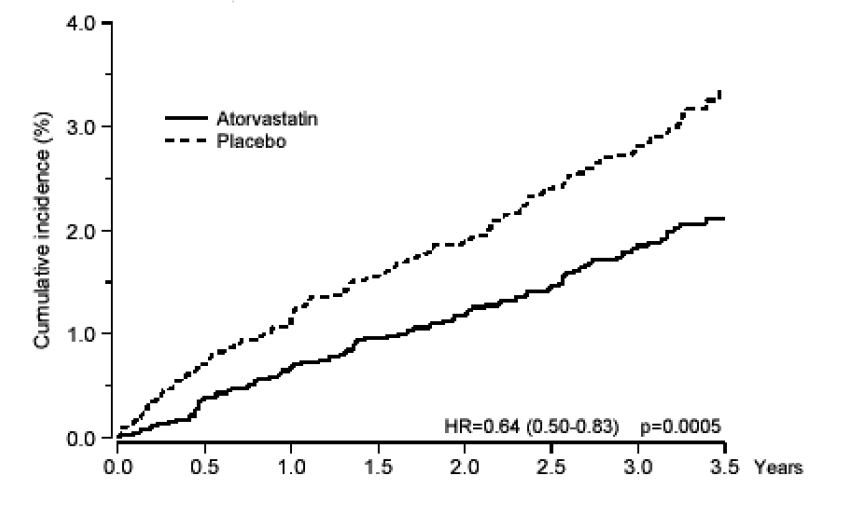
Atorvastatin calcium significantly reduced the rate of coronary events [either fatal coronary heart disease (46 events in the placebo group vs. 40 events in the atorvastatin calcium group) or non-fatal MI (108 events in the placebo group vs. 60 events in the atorvastatin calcium group)] with a relative risk reduction of 36% [(based on incidences of 1.9% for atorvastatin calcium vs. 3.0% for placebo), p=0.0005 (see Figure 1)]. The risk reduction was consistent regardless of age, smoking status, obesity, or presence of renal dysfunction. The effect of atorvastatin calcium was seen regardless of baseline LDL levels.
Figure 1: Effect of atorvastatin calcium 10 mg/day on Cumulative Incidence of Non-Fatal Myocardial Infarction or Coronary Heart Disease Death (in ASCOT-LLA)
[image: MM2]Atorvastatin calcium also significantly decreased the relative risk for revascularization procedures by 42% (incidences of 1.4% for atorvastatin calcium and 2.5% for placebo). Although the reduction of fatal and non-fatal strokes did not reach a pre-defined significance level (p=0.01), a favorable trend was observed with a 26% relative risk reduction (incidences of 1.7% for atorvastatin calcium and 2.3% for placebo). There was no significant difference between the treatment groups for death due to cardiovascular causes (p=0.51) or noncardiovascular causes (p=0.17).
In the Collaborative Atorvastatin Diabetes Study (CARDS), the effect of atorvastatin calcium on cardiovascular disease (CVD) endpoints was assessed in 2838 subjects (94% White, 2% Black, 2% South Asian, 1% other; 68% male), ages 40 to 75 with type 2 diabetes based on WHO criteria, without prior history of cardiovascular disease and with LDL ≤ 160 mg/dL and triglycerides (TG) ≤ 600 mg/dL. In addition to diabetes, subjects had 1 or more of the following risk factors: current smoking (23%), hypertension (80%), retinopathy (30%), or microalbuminuria (9%) or macroalbuminuria (3%). No subjects on hemodialysis were enrolled in the trial. In this multicenter, placebo-controlled, double-blind clinical trial, subjects were randomly allocated to either atorvastatin calcium 10 mg daily (1429) or placebo (1411) in a 1:1 ratio and were followed for a median duration of 3.9 years. The primary endpoint was the occurrence of any of the major cardiovascular events: myocardial infarction, acute CHD death, unstable angina, coronary revascularization, or stroke. The primary analysis was the time to first occurrence of the primary endpoint.
Baseline characteristics of subjects were: mean age of 62 years, mean HbA1c 7.7%; median LDL-C 120 mg/dL; median TC 207 mg/dL; median TG 151 mg/dL; median HDL-C 52 mg/dL. The effect of atorvastatin calcium 10 mg/day on lipid levels was similar to that seen in previous clinical trials.
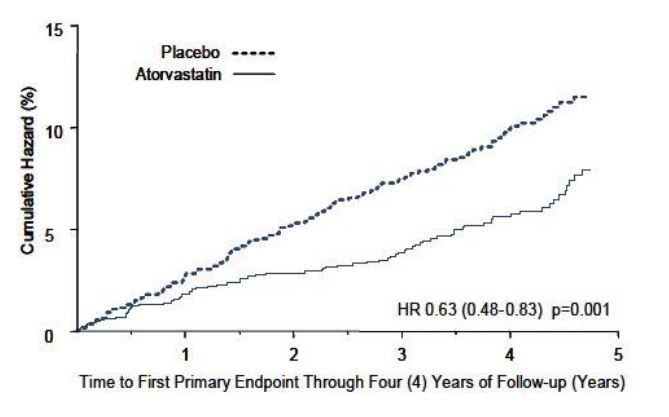
Atorvastatin calcium significantly reduced the rate of major cardiovascular events (primary endpoint events) (83 events in the atorvastatin calcium group vs. 127 events in the placebo group) with a relative risk reduction of 37%, HR 0.63, 95% CI (0.48, 0.83) (p=0.001) (see Figure 2). An effect of atorvastatin calcium was seen regardless of age, sex, or baseline lipid levels.
Atorvastatin calcium significantly reduced the risk of stroke by 48% (21 events in the atorvastatin calcium group vs. 39 events in the placebo group), HR 0.52, 95% CI (0.31, 0.89) (p=0.016) and reduced the risk of MI by 42% (38 events in the atorvastatin calcium group vs. 64 events in the placebo group), HR 0.58, 95.1% CI (0.39, 0.86) (p=0.007). There was no significant difference between the treatment groups for angina, revascularization procedures, and acute CHD death.
There were 61 deaths in the atorvastatin calcium group vs. 82 deaths in the placebo group (HR 0.73, p=0.059)
[image: MM3]In the Treating to New Targets Study (TNT), the effect of atorvastatin calcium 80 mg/day vs. atorvastatin calcium 10 mg/day on the reduction in cardiovascular events was assessed in 10,001 subjects (94% white, 81% male, 38% ≥65 years) with clinically evident coronary heart disease who had achieved a target LDL-C level <130 mg/dL after completing an 8-week, open-label, run-in period with atorvastatin calcium 10 mg/day. Subjects were randomly assigned to either 10 mg/day or 80 mg/day of atorvastatin calcium and followed for a median duration of 4.9 years. The primary endpoint was the time-to-first occurrence of any of the following major cardiovascular events (MCVE): death due to CHD, non-fatal myocardial infarction, resuscitated cardiac arrest, and fatal and non-fatal stroke. The mean LDL-C, TC, TG, non-HDL, and HDL cholesterol levels at 12 weeks were 73, 145, 128, 98, and 47 mg/dL during treatment with 80 mg of atorvastatin calcium and 99, 177, 152, 129, and 48 mg/dL during treatment with 10 mg of atorvastatin calcium.
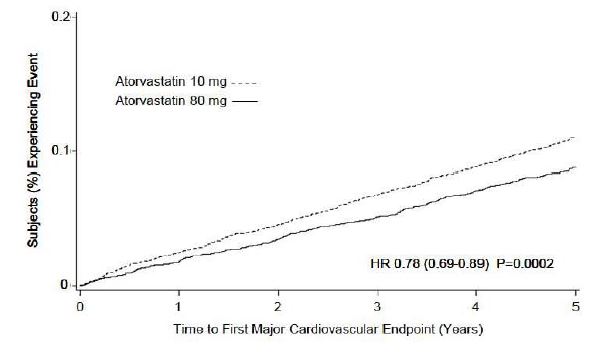
Treatment with atorvastatin calcium 80 mg/day significantly reduced the rate of MCVE (434 events in the 80 mg/day group vs. 548 events in the 10 mg/day group) with a relative risk reduction of 22%, HR 0.78, 95% CI (0.69, 0.89), p=0.0002 (see Figure 3 and Table 8). The overall risk reduction was consistent regardless of age (<65, ≥65) or sex.
[image: MM4]|
a Atorvastatin 80 mg: atorvastatin 10 mg |
|||||
|
b Component of other secondary endpoints |
|||||
|
* Secondary endpoints not included in primary endpoint |
|||||
|
Endpoint
|
Atorvastatin
10 mg (N=5006) |
Atorvastatin 80 mg
(N=4995) |
HRa (95%CI)
|
||
|
PRIMARY ENDPOINT
|
n |
(%) |
n |
(%) |
|
| First major cardiovascular endpoint |
548 |
(10.9) |
434 |
(8.7) |
0.78 (0.69, 0.89) |
|
Components of the Primary Endpoint
|
|||||
| CHD death |
127 |
(2.5) |
101 |
(2.0) |
0.80 (0.61, 1.03) |
| Non-fatal, non-procedure related MI |
308 |
(6.2) |
243 |
(4.9) |
0.78 (0.66, 0.93) |
| Resuscitated cardiac arrest |
26 |
(0.5) |
25 |
(0.5) |
0.96 (0.56, 1.67) |
| Stroke (fatal and non-fatal) |
155 |
(3.1) |
117 |
(2.3) |
0.75 (0.59, 0.96) |
|
SECONDARY ENDPOINTS*
|
|||||
| First CHF with hospitalization |
164 |
(3.3) |
122 |
(2.4) |
0.74 (0.59, 0.94) |
| First PVD endpoint |
282 |
(5.6) |
275 |
(5.5) |
0.97 (0.83, 1.15) |
| First CABG or other coronary revascularization procedureb
|
904 |
(18.1) |
667 |
(13.4) |
0.72 (0.65, 0.80) |
| First documented angina endpointb
|
615 |
(12.3) |
545 |
(10.9) |
0.88 (0.79, 0.99) |
| All-cause mortality |
282 |
(5.6) |
284 |
(5.7) |
1.01 (0.85, 1.19) |
|
Components of All-Cause Mortality
|
|||||
| Cardiovascular death |
155 |
(3.1) |
126 |
(2.5) |
0.81 (0.64, 1.03) |
| Noncardiovascular death |
127 |
(2.5) |
158 |
(3.2) |
1.25 (0.99, 1.57) |
| Cancer death |
75 |
(1.5) |
85 |
(1.7) |
1.13 (0.83, 1.55) |
| Other non-CV death |
43 |
(0.9) |
58 |
(1.2) |
1.35 (0.91, 2.00) |
| Suicide, homicide, and other traumatic non-CV death |
9 |
(0.2) |
15 |
(0.3) |
1.67 (0.73, 3.82) |
Of the events that comprised the primary efficacy endpoint, treatment with atorvastatin calcium 80 mg/day significantly reduced the rate of non-fatal, non-procedure related MI and fatal and non-fatal stroke, but not CHD death or resuscitated cardiac arrest (Table 8). Of the predefined secondary endpoints, treatment with atorvastatin calcium 80 mg/day significantly reduced the rate of coronary revascularization, angina, and hospitalization for heart failure, but not peripheral vascular disease. The reduction in the rate of CHF with hospitalization was only observed in the 8% of patients with a prior history of CHF.
There was no significant difference between the treatment groups for all-cause mortality (Table 8). The proportions of subjects, who experienced cardiovascular death, including the components of CHD death and fatal stroke, were numerically smaller in the atorvastatin calcium 80 mg group than in the atorvastatin calcium 10 mg treatment group. The proportions of subjects who experienced noncardiovascular death were numerically larger in the atorvastatin calcium 80 mg group than in the atorvastatin calcium 10 mg treatment group.
Primary Hyperlipidemia in Adults
Atorvastatin calcium reduces total-C, LDL-C, apo B, and TG, and increases HDL-C in patients with hyperlipidemia (heterozygous familial and nonfamilial) and mixed dyslipidemia. Therapeutic response is seen within 2 weeks, and maximum response is usually achieved within 4 weeks and maintained during chronic therapy.
In two multicenter, placebo-controlled, dose-response trails in patients with hyperlipidemia, atorvastatin calcium given as a single dose over 6 weeks, significantly reduced total-C, LDL-C, apo B, and TG. (Pooled results are provided in Table 9.)
|
a Results are pooled from 2 dose-response trials |
|||||||
|
Dose
|
N
|
TC
|
LDL-C
|
Apo B
|
TG
|
HDL-C
|
N
|
| Placebo |
21 |
4 |
4 |
3 |
10 |
-3 |
Placebo |
| 10 |
22 |
-29 |
-39 |
-32 |
-19 |
6 |
10 |
| 20 |
20 |
-33 |
-43 |
-35 |
-26 |
9 |
20 |
| 40 |
21 |
-37 |
-50 |
-42 |
-29 |
6 |
40 |
| 80 |
23 |
-45 |
-60 |
-50 |
-37 |
5 |
80 |
In three multicenter, double-blind trails in patients with hyperlipidemia, atorvastatin calcium was compared to other statins. After randomization, patients were treated for 16 weeks with either atorvastatin calcium 10 mg per day or a fixed dose of the comparative agent (Table 10).
|
1 A negative value for the 95% CI for the difference between treatments favors atorvastatin calcium for all except HDL-C, for which a positive value favors atorvastatin calcium. If the range does not include 0, this indicates a statistically significant difference. |
||||||
|
a Significantly different from lovastatin, ANCOVA, p ≤0.05 |
||||||
|
b Significantly different from pravastatin, ANCOVA, p ≤0.05 |
||||||
|
c Significantly different from simvastatin, ANCOVA, p ≤0.05 |
||||||
|
Treatment
(Daily Dose) |
N
|
Total-C
|
LDL-C
|
Apo B
|
TG
|
HDL-C
|
|
Trial 1
|
||||||
| Atorvastatin Calcium 10 mg |
707 |
-27a
|
-36a
|
-28a
|
-17a
|
+7 |
| Lovastatin 20 mg |
191 |
-19 |
-27 |
-20 |
-6 |
+7 |
| 95% CI for Diff1
|
-9.2,-6.5 |
-10.7, -7.1 |
-10.0, -6.5 |
-15.2, -7.1 |
-1.7, 2.0 |
|
|
Trial 2
|
||||||
| Atorvastatin Calcium 10 mg |
222 |
-25b |
-35b
|
-27b
|
-17b
|
+6 |
| Pravastatin 20 mg |
77 |
-17 |
-23 |
-17 |
-9 |
+8 |
| 95% CI for Diff1
|
-10.8,-6.1 |
-14.5, -8.2 |
-13.4, -7.4 |
-14.1, -0.7 |
-4.9, 1.6 |
|
|
Trial 3
|
||||||
| Atorvastatin Calcium 10 mg |
132 |
-29c
|
-37c
|
-34c
|
-23c
|
+7 |
| Simvastatin 10 mg |
45 |
-24 |
-30 |
-30 |
-15 |
+7 |
| 95% CI for Diff1
|
8.7,-2.7 |
-10.1, -2.6 |
-8.0, -1.1 |
-15.1, -0.7 |
-4.3, 3.9 |
Table 10 does not contain data comparing the effects of atorvastatin calcium 10 mg and higher doses of lovastatin, pravastatin, and simvastatin. The drugs compared in the trials summarized in the table are not necessarily interchangeable.
Hypertriglyceridemia in Adults
The response to atorvastatin calcium in 64 patients with isolated hypertriglyceridemia treated across several clinical trials is shown in the table below (Table 11). For the atorvastatin calcium-treated patients, median (min, max) baseline TG level was 565 (267 to 1502).
|
|
Placebo (N=12)
|
Atorvastatin Calcium 10 mg
(N=37) |
Atorvastatin Calcium 20 mg
(N=13) |
Atorvastatin Calcium 80 mg
(N=14) |
| Triglycerides |
-12.4 (-36.6, 82.7) |
-41.0 (-76.2, 49.4) |
-38.7 (-62.7, 29.5) |
-51.8 (-82.8, 41.3) |
| Total-C |
-2.3 (-15.5, 24.4) |
-28.2 (-44.9, -6.8) |
-34.9 (-49.6, -15.2) |
-44.4 (-63.5, -3.8) |
| LDL-C |
3.6 (-31.3, 31.6) |
-26.5 (-57.7, 9.8) |
-30.4 (-53.9, 0.3) |
-40.5 (-60.6, -13.8) |
| HDL-C |
3.8 (-18.6, 13.4) |
13.8 (-9.7, 61.5) |
11.0 (-3.2, 25.2) |
7.5 (-10.8, 37.2) |
| non-HDL-C |
-2.8 (-17.6, 30.0) |
-33.0 (-52.1, -13.3) |
-42.7 (-53.7, -17.4) |
-51.5 (-72.9, -4.3) |
Dysbetalipoproteinemia in Adults
The results of an open-label crossover study of 16 patients (genotypes: 14 apo E2/E2 and 2 apo E3/E2) with dysbetalipoproteinemia are shown in the table below (Table 12).
|
|
Median % Change (min, max)
|
||
|
Median (min, max) at Baseline (mg/dL)
|
Atorvastatin Calcium 10 mg
|
Atorvastatin Calcium 80 mg
|
|
| Total-C |
442 (225, 1320) |
-37 (-85, 17) |
-58 (-90, -31) |
| Triglycerides |
678 (273, 5990) |
-39 (-92, -8) |
-53 (-95, -30) |
| IDL-C + VLDL-C |
215 (111, 613) |
-32 (-76, 9) |
-63 (-90, -8) |
| non-HDL-C |
411 (218, 1272) |
-43 (-87, -19) |
-64 (-92, -36) |
HoFH in Adults and Pediatric Patients
In a trial without a concurrent control group, 29 patients (mean age of 22 years, median age of 24 years, 31% ˂18 years) with HoFH received maximum daily doses of 20 to 80 mg of atorvastatin calcium. The mean LDL-C reduction in this trial was 18%. Twenty-five patients with a reduction in LDL-C had a mean response of 20% (range of 7% to 53%, median of 24%); the remaining 4 patients had 7% to 24% increases in LDL-C. Five of the 29 patients had absent LDL-receptor function. Of these, 2 patients also had a portacaval shunt and had no significant reduction in LDL-C. The remaining 3 receptor-negative patients had a mean LDL-C reduction of 22%.
HeFH in Pediatric Patients
In a double-blind, placebo-controlled trial followed by an open-label phase, 187 boys and post-menarchal girls 10 years to 17 years of age (mean age 14.1 years, 31% female; 92% White, 1.6% Blacks, 1.6% Asians, 4.8% other) with heterozygous familial hypercholesterolemia (HeFH) or severe hypercholesterolemia, were randomized to atorvastatin calcium (n=140) or placebo(n=47) for 26 weeks and then all received atorvastatin calcium for 26 weeks. Inclusion in the trial required 1) a baseline LDL-C level ≥ 190 mg/dL or 2) a baseline LDL-C level ≥ 160 mg/dL and positive family history of FH or documented premature cardiovascular disease in a first or second-degree relative. The mean baseline LDL-C value was 219 mg/dL (range: 139 to 385 mg/dL) in the atorvastatin calcium group compared to 230 mg/dL (range: 160 to 325 mg/dL) in the placebo group. The dosage of atorvastatin calcium (once daily) was 10 mg for the first 4 weeks and uptitrated to 20 mg if the LDL-C level was > 130 mg/dL. The number of atorvastatin calcium-treated patients who required uptitration to 20 mg after Week 4 during the double-blind phase was 78 (56%).
Atorvastatin calcium significantly decreased plasma levels of total-C, LDL-C, triglycerides, and apolipoprotein B during the 26-week double-blind phase (see Table 13).
|
DOSAGE
|
N
|
Total-C
|
LDL-C
|
HDL-C
|
TG
|
Apolipoprotein B
|
| Placebo |
47 |
-1.5 |
-0.4 |
-1.9 |
1.0 |
0.7 |
| Atorvastatin Calcium |
140 |
-31.4 |
-39.6 |
2.8 |
-12.0 |
-34.0 |
The mean achieved LDL-C value was 130.7 mg/dL (range: 70.0 to 242.0 mg/dL) in the atorvastatin calcium group compared to 228.5 mg/dL (range: 152.0 to 385.0 mg/dL) in the placebo group during the 26-week double-blind phase.
Atorvastatin was also studied in a three year open-label, uncontrolled trial that included 163 patients with HeFH who were 10 years to 15 years old (82 boys and 81 girls). All patients had a clinical diagnosis of HeFH confirmed by genetic analysis (if not already confirmed by family history). Approximately 98% were White, and less than 1% were Black or Asian. Mean LDL-C at baseline was 232 mg/dL. The starting atorvastatin dosage was 10 mg once daily and doses were adjusted to achieve a target of <130 mg/dL LDL-C. The reductions in LDL-C from baseline were generally consistent across age groups within the trial as well as with previous clinical studies in both adult and pediatric placebo-controlled trials.
Create a free account to view complete drug information, save medications, and more.
Free forever · No credit card required