 MedLens
Loading…
Tablets USP · Wockhardt Limited
Dosage Form
Tablets USP
Manufacturer
Wockhardt Limited
This medication contains important usage instructions, warnings, and side effect information that you should review before use.
USE IN PREGNANCY
When used in pregnancy during the second and third trimesters, ACE inhibitors can cause injury and even death to the developing fetus. When pregnancy is detected, Lisinopril tablet should be discontinued as soon as possible. See WARNINGS, Fetal/Neonatal Morbidity and Mortality.
Lisinopril tablet is contraindicated in patients who are hypersensitive to this product and in patients with a history of angioedema related to previous treatment with an angiotensin converting enzyme inhibitor and in patients with hereditary or idiopathic angioedema.
Hypotension - Patients on Diuretic Therapy: Patients on diuretics and especially those in whom diuretic therapy was recently instituted, may occasionally experience an excessive reduction of blood pressure after initiation of therapy with Lisinopril tablet. The possibility of hypotensive effects with Lisinopril tablet can be minimized by either discontinuing the diuretic or increasing the salt intake prior to initiation of treatment with Lisinopril tablet. If it is necessary to continue the diuretic, initiate therapy with Lisinopril tablet at a dose of 5 mg daily, and provide close medical supervision after the initial dose until blood pressure has stabilized (See WARNINGS, and DOSAGE AND ADMINISTRATION). When a diuretic is added to the therapy of a patient receiving Lisinopril tablet, an additional antihypertensive effect is usually observed. Studies with ACE inhibitors in combination with diuretics indicate that the dose of the ACE inhibitor can be reduced when it is given with a diuretic (See DOSAGE AND ADMINISTRATION).
Antidiabetics: Epidemiological studies have suggested that concomitant administration of ACE inhibitors and antidiabetic medicines (insulins, oral hypoglycemic agents) may cause an increased blood-glucose-lowering effect with risk of hypoglycemia. This phenomenon appeared to be more likely to occur during the first weeks of combined treatment and in patients with renal impairment. In diabetic patients treated with oral antidiabetic agents or insulin, glycemic control should be closely monitored for hypoglycemia, especially during the first month of treatment with an ACE inhibitor.
Non-steroidal Anti-inflammatory Agents: In some patients with comprised renal function who are being treated with non-steroidal anti-inflammatory drugs, the co-administration of lisinopril may result in further deterioration of renal function. These effects are usually reversible. In a study in 36 patients with mild to moderate hypertension where the antihypertensive effects of Lisinopril tablet alone were compared to Lisinopril tablet given concomitantly with indomethacin, the use of indomethacin was associated with a reduced effect, although the difference between the two regimens was not significant.
Other Agents: Lisinopril tablet has been used concomitantly with nitrates and/or digoxin without evidence of clinically significant adverse interactions. This included post myocardial infarction patients who were receiving intravenous or transdermal nitroglycerin. No clinically important pharmacokinetic interactions occurred when Lisinopril tablet was used concomitantly with propranolol or hydrochlorothiazide. The presence of food in the stomach does not alter the bioavailability of Lisinopril tablet.
Agents Increasing Serum Potassium: Lisinopril tablet attenuates potassium loss caused by thiazide-type diuretics. Use of Lisinopril tablet with potassium-sparing diuretics (e.g., spironolactone, triamterene, or amiloride, eplerenone), potassium supplements, or potassium-containing salt substitutes may lead to significant increases in serum potassium. Therefore, if concomitant use of these agents is indicated because of demonstrated hypokalemia, they should be used with caution and with frequent monitoring of serum potassium. Potassium-sparing agents should generally not be used in patients with heart failure who are receiving Lisinopril tablet.
Lithium: Lithium toxicity has been reported in patients receiving lithium concomitantly with drugs which cause elimination of sodium, including ACE inhibitors. Lithium toxicity was usually reversible upon discontinuation of lithium and the ACE inhibitor. It is recommended that serum lithium levels be monitored frequently if Lisinopril tablet is administered concomitantly with lithium.
Gold: Nitritoid reactions (symptoms include facial flushing, nausea, vomiting and hypotension) have been reported rarely in patients on therapy with injectable gold (sodium aurothiomalate) and concomitant ACE inhibitor therapy including lisinopril.
Lisinopril tablet has been found to be generally well tolerated in controlled clinical trials involving 1969 patients with hypertension or heart failure. For the most part, adverse experiences were mild and transient.
Pregnancy Categories C (first trimester) and D (second and third trimesters). See WARNINGS, Fetal/Neonatal Morbidity and Mortality.
Milk of lactating rats contains radioactivity following administration of 14C lisinopril. It is not known whether this drug is excreted in human milk. Because many drugs are excreted in human milk and because of the potential for serious adverse reactions in nursing infants from ACE inhibitors, a decision should be made whether to discontinue nursing or discontinue Lisinopril tablet, taking into account the importance of the drug to the mother.
Antihypertensive effects of Lisinopril tablet have been established in hypertensive pediatric patients aged 6 to 16 years.
There are no data on the effect of Lisinopril tablet on blood pressure in pediatric patients under the age 6 or in pediatric patients with glomerular filtration rate <30 mL/min/1.73 m2. (See CLINICAL PHARMACOLOGY, Pharmacokinetics and Metabolism and Pharmacodynamics and Clinical Effects, and DOSAGE AND ADMINISTRATION).
Clinical studies of Lisinopril tablet in patients with hypertension did not include sufficient numbers of subjects aged 65 and over to determine whether they respond differently from younger subjects. Other clinical experience in this population has not identified differences in responses between the elderly and younger patients. In general, dose selection for an elderly patient should be cautious, usually starting at the low end of the dosing range, reflecting the greater frequency of decreased hepatic, renal, or cardiac function, and of concomitant disease or other drug therapy.
In the ATLAS trial of Lisinopril tablet in patients with congestive heart failure, 1,596 (50%) were 65 and over, while 437 (14%) were 75 and over. In a clinical study of Lisinopril tablet in patients with myocardial infarctions 4,413 (47%) were 65 and over, while 1,656 (18%) were 75 and over. In these studies, no overall differences in safety or effectiveness were observed between elderly and younger patients, and other reported clinical experiences has not identified differences in responses between the elderly and younger patients (see CLINICAL PHARMACOLOGY - Pharmacodynamics and Clinical Effects - Heart Failure and CLINICAL PHARMACOLOGY - Pharmacodynamics and Clinical Effects - Acute Myocardial Infarction).
Other reported clinical experience has not identified differences in responses between elderly and younger patients, but greater sensitivity of some older individuals cannot be ruled out.
Pharmacokinetic studies indicate that maximum blood levels and area under the plasma concentration time curve (AUC) are doubled in older patients (see CLINICAL PHARMACOLOGY - Pharmacokinetics and Metabolism).
This drug is known to be substantially excreted by the kidney, and the risk of toxic reactions to this drug may be greater in patients with impaired renal function. Because elderly patients are more likely to have decreased renal function, care should be taken in dose selection. Evaluation of patients with hypertension, congestive heart failure, or myocardial infarction should always include assessment of renal function (see DOSAGE AND ADMINISTRATION).
Following a single oral dose of 20 g/kg no lethality occurred in rats, and death occurred in one of 20 mice receiving the same dose. The most likely manifestation of overdosage would be hypotension, for which the usual treatment would be intravenous infusion of normal saline solution.
Lisinopril can be removed by hemodialysis (See WARNINGS, Anaphylactoid Reactions During Membrane Exposure).
Store at controlled room temperature, 20-25°C (68-77°F) [see USP]. Protect from moisture, freezing and excessive heat. Dispense in a tight container.
*AN69 is a registered trademark of Hospal Ltd.
Angioedema: Angioedema, including laryngeal edema, may occur at any time during treatment with angiotensin-converting enzyme inhibitors, including Lisinopril tablet. Patients should be so advised and told to report immediately any signs or symptoms suggesting angioedema (swelling of face, extremities, eyes, lips, tongue, difficulty in swallowing or breathing) and to take no more drug until they have consulted with the prescribing physician.
Symptomatic Hypotension: Patients should be cautioned to report lightheadedness especially during the first few days of therapy. If actual syncope occurs, the patient should be told to discontinue the drug until they have consulted with the prescribing physician.
All patients should be cautioned that excessive perspiration and dehydration may lead to an excessive fall in blood pressure because of reduction in fluid volume. Other causes of volume depletion such as vomiting or diarrhea may also lead to a fall in blood pressure; patients should be advised to consult with their physician.
Hyperkalemia: Patients should be told not to use salt substitutes containing potassium without consulting their physician.
Hypoglycemia: Diabetic patients treated with oral antidiabetic agents or insulin starting an ACE inhibitor should be told to closely monitor for hypoglycemia, especially during the first month of combined use (See PRECAUTIONS, Drug Interactions).
Leukopenia/Neutropenia: Patients should be told to report promptly any indication of infection (e.g., sore throat, fever) which may be a sign of leukopenia/neutropenia.
Pregnancy: Female patients of childbearing age should be told about the consequences of exposure to ACE inhibitors during pregnancy. These patients should be asked to report pregnancies to their physicians as soon as possible.
NOTE: As with many other drugs, certain advice to patients being treated with Lisinopril tablet is warranted. This information is intended to aid in the safe and effective use of this medication. It is not a disclosure of all possible adverse or intended effects.
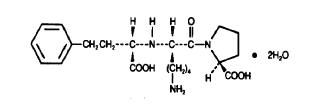
Lisinopril is an oral long-acting angiotensin converting enzyme inhibitor. Lisinopril, a synthetic peptide derivative, is chemically described as (S)-1-[N2 -(1-carboxy-3- phenylpropyl)-L-lysyl]-L-proline dihydrate. Its empirical formula is C21H31N3O5.2H2O and its structural formula is:
[image: MM1]Lisinopril is a white to off-white, crystalline powder, with a molecular weight of 441.53. It is soluble in water and sparingly soluble in methanol and practically insoluble in ethanol.
Lisinopril tablet is supplied as 2.5 mg, 5 mg, 10 mg, 20 mg, 30 mg and 40 mg tablets for oral administration.
Inactive Ingredients:
2.5 mg, 5 mg, 10 mg tablets - dibasic calcium phosphate dihydrate, povidone, pregelatinized starch, mannitol, colloidal silicon dioxide, corn starch, magnesium stearate.
20 mg, 30 mg, 40 mg tablets - dibasic calcium phosphate dihydrate, povidone, pregelatinized starch, mannitol, colloidal silicon dioxide, corn starch, magnesium stearate, ferric oxide yellow (for 20 mg), ferric oxide red (for 30 mg) and ferric oxide brown (for 40 mg).
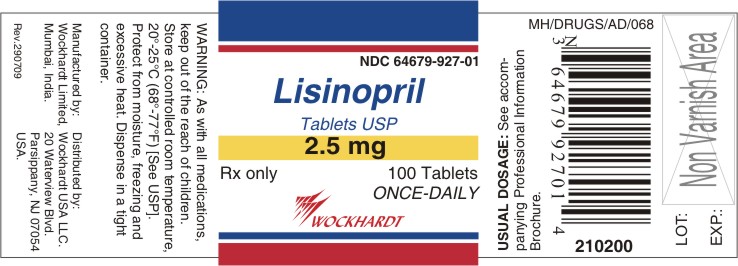
2.5 mg Tablets, white to off-white, round biconvex uncoated tablets debossed with "W" on one side and other side plain.
(NDC 64679-927-01) Bottles of 100 tablets
(NDC 64679-927-02) Bottles of 1000 tablets
(NDC 64679-927-03) Unit Dose Blister Package of 100
(NDC 64679-927-05) Bottles of 500 tablets
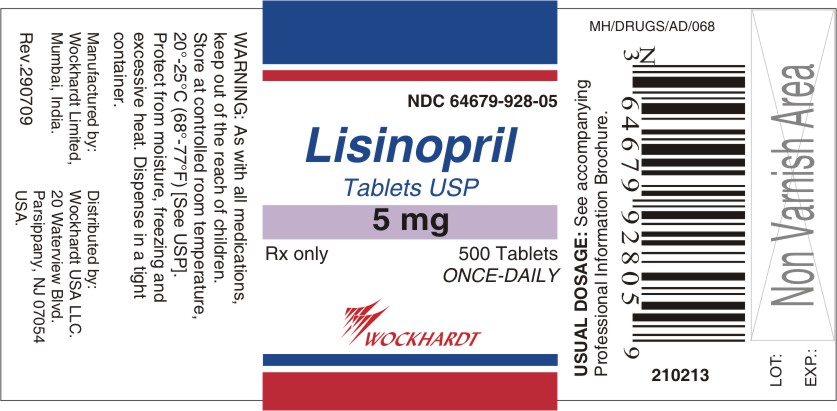
5 mg Tablets, white to off-white, round biconvex uncoated tablets debossed with W/928 on one side and breakline on other side.
(NDC 64679-928-01) Bottles of 100 tablets
(NDC 64679-928-02) Bottles of 3000 tablets
(NDC 64679-928-03) Unit Dose Blister Package of 100
(NDC 64679-928-05) Bottles of 500 tablets
(NDC 64679-928-06) Bottles of 1000 tablets
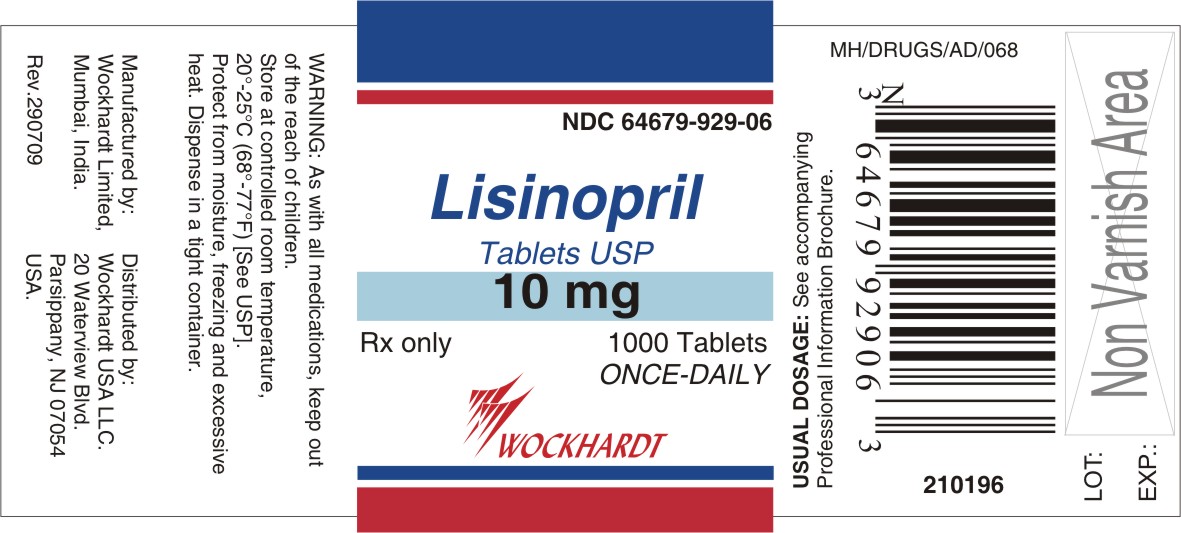
10 mg Tablets, white to off-white, round biconvex uncoated tablets debossed with W/929 on one side and other side plain.
(NDC 64679-929-01) Bottles of 100 tablets
(NDC 64679-929-02) Bottles of 3000 tablets
(NDC 64679-929-03) Unit Dose Blister Package of 100
(NDC 64679-929-05) Bottles of 500 tablets
(NDC 64679-929-06) Bottles of 1000 tablets
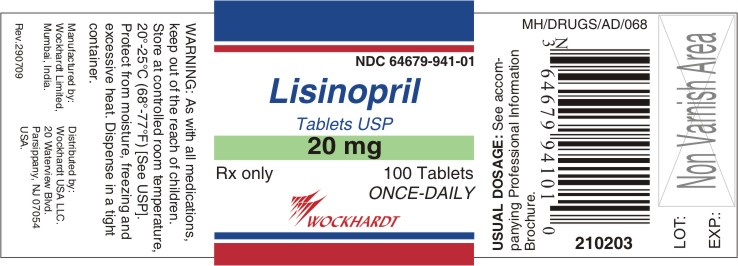
20 mg Tablets, mottled light yellow, round biconvex uncoated tablets debossed with W/941 on one side and other side plain.
(NDC 64679-941-01) Bottles of 100 tablets
(NDC 64679-941-02) Bottles of 3000 tablets
(NDC 64679-941-03) Unit Dose Blister Package of 100
(NDC 64679-941-05) Bottles of 500 tablets
(NDC 64679-941-06) Bottles of 1000 tablets
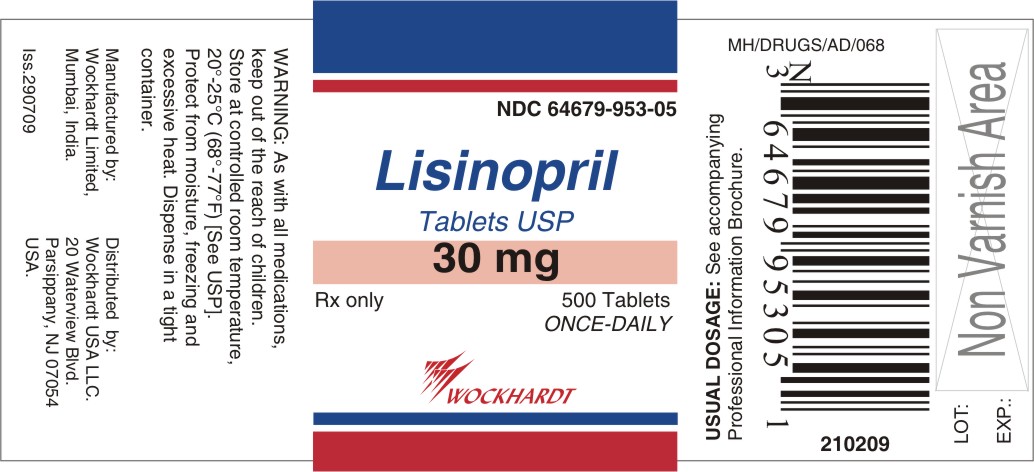
30 mg Tablets, mottled light red, round biconvex uncoated tablets debossed with W/953 on one side and other side plain.
(NDC 64679-953-01) Bottles of 100 tablets
(NDC 64679-953-02) Bottles of 1000 tablets
(NDC 64679-953-03) Unit Dose Blister Package of 100
(NDC 64679-953-05) Bottles of 500 tablets
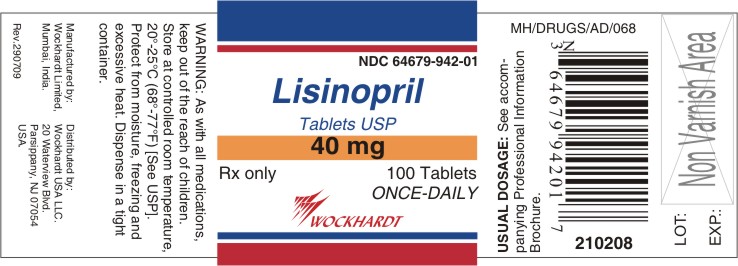
40 mg Tablets, mottled light brown, round biconvex uncoated tablets debossed with W/942 on one side and other side plain.
(NDC 64679-942-01) Bottles of 100 tablets
(NDC 64679-942-02) Bottles of 1000 tablets
(NDC 64679-942-03) Unit Dose Blister Package of 100
(NDC 64679-942-05) Bottles of 500 tablets
Photos of the product and/or packaging supplied by the manufacturer.
Lisinopril inhibits angiotensin-converting enzyme (ACE) in human subjects and animals. ACE is a peptidyl dipeptidase that catalyzes the conversion of angiotensin I to the vasoconstrictor substance, angiotensin II. Angiotensin II also stimulates aldosterone secretion by the adrenal cortex. The beneficial effects of lisinopril in hypertension and heart failure appear to result primarily from suppression of the reninangiotensin-aldosterone system. Inhibition of ACE results in decreased plasma angiotensin II which leads to decreased vasopressor activity and to decreased aldosterone secretion. The latter decrease may result in a small increase of serum potassium. In hypertensive patients with normal renal function treated with Lisinopril tablet alone for up to 24 weeks, the mean increase in serum potassium was approximately 0.1 mEq/L; however, approximately 15% of patients had increases greater than 0.5 mEq/L and approximately 6% had a decrease greater than 0.5 mEq/L. In the same study, patients treated with Lisinopril tablet and hydrochlorothiazide for up to 24 weeks had a mean decrease in serum potassium of 0.1 mEq/L; approximately 4% of patients had increases greater than 0.5 mEq/L and approximately 12% had a decrease greater than 0.5 mEq/L (See PRECAUTIONS). Removal of angiotensin II negative feedback on renin secretion leads to increased plasma renin activity.
ACE is identical to kininase, an enzyme that degrades bradykinin. Whether increased levels of bradykinin, a potent vasodepressor peptide, play a role in the therapeutic effects of Lisinopril tablet remains to be elucidated.
While the mechanism through which Lisinopril tablet lowers blood pressure is believed to be primarily suppression of the reninangiotensin-aldosterone system, Lisinopril tablet is antihypertensive even in patients with low-renin hypertension. Although Lisinopril tablet was antihypertensive in all races studied, Black hypertensive patients (usually a low-renin hypertensive population) had a smaller average response to monotherapy than non-Black patients.
Concomitant administration of Lisinopril tablet and hydrochlorothiazide further reduced blood pressure in Black and non-Black patients and any racial differences in blood pressure response were no longer evident.
Manufactured by:
Wockhardt Limited
Mumbai, India.
Distributed by:
Wockhardt USA LLC.
20 Waterview Blvd.
Parsippany, NJ 07054USA.
Rev.290709
Create a free account to view complete drug information, save medications, and more.
Free forever · No credit card required