 MedLens
Loading…
TABLETS safely and effectively. See full prescribing information for METFORMIN HYDROCHLORIDE EXTENDED-RELEASE TABLETS Initial U.S. Approval: 1995 · Unichem Pharmaceuticals (USA), Inc.
Dosage Form
TABLETS safely and effectively. See full prescribing information for METFORMIN HYDROCHLORIDE EXTENDED-RELEASE TABLETS Initial U.S. Approval: 1995
Manufacturer
Unichem Pharmaceuticals (USA), Inc.
This medication contains important usage instructions, warnings, and side effect information that you should review before use.
WARNING: LACTIC ACIDOSIS
Postmarketing cases of metformin-associated lactic acidosis have resulted in death, hypothermia, hypotension, and resistant bradyarrhythmias. The onset of metformin-associated lactic acidosis is often subtle, accompanied only by nonspecific symptoms such as malaise, myalgias, respiratory distress, somnolence, and abdominal pain. Metformin-associated lactic acidosis was characterized by elevated blood lactate levels (>5 mmol/Liter), anion gap acidosis (without evidence of ketonuria or ketonemia), an increased lactate/pyruvate ratio; and metformin plasma levels generally >5 mcg/mL [see Warnings and Precautions (5.1) ].
Risk factors for metformin-associated lactic acidosis include renal impairment, concomitant use of certain drugs (e.g. carbonic anhydrase inhibitors such as topiramate), age 65 years old or greater, having a radiological study with contrast, surgery and other procedures, hypoxic states (e.g., acute congestive heart failure), excessive alcohol intake, hepatic impairment and mitochondrial diseases [see Warnings and Precautions (5.1)].
Steps to reduce the risk of and manage metformin-associated lactic acidosis in these high risk groups are provided [see Dosage and Administration (2),Contraindications (4), Warnings and Precautions (5.1)].
If metformin-associated lactic acidosis is suspected, immediately discontinue metformin hydrochloride extended-release tablets and institute general supportive measures in a hospital setting. Prompt hemodialysis is recommended [see Warnings and Precautions (5.1) ].
Metformin hydrochloride extended-release tablets are indicated as an adjunct to diet and exercise to improve glycemic control in adults and pediatric patients 10 years of age and older with type 2 diabetes mellitus.
Metformin hydrochloride extended-release tablets, USP are available as:
Metformin hydrochloride extended-release tablets are contraindicated in patients with:
Table 2 presents clinically significant drug interactions with metformin hydrochloride extended-release tablets.
|
Carbonic Anhydrase Inhibitors
|
|
|
Clinical Impact:
|
Carbonic anhydrase inhibitors frequently cause a decrease in serum bicarbonate and induce non-anion gap, hyperchloremic metabolic acidosis. Concomitant use of these drugs with metformin hydrochloride extended-release tablets may increase the risk for lactic acidosis. |
|
Intervention:
|
Consider more frequent monitoring of these patients. |
|
Examples:
|
Topiramate, zonisamide, acetazolamide or dichlorphenamide. |
|
Drugs that Reduce metformin hydrochloride extended-release tablets
Clearance
|
|
|
Clinical Impact:
|
Concomitant use of drugs that interfere with common renal tubular transport systems involved in the renal elimination of metformin (e.g., organic cationic transporter-2 [OCT2] / multidrug and toxin extrusion [MATE] inhibitors) could increase systemic exposure to metformin and may increase the risk for lactic acidosis [see Clinical Pharmacology (12.3)].
|
|
Intervention:
|
Consider the benefits and risks of concomitant use with metformin hydrochloride extended-release tablets |
|
Examples:
|
Ranolazine, vandetanib, dolutegravir, and cimetidine. |
|
Alcohol
|
|
|
Clinical Impact:
|
Alcohol is known to potentiate the effect of metformin on lactate metabolism. |
|
Intervention:
|
Warn patients against excessive alcohol intake while receiving metformin hydrochloride extended-release tablets. |
|
Insulin Secretagogues or Insulin
|
|
|
Clinical Impact:
|
Coadministration of metformin hydrochloride extended-release tablets with an insulin secretagogue (e.g., sulfonylurea) or insulin may increase the risk of hypoglycemia. |
|
Intervention:
|
Patients receiving an insulin secretagogue or insulin may require lower doses of the insulin secretagogue or insulin. |
|
Drugs Affecting Glycemic Control
|
|
|
Clinical Impact:
|
Certain drugs tend to produce hyperglycemia and may lead to loss of glycemic control. |
|
Intervention:
|
When such drugs are administered to a patient receiving metformin hydrochloride extended-release tablets, observe the patient closely for loss of blood glucose control. When such drugs are withdrawn from a patient receiving metformin hydrochloride extended-release tablets, observe the patient closely for hypoglycemia. |
|
Examples:
|
Thiazides and other diuretics, corticosteroids, phenothiazines, thyroid products, estrogens, oral contraceptives, phenytoin, nicotinic acid, sympathomimetics, calcium channel blockers, and isoniazid. |
The following adverse reactions are also discussed elsewhere in the labeling:
Risk Summary:
Limited data with metformin hydrochloride extended-release tablets in pregnant women are not sufficient to determine a drug-associated risk for major birth defects or miscarriage. Published studies with metformin use during pregnancy have not reported a clear association with metformin and major birth defect or miscarriage risk [see Data]. There are risks to the mother and fetus associated with poorly controlled diabetes mellitus in pregnancy [see Clinical Considerations].
No adverse developmental effects were observed when metformin was administered to pregnant Sprague Dawley rats and rabbits during the period of organogenesis at doses up to 2-and 5-times, respectively, a 2550 mg clinical dose, based on body surface area [see Data].
The estimated background risk of major birth defects is 6–10% in women with pre-gestational diabetes mellitus with an HbA1C >7 and has been reported to be as high as 20–25% in women with a HbA1C >10. The estimated background risk of miscarriage for the indicated population is unknown. In the U.S. general population, the estimated background risk of major birth defects and miscarriage in clinically recognized pregnancies is 2–4% and 15–20%, respectively.
Clinical Considerations
Disease-associated maternal and/or embryo/fetal risk
Poorly-controlled diabetes mellitus in pregnancy increases the maternal risk for diabetic ketoacidosis, pre-eclampsia, spontaneous abortions, preterm delivery, stillbirth and delivery complications. Poorly controlled diabetes mellitus increases the fetal risk for major birth defects, stillbirth, and macrosomia related morbidity.
Data
Human Data
Published data from post-marketing studies have not reported a clear association with metformin and major birth defects, miscarriage, or adverse maternal or fetal outcomes when metformin was used during pregnancy. However, these studies cannot definitely establish the absence of any metformin-associated risk because of methodological limitations, including small sample size and inconsistent comparator groups.
Animal Data
Metformin hydrochloride did not adversely affect development outcomes when administered to pregnant rats and rabbits at doses up to 600 mg/kg/day. This represents an exposure of about 2 and 5 times a 2550 mg clinical dose based on body surface area comparisons for rats and rabbits, respectively. Determination of fetal concentrations demonstrated a partial placental barrier to metformin.
Safety and effectiveness of metformin hydrochloride extended-release tablets as an adjunct to diet and exercise to improve glycemic control in pediatric patients 10 years of age and older with type 2 diabetes mellitus have been established. Use of metformin hydrochloride extended-release tablets for this indication is supported by evidence from adequate and well-controlled trials of metformin hydrochloride immediate-release tablets in adults with additional data from a controlled clinical trial of metformin hydrochloride immediate-release tablets in pediatric patients 10 to 16 years old with type 2 diabetes mellitus.
The safety and effectiveness of metformin extended-release tablets for glycemic control in pediatric patients less than 10 years of age with type 2 diabetes mellitus have not been established.
Controlled clinical studies of metformin hydrochloride extended-release tablets did not include sufficient numbers of elderly patients to determine whether they respond differently from younger patients. In general, dose selection for an elderly patient should be cautious, usually starting at the low end of the dosing range, reflecting the greater frequency of decreased hepatic, renal, or cardiac function, and of concomitant disease or other drug therapy and the higher risk of lactic acidosis. Assess renal function more frequently in elderly patients [see Warnings and Precautions (5.1) ].
In the event of an overdose with metformin hydrochloride extended-release tablets, consider contacting the Poison Help line (1-800-222-1222) or a medical toxicologist for additional overdosage management recommendations.
Overdose of metformin hydrochloride has occurred, including ingestion of amounts greater than 50 grams. Hypoglycemia was reported in approximately 10% of cases, but no causal association with metformin has been established. Lactic acidosis has been reported in approximately 32% of metformin overdose cases [see Warnings and Precautions (5.1) ]. Metformin is dialyzable with a clearance of up to 170 mL/min under good hemodynamic conditions. Therefore, hemodialysis may be useful for removal of accumulated drug from patients in whom metformin overdosage is suspected.
PATIENT COUNSELING INFORMATION
Advise the patient to read the FDA-approved patient labeling (Patient Information).
Lactic Acidosis:
Explain the risks of lactic acidosis, its symptoms, and conditions that predispose to its development. Advise patients to discontinue metformin hydrochloride extended-release tablets immediately and to promptly notify their healthcare provider if unexplained hyperventilation, myalgias, malaise, unusual somnolence or other nonspecific symptoms occur. Counsel patients against excessive alcohol intake and inform patients about importance of regular testing of renal function while receiving metformin hydrochloride extended-release tablets. Instruct patients to inform their doctor that they are taking metformin hydrochloride extended-release tablets prior to any surgical or radiological procedure, as temporary discontinuation may be required [see Warnings and Precautions (5.1)].
Hypoglycemia
Inform patients that hypoglycemia may occur when metformin hydrochloride extended-release tablets is coadministered with oral sulfonylureas and insulin. Explain to patients receiving concomitant therapy the risks of hypoglycemia, its symptoms and treatment, and conditions that predispose to its development [see Warnings and Precautions (5.3)].
Vitamin B12 Deficiency:
Inform patients about importance of regular hematological parameters while receiving metformin hydrochloride extended-release tablets [see Warnings and Precautions (5.2)].
Females of Reproductive Age:
Inform females that treatment with metformin hydrochloride extended-release tablets may result in ovulation in some premenopausal anovulatory women which may lead to unintended pregnancy [see Use in Specific Populations (8.3)].
Metformin Hydrochloride Extended-Release Tablets Administration Information:
Inform patients that metformin hydrochloride extended-release tablets must be swallowed whole and not crushed, cut, or chewed, and that the inactive ingredients may occasionally be eliminated in the feces as a soft mass that may resemble the original tablet.
Manufactured by:
UNICHEM LABORATORIES LTD.
Pilerne Ind. Estate, Pilerne, Bardez,
Goa 403 511, India.
Manufactured for:
[image: IMGID1351]
East Brunswick, NJ 08816
04-R-04/2026
13016834
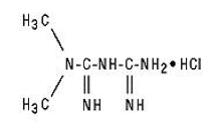
Metformin hydrochloride extended-release tablets, USP contain the antihyperglycemic agent metformin, which is a biguanide, in the form of monohydrochloride. The chemical name of metformin hydrochloride is N,N-dimethylimidodicarbonimidic diamide hydrochloride. The structural formula is as shown below:
[image: MM1]Metformin hydrochloride, USP is a white crystals or white crystalline powder with a molecular formula of C4H11N5 • HCl and a molecular weight of 165.62. It is freely soluble in water, slightly soluble in alcohol, practically insoluble in acetone, and in methylene chloride. The pKa of metformin hydrochloride is 2.8 and 11.5. The pH of a 5% aqueous solution of metformin hydrochloride is between 6 and 7.
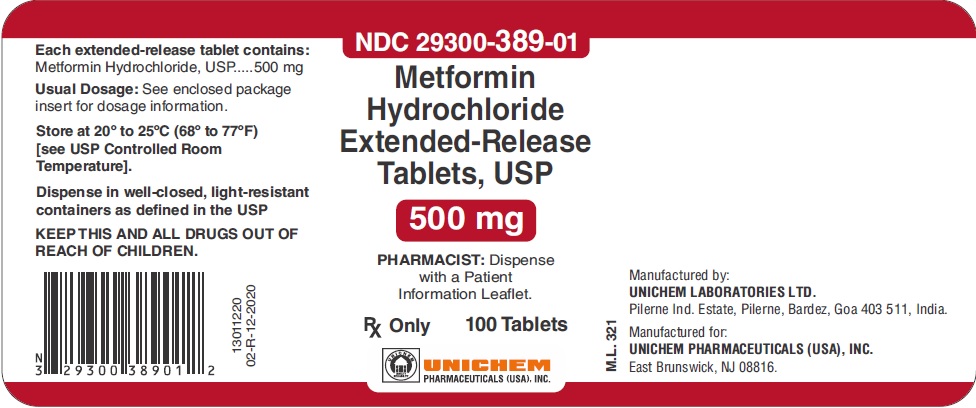
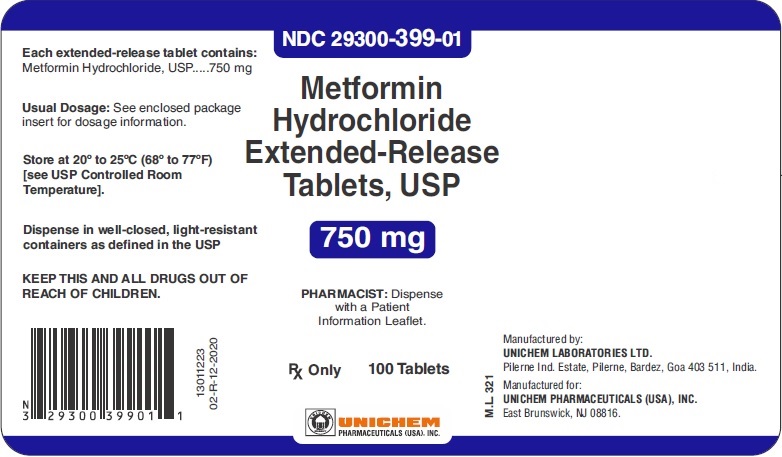
Metformin hydrochloride extended-release tablets, USP contain 500 mg or 750 mg of metformin hydrochloride, which is equivalent to 389.93 mg, 584.90 mg metformin base, respectively.
Metformin hydrochloride extended-release tablets, USP 500 mg and 750 mg contain the inactive ingredients carboxymethylcellulose sodium, hypromellose and magnesium stearate.
Meets USP Dissolution Test 22.
| Metformin Hydrochloride Extended-Release Tablets, USP |
|||
| 500 mg |
Bottles of 90 |
NDC 29300-389-19 |
White to off white slight mottled appearance, capsule shaped, biconvex tablets debossed with "389" on one side and "U" on other side. |
| Bottles of 100 |
NDC 29300-389-01 |
||
| Bottles of 500 |
NDC 29300-389-05 |
||
| Bottles of 1,000 |
NDC 29300-389-10 |
||
| 750 mg |
Bottles of 100 |
NDC 29300-399-01 |
White to off white slight mottled appearance, capsule shaped, biconvex tablets debossed with "399" on one side and "U" on other side |
| Bottles of 500 |
NDC 29300-399-05 |
Photos of the product and/or packaging supplied by the manufacturer.


Metformin is an antihyperglycemic agent which improves glucose tolerance in patients with type 2 diabetes mellitus, lowering both basal and postprandial plasma glucose. Metformin decreases hepatic glucose production, decreases intestinal absorption of glucose, and improves insulin sensitivity by increasing peripheral glucose uptake and utilization. With metformin therapy, insulin secretion remains unchanged while fasting insulin levels and day-long plasma insulin response may decrease.
Absorption
The absolute bioavailability of a metformin hydrochloride 500 mg tablet given under fasting conditions is approximately 50% to 60%. Studies using single oral doses of metformin hydrochloride tablet 500 to 1500 mg and 850 to 2550 mg, indicate that there is a lack of dose proportionality with increasing doses, which is due to decreased absorption rather than an alteration in elimination. At usual clinical doses and dosing schedules of metformin hydrochloride tablet, steady state plasma concentrations of metformin are reached within 24 to 48 hours and are generally <1 μg/mL.
Following a single oral dose of metformin hydrochloride extended-release tablet, Cmax is achieved with a median value of 7 hours and a range of 4 to 8 hours. Peak plasma levels are approximately 20% lower compared to the same dose of metformin hydrochloride tablet, however, the extent of absorption (as measured by AUC) is comparable to metformin hydrochloride tablet.
At steady state, the AUC and Cmax are less than dose proportional for metformin hydrochloride extended-release tablet within the range of 500 to 2000 mg administered once daily. Peak plasma levels are approximately 0.6, 1.1, 1.4 and 1.8 mcg/mL for 500, 1000, 1500, and 2000 mg once-daily doses, respectively. The extent of metformin absorption (as measured by AUC) from metformin hydrochloride extended-release tablet at a 2000 mg once-daily dose is similar to the same total daily dose administered as metformin hydrochloride tablets 1000 mg twice daily. After repeated administration of metformin hydrochloride extended-release tablets, metformin did not accumulate in plasma.
Effect of food: Food decreases the extent of absorption and slightly delays the absorption of metformin, as shown by approximately a 40% lower mean peak plasma concentration (Cmax), a 25% lower area under the plasma concentration versus time curve (AUC), and a 35-minute prolongation of time to peak plasma concentration (Tmax) following administration of a single 850 mg tablet of metformin hydrochloride tablet with food, compared to the same tablet strength administered fasting.
Although the extent of metformin absorption (as measured by AUC) from the metformin hydrochloride extended-release tablet increased by approximately 50% when given with food, there was no effect of food on Cmax and Tmax of metformin. Both high and low fat meals had the same effect on the pharmacokinetics of metformin hydrochloride extended-release tablets.
Distribution
The apparent volume of distribution (V/F) of metformin following single oral doses of metformin hydrochloride tablet 850 mg averaged 654 ± 358 L. Metformin is negligibly bound to plasma proteins. Metformin partitions into erythrocytes, most likely as a function of time.
Metabolism
Intravenous single-dose studies in normal subjects demonstrate that metformin is excreted unchanged in the urine and does not undergo hepatic metabolism (no metabolites have been identified in humans) nor biliary excretion.
Elimination
Renal clearance (see Table 3) is approximately 3.5 times greater than creatinine clearance, which indicates that tubular secretion is the major route of metformin elimination. Following oral administration, approximately 90% of the absorbed drug is eliminated via the renal route within the first 24 hours, with a plasma elimination half-life of approximately 6.2 hours. In blood, the elimination half-life is approximately 17.6 hours, suggesting that the erythrocyte mass may be a compartment of distribution.
Specific Populations
Patients With Renal Impairment
In patients with decreased renal function the plasma and blood half-life of metformin is prolonged and the renal clearance is decreased (see Table 3) [See (2.4), Contraindications (4), Warnings and Precautions (5.1) and Use in Specific Populations (8.6) ].
Patients With Hepatic Impairment
No pharmacokinetic studies of metformin have been conducted in patients with hepatic impairment [See Warnings and Precautions (5.1) and Use in Specific Populations (8.7) ].
Geriatric Patients
Limited data from controlled pharmacokinetic studies of metformin hydrochloride tablets in healthy elderly subjects suggest that total plasma clearance of metformin is decreased, the half-life is prolonged, and Cmax is increased, compared to healthy young subjects. It appears that the change in metformin pharmacokinetics with aging is primarily accounted for by a change in renal function (see Table 3). [See Warnings and Precautions (5.1) and Use in Specific Populations (8.5) ].
|
Subject Groups: Metformin Hydrochloride Tablets dosea
(number of subjects) |
Cmaxb (mcg/mL)
|
Tmaxc (hrs)
|
Renal Clearance (mL/min)
|
|
Healthy, nondiabetic adults:
500 mg single dose (24) 850 mg single dose (74)d 850 mg three times daily for 19 dosese (9) |
1.03 (±0.33) 1.60 (±0.38) 2.01 (±0.42) |
2.75 (±0.81) 2.64 (±0.82) 1.79 (±0.94) |
600 (±132) 552 (±139) 642 (±173) |
|
Adults with type 2 diabetes mellitus:
850 mg single dose (23) 850 mg three times daily for 19 dosese (9) |
1.48 (±0.5) 1.90 (±0.62) |
3.32 (±1.08) 2.01 (±1.22) |
491 (±138) 550 (±160) |
|
Elderlyf, healthy nondiabetic adults:
850 mg single dose (12) |
2.45 (±0.70) |
2.71 (±1.05) |
412 (±98) |
|
Renal-impaired adults:
850 mg single dose Mild (CLcrg 61-90 mL/min) (5) Moderate (CLcr 31-60 mL/min) (4) Severe (CLcr 10-30 mL/min) (6) |
1.86 (±0.52) 4.12 (±1.83) 3.93 (±0.92) |
3.20 (±0.45) 3.75 (±0.50) 4.01 (±1.10) |
384 (±122) 108 (±57) 130 (±90) |
aAll doses given fasting except the first 18 doses of the multiple dose studies
bPeak plasma concentration
cTime to peak plasma concentration
dCombined results (average means) of five studies: mean age 32 years (range 23-59 years)
e Kinetic study done following dose 19, given fasting
fElderly subjects, mean age 71 years (range 65-81 years)
gCLcr = creatinine clearance normalized to body surface area of 1.73 m2
Pediatric Patients
After administration of a single oral GLUCOPHAGE 500 mg tablet with food, geometric mean metformin Cmax and AUC differed less than 5% between pediatric patients (12-16 years of age) with type 2 diabetes mellitus and sex and weight-matched healthy adults (20-45 years of age), all with normal renal function.
Sex
Metformin pharmacokinetic parameters did not differ significantly between normal subjects and patients with type 2 diabetes mellitus when analyzed according to sex (males=19, females=16).
Race
No studies of metformin pharmacokinetic parameters according to race have been performed.
Drug Interaction Studies
In Vivo Assessment of Drug Interactions
|
Coadministered Drug
|
Dose of Coadministered Drug*
|
Dose of Metformin*
|
Geometric Mean Ratio
(ratio with/without coadministered drug) No Effect = 1.00 |
||
|
|
AUC†
|
Cmax
|
|||
|
No dosing adjustments required for the following:
|
|||||
| Glyburide |
5 mg |
850 mg |
metformin |
0.91‡ |
0.93‡ |
| Furosemide |
40 mg |
850 mg |
metformin |
1.09‡ |
1.22‡ |
| Nifedipine |
10 mg |
850 mg |
metformin |
1.16 |
1.21 |
| Propranolol |
40 mg |
850 mg |
metformin |
0.90 |
0.94 |
| Ibuprofen |
400 mg |
850 mg |
metformin |
1.05‡ |
1.07‡ |
|
Cationic drugs eliminated by renal tubular secretion may reduce metformin elimination [See Warnings and Precautions (5.1) and Drug Interactions (7).] |
|||||
| Cimetidine |
400 mg |
850 mg |
metformin |
1.40 |
1.61 |
|
Carbonic anhydrase inhibitors may cause metabolic acidosis [See
Warnings and
Precautions (5.1) and Drug Interactions (7)] |
|||||
| Topiramate |
100 mg§ |
500 mg§ |
metformin |
1.25§ |
1.17 |
* All metformin and coadministered drugs were given as single doses
† AUC = AUC(INF)
‡ Ratio of arithmetic means
§At steady state with topiramate 100 mg every 12 hours and metformin 500 mg every 12 hours; AUC = AUC0-12h
|
*All metformin and coadministered drugs were given as single doses |
|||||
|
†AUC = AUC(INF) unless otherwise noted |
|||||
|
‡ Ratio of arithmetic means, p-value of difference <0.05 |
|||||
|
§AUC(0-24 hr) reported |
|||||
|
¶ Ratio of arithmetic means |
|||||
|
Coadministered Drug
|
Dose of Coadministered Drug
*
|
Dose of Metformin
*
|
Geometric Mean Ratio
(ratio with/without metformin) No Effect = 1.00 |
||
|
|
AUC†
|
Cmax
|
|||
|
No dosing adjustments required for the following:
|
|||||
| Glyburide |
5 mg |
850 mg |
glyburide |
0.78‡
|
0.63‡
|
| Furosemide |
40 mg |
850 mg |
furosemide |
0.87‡
|
0.69‡
|
| Nifedipine |
10 mg |
850 mg |
nifedipine |
1.10§
|
1.08 |
| Propranolol |
40 mg |
850 mg |
propranolol |
1.01§
|
1.02 |
| Ibuprofen |
400 mg |
850 mg |
ibuprofen |
0.97¶
|
1.01¶
|
| Cimetidine |
400 mg |
850 mg |
cimetidine |
0.95§
|
1.01 |
Long-term carcinogenicity studies have been performed in rats (dosing duration of 104 weeks) and mice (dosing duration of 91 weeks) at doses up to and including 900 mg/kg/day and 1500 mg/kg/day, respectively. These doses are both approximately 3 times the maximum recommended human daily dose of 2550 mg based on body surface area comparisons. No evidence of carcinogenicity with metformin was found in either male or female mice. Similarly, there was no tumorigenic potential observed with metformin in male rats. There was, however, an increased incidence of benign stromal uterine polyps in female rats treated with 900 mg/kg/day.
There was no evidence of a mutagenic potential of metformin in the following in vitro tests: Ames test (S. typhimurium), gene mutation test (mouse lymphoma cells), or chromosomal aberrations test (human lymphocytes). Results in the in vivo mouse micronucleus test were also negative.
Fertility of male or female rats was unaffected by metformin when administered at doses as high as 600 mg/kg/day, which is approximately 2 times the maximum recommended human daily dose of 2550 mg based on body surface area comparisons.
Create a free account to view complete drug information, save medications, and more.
Free forever · No credit card required