 MedLens
Loading…
Generic name: Neomycin sulfate and Polymyxin B Sulfate, Bacitracin Zinc and Hydrocortisone
Ointment, USP(Sterile) · Phoenix Pharmaceutical, Inc.
Dosage Form
Ointment, USP(Sterile)
Manufacturer
Phoenix Pharmaceutical, Inc.
This medication contains important usage instructions, warnings, and side effect information that you should review before use.
Neomycin and polymyxin B sulfates, bacitracin zinc and hydrocortisone ophthalmic ointment is indicated for steroid-responsive inflammatory ocular conditions for which a corticosteroid is indicated and where bacterial infection or a risk of bacterial infection exists.
Ocular corticosteroids are indicated in inflammatory conditions of the palpebral and bulbar conjunctiva, cornea, and anterior segment of the globe where the inherent risk of corticosteroid use in certain infective conjunctivitides is accepted to obtain a diminution in edema and inflammation. They are also indicated in chronic anterior uveitis and corneal injury from chemical, radiation, or thermal burns, or penetration of foreign bodies.
The use of a combination drug with an anti-infective component is indicated where the risk of infection is high or where there is an expectation that potentially dangerous numbers of bacteria will be present in the eye (see CLINICAL PHARMACOLOGY: Microbiology).
The particular anti-infective drugs in this product are active against the following common bacterial eye pathogens: Staphylococcus aureus, streptococci, including Streptococcus pneumoniae, Escherichia coli, Haemophilus influenzae, Klebsiella-Enterobacter species, Neisseria species, and Pseudomonas aeruginosa. The product does not provide adequate coverage against Serratia marcescens.
Apply the ointment in the affected eye every 3 or 4 hours, depending on the severity of the condition.
Not more than 8 grams should be prescribed initially and the prescription should not be refilled without further evaluation as outlined in PRECAUTIONS: above.
Neomycin and polymyxin B sulfates, bacitracin zinc and hydrocortisone ophthalmic ointment is contraindicated in most viral diseases of the cornea and conjunctiva including: epithelial herpes simplex keratitis (dendritic keratitis), vaccinia and varicella, and also in mycobacterial infection of the eye and fungal diseases of ocular structures.
This product is also contraindicated in individuals who have shown hypersensitivity to any of its components. Hypersensitivity to the antibiotic component occurs at a higher rate than for other components.
Adverse reactions have occurred with corticosteroid/anti-infective combination drugs which can be attributed to the corticosteroid component, the anti-infective component, or the combination. The exact incidence is not known.
Reactions occurring most often from the presence of the anti-infective ingredient are allergic sensitization reactions including itching, swelling and conjunctival erythema (see WARNINGS). More serious hypersensitivity reactions, including anaphylaxis, have been reported rarely.
The reactions due to the corticosteroid component in decreasing order of frequency are: elevation of intraocular pressure (IOP) with possible development of glaucoma, and infrequent optic nerve damage; posterior subcapsular cataract formation; and delayed wound healing.
It is not known whether topical administration of corticosteroids could result in sufficient systemic absorption to produce detectable quantities in human milk. Systemically administered corticosteroids appear in human milk and could suppress growth, interfere with endogenous corticosteroid production, or cause other untoward effects. Because of the potential for serious adverse reactions in nursing infants from neomycin and polymyxin B sulfates, bacitracin zinc and hydrocortisone ophthalmic ointment, a decision should be made whether to discontinue nursing or to discontinue the drug, taking into account the importance of the drug to the mother.
Safety and effectiveness in pediatric patients have not been established.
Store between 15° - 30°C (59°- 86°F).
KEEP OUT OF REACH OF CHILDREN.
Rx only
Revised November 2007
Bausch & Lomb Incorporated
Tampa, FL 33637
©Bausch & Lomb Incorporated
9113800 (Folded)
9113900 (Flat)
Patients should be instructed to avoid allowing the tip of the dispensing container to contact the eye, eyelid, fingers, or any other surface. The use of this product by more than one person may spread infection.
Patients should also be instructed that ocular products, if handled improperly, can become contaminated by common bacteria known to cause ocular infections. Serious damage to the eye and subsequent loss of vision may result from using contaminated products (see PRECAUTIONS: General).
If the condition persists or gets worse, or if a rash or allergic reaction develops, the patient should be advised to stop use and consult a physician. Do not use this product if you are allergic to any of the listed ingredients.
Keep tightly closed when not in use. Keep out of the reach of children.
Neomycin and Polymyxin B Sulfates, Bacitracin Zinc and Hydrocortisone Ophthalmic Ointment, USP is a sterile antimicrobial and anti-inflammatory ointment for ophthalmic use.
Each Gram Contains: ACTIVES: Neomycin sulfate (equivalent to 3.5 mg neomycin base), Polymyxin B Sulfate equivalent to 10,000 polymyxin B units, Bacitracin Zinc equivalent to 400 bacitracin units, Hydrocortisone 10 mg (1%); INACTIVES: White Petrolatum, Mineral Oil.
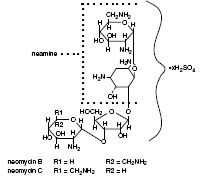
Neomycin sulfate is the sulfate salt of neomycin B and C, which are produced by the growth of Streptomyces fradiae Waksman (Fam. Streptomycetaceae). It has a potency equivalent of not less than 600 mcg of neomycin standard per mg, calculated on an anhydrous basis.
The structural formulae are:
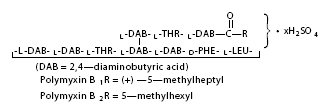
[image: id_9225cc96-8371-4364-a672-3b92b53f395a]Polymyxin B sulfate is the sulfate salt of polymyxin B1 and B2, which are produced by the growth of Bacillus polymyxa (Prazmowski) Migula (Fam. Bacillaceae). It has a potency of not less than 6,000 polymyxin B units per mg, calculated on an anhydrous basis.
The structural formulae are:
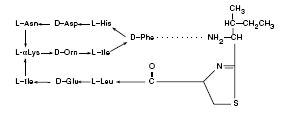
[image: id_8df6ed7d-bffd-4956-a9cb-3f181d5c589d]Bacitracin zinc is the zinc salt of bacitracin, a mixture of related cyclic polypeptides (mainly bacitracin A) produced by the growth of an organism of the licheniformis group of Bacillus subtilis var Tracy. It has a potency of not less than 40 bacitracin units per mg.
The structural formula is:
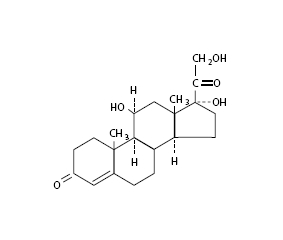
[image: id_eb726fc0-9a61-4b04-867d-a52a83c39e07]Hydrocortisone, 11β, 17, 21-trihydroxypregn-4-ene-3, 20-dione, is an anti-inflammatory hormone.
Its structural formula is:
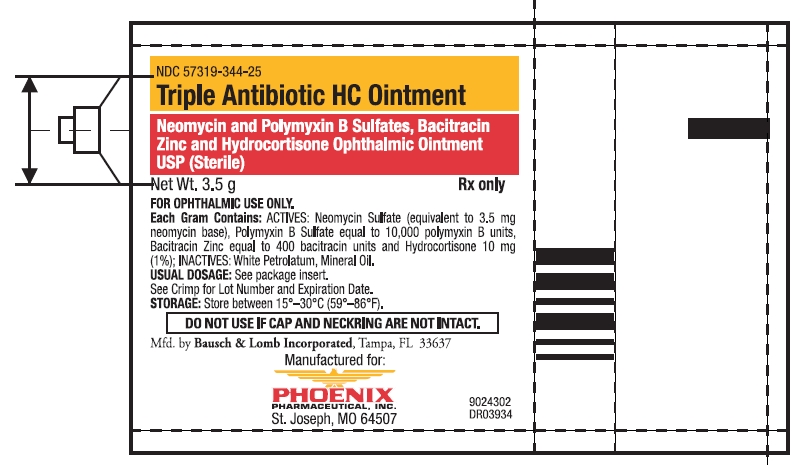
[image: id_ade48e58-464a-4ae6-ab7d-a130c19208cc]NDC 57319-344-25
Triple Antibiotic HC Ointment
Neomycin and Polymyxin B Sulfates, Bacitracin Zinc and Hydrocortisone Ophthalmic Ointment USP (Sterile)
Net Wt. 3.5 g
Rx only
Neomycin and Polymyxin B Sulfates, Bacitracin Zinc and Hydrocortisone Ophthalmic Ointment, USP is supplied in a tube with ophthalmic tip applicator in the following size:
3.5 g - Prod. No. 03934.
DO NOT USE IF CAP AND NECKRING ARE NOT INTACT.
FOR OPHTHALMIC USE ONLY
Photos of the product and/or packaging supplied by the manufacturer.
Corticosteroids suppress the inflammatory response to a variety of agents and they probably delay or slow healing. Since corticosteroids may inhibit the body’s defense mechanism against infection, concomitant antimicrobial drugs may be used when this inhibition is considered to be clinically significant in a particular case.
When a decision to administer both a corticosteroid and antimicrobials is made, the administration of such drugs in combination has the advantage of greater patient compliance and convenience, with the added assurance that the appropriate dosage of all drugs is administered. When each type of drug is in the same formulation, compatibility of ingredients is assured and the correct volume of drug is delivered and retained.
The relative potency of corticosteroids depends on the molecular structure, concentration and release from the vehicle.
Long-term studies in animals to evaluate carcinogenic or mutagenic potential have not been conducted with polymyxin B sulfate or bacitracin. Treatment of cultured human lymphocytes in vitro with neomycin increased the frequency of chromosome aberrations at the highest concentration (80 mcg /mL) tested; however, the effects of neomycin on carcinogenesis and mutagenesis in humans are unknown.
Long-term studies in animals (rats, rabbits, mice) showed no evidence of carcinogenicity or mutagenicity attributable to oral administration of corticosteroids. Long-term animal studies have not been performed to evaluate the carcinogenic potential of topical corticosteroids. Studies to determine mutagenicity with hydrocortisone have revealed negative results.
Polymyxin B has been reported to impair the motility of equine sperm, but its effects on male or female fertility are unknown. No adverse effects on male or female fertility, litter size or survival were observed in rabbits given bacitracin zinc 100 gm/ton of diet. Long-term animal studies have not been performed to evaluate the effect on fertility of topical corticosteroids.
The development of secondary infection has occurred after use of combinations containing corticosteroids and antimicrobials. Fungal and viral infections of the cornea are particularly prone to develop coincidentally with long-term applications of a corticosteroid. The possibility of fungal invasion must be considered in any persistent corneal ulceration where corticosteroid treatment has been used.
Local irritation on instillation has also been reported.
Create a free account to view complete drug information, save medications, and more.
Free forever · No credit card required