 MedLens
Loading…
RedPharm Drug Inc.
Dosage Form
N/A
Manufacturer
RedPharm Drug Inc.
This medication contains important usage instructions, warnings, and side effect information that you should review before use.
Amoxicillin/clavulanate potassium is indicated in the treatment of infections caused by susceptible strains of the designated organisms in the conditions listed below:
Lower Respiratory Tract Infections - caused by β-lactamase-producing strains of H. influenzae and M. catarrhalis.
Otitis Media - caused by β-lactamase-producing strains of H. influenzae and M. catarrhalis.
Sinusitis - caused by β-lactamase-producing strains of H. influenzae and M. catarrhalis.
Skin and Skin Structure Infections - caused by β-lactamase-producing strains of S. aureus, E. coli and Klebsiella spp.
Urinary Tract Infections - caused by β-lactamase-producing strains of E. coli, Klebsiella spp. and Enterobacter spp.
While amoxicillin/clavulanate potassium is indicated only for the conditions listed above, infections caused by ampicillin-susceptible organisms are also amenable to amoxicillin/clavulanate potassium treatment due to its amoxicillin content, therefore, mixed infections caused by ampicillin-susceptible organisms and β-lactamase-producing organisms susceptible to amoxicillin/clavulanate potassium should not require the addition of another antibiotic. Because amoxicillin has greater in vitro activity against S. pneumoniae than does ampicillin or penicillin, the majority of S. pneumoniae strains with intermediate susceptibility to ampicillin or penicillin are fully susceptible to amoxicillin and amoxicillin/clavulanate potassium. (See Microbiology.)
To reduce the development of drug-resistant bacteria and maintain the effectivness of amoxicillin/clavulanate potassium and other antibacterial drugs, amoxicillin/clavulanate potassium should be used only to treat or prevent infections, that are proven or strongly suspected to be caused by susceptible bacteria.When culture and susceptibility information are available, they should be considered in selecting or modifying antibacterial therapy. In the absence of such data, local epidemiology and susceptibility patterns may contribute to the empiric selection of therapy.
Bacteriological studies, to determine the causative organisms and their susceptibility to amoxicillin/clavulanate potassium, should be performed together with any indicated surgical procedures.
Since both the Amoxicillin and Clavulanate Potassium Tablets, 250 mg/125 mg and 500 mg/125 mg contain the same amount of clavulanic acid (125 mg, as the potassium salt), two Amoxicillin and Clavulanate Potassium Tablets 250 mg/125 mg are not equivalent to one Amoxicillin and Clavulanate Potassium Tablet, USP (amoxicillin, 500 mg, as the trihydrate and clavulanic acid, 125 mg, as clavulanate potassium); therefore, two Amoxicillin and Clavulanate Potassium Tablets 250 mg/125 mg should not be substituted for one Amoxicillin and Clavulanate Potassium Tablet, USP (amoxicillin, 500 mg, as the trihydrate and clavulanic acid, 125 mg, as clavulanate potassium) .
Dosage AdultsThe usual adult dose is one Amoxicillin and Clavulanate Potassium Tablet, USP (amoxicillin, 500 mg, as the trihydrate and clavulanic acid, 125 mg, as clavulanate potassium) every 12 hours or one Amoxicillin and Clavulanate Potassium Tablet 250 mg/125 mg every 8 hours. For more severe infections and infections of the respiratory tract, the dose should be one Amoxicillin and Clavulanate Potassium Tablet, USP (amoxicillin, 875 mg, as the trihydrate and clavulanic acid, 125 mg, as clavulanate potassium) every 12 hours or one Amoxicillin and Clavulanate Potassium Tablet, USP (amoxicillin, 500 mg, as the trihydrate and clavulanic acid, 125 mg, as clavulanate potassium) every 8 hours.
Patients with impaired renal function do not generally require a reduction in dose unless the impairment is severe. Severely impaired patients with a glomerular filtration rate of less than 30 mL/minute should not receive the 875 mg tablet. Patients with a glomerular filtration rate of 10 to 30 mL/minute should receive 500 mg/125 mg or 250 mg/125 mg every 12 hours, depending on the severity of the infection. Patients with a less than 10 mL/minute glomerular filtration rate should receive 500 mg/125 mg or 250 mg/125 mg every 24 hours, depending on severity of the infection.
Hemodialysis patients should receive 500 mg/125 mg or 250 mg/125 mg every 24 hours, depending on severity of the infection. They should receive an additional dose both during and at the end of dialysis.
Hepatically impaired patients should be dosed with caution and hepatic function monitored at regular intervals. (See WARNINGS .)
Pediatric PatientsPediatric patients weighing 40 kg or more should be dosed according to the adult commendations
Due to the different amoxicillin to clavulanic acid ratios in the Amoxicillin and Clavulanate Potassium Tablet 250 mg/125 mg versus the Amoxicillin and Clavulanate Potassium Chewable Tablet 250 mg/62.5, the Amoxicillin and Clavulanate Potassium Tablet 250 mg/125 mg should not be used until the pediatric patient weighs at least 40 kg or more.
AdministrationAmoxicillin and Clavulanate Potassium Tablet may be taken without regard to meals; however, absorption of clavulanate potassium is enhanced when Amoxicillin and Clavulanate Potassium Tablet is administered at the start of a meal. To minimize the potential for gastrointestinal intolerance, Amoxicillin and Clavulanate Potassium Tablet should be taken at the start of a meal.
Probenecid decreases the renal tubular secretion of amoxicillin. Concurrent use with amoxicillin/clavulanate potassium may result in increased and prolonged blood levels of amoxicillin. Coadministration of probenecid cannot be recommended.
The concurrent administration of allopurinol and ampicillin increases substantially the incidence of rashes in patients receiving both drugs as compared to patients receiving ampicillin alone. It is not known whether this potentiation of ampicillin rashes is due to allopurinol or the hyperuricemia present in these patients. There are no data with amoxicillin/clavulanate potassium and allopurinol administered concurrently.
In common with other broad-spectrum antibiotics, amoxicillin/clavulanate potassium may reduce the efficacy of oral contraceptives.
Amoxicillin/clavulanate potassium is generally well tolerated. The majority of side effects observed in clinical trials were of a mild and transient nature and less than 3% of patients discontinued therapy because of drug-related side effects. The most frequently reported adverse effects were diarrhea/loose stools (9%), nausea (3%), skin rashes and urticaria (3%), vomiting (1%) and vaginitis (1%). The overall incidence of side effects, and in particular diarrhea, increased with the higher recommended dose. Other less frequently reported reactions include: abdominal discomfort, flatulence and headache.
The following adverse reactions have been reported for ampicillin-class antibiotics:
GastrointestinalDiarrhea, nausea, vomiting, indigestion, gastritis, stomatitis, glossitis, black “hairy” tongue, mucocutaneous candidiasis, enterocolitis, and hemorrhagic/pseudomembranous colitis. Onset of pseudomembranous colitis symptoms may occur during or after antibiotic treatment. (See WARNINGS .)
Hypersensitivity ReactionsSkin rashes, pruritus, urticaria, angioedema, serum sickness-like reactions (urticaria or skin rash accompanied by arthritis, arthralgia, myalgia and frequently fever), erythema multiforme (rarely Stevens-Johnson Syndrome), acute generalized exanthematous pustulosis, and an occasional case of exfoliative dermatitis (including toxic epidermal necrolysis) have been reported. These reactions may be controlled with antihistamines and, if necessary, systemic corticosteroids. Whenever such reactions occur, the drug should be discontinued, unless the opinion of the physician dictates otherwise. Serious and occasional fatal hypersensitivity (anaphylactic) reactions can occur with oral penicillin. (See WARNINGS.)
LiverA moderate rise in AST (SGOT) and/or ALT (SGPT) has been noted in patients treated with ampicillin class antibiotics but the significance of these findings is unknown. Hepatic dysfunction, including increases in serum transaminases (AST and/or ALT), serum bilirubin and/or alkaline phosphatase, has been infrequently reported with amoxicillin/clavulanate potassium. It has been reported more commonly in elderly, in males, or in patients on prolonged treatment. The histologic findings on liver biopsy have consisted of predominantly cholestatic, hepatocellular, or mixed cholestatic-hepatocellular changes. The onset of signs/symptoms of hepatic dysfunction may occur during or several weeks after therapy has been discontinued. The hepatic dysfunction, which may be severe, is usually reversible. On rare occasions, deaths have been reported (less than 1 death reported per estimated 4 million prescriptions worldwide). These have generally been cases associated with serious underlying diseases or concomitant medications.
RenalInterstitial nephritis and hematuria have been reported rarely. Crystalluria has also been reported (see OVERDOSAGE ).
Hemic and Lymphatic SystemsAnemia, including hemolytic anemia, thrombocytopenia, thrombocytopenic purpura, eosinophilia, leukopenia and agranulocytosis have been reported during therapy with penicillins. These reactions are usually reversible on discontinuation of therapy and are believed to be hypersensitivity phenomena. A slight thrombocytosis was noted in less than 1% of the patients treated with amoxicillin/clavulanate potassium. There have been rare reports of increased prothrombin time in patients receiving amoxicillin/clavulanate potassium and anticoagulant therapy concomitantly.
Central Nervous SystemAgitation, anxiety, behavioral changes, confusion, convulsions, dizziness, insomnia, and reversible hyperactivity have been reported rarely.
MiscellaneousTooth discoloration (brown, yellow, or gray staining) has been rarely reported. Most reports occured in pediatric patients. Discolorations was reduced or eliminated with brushing or dental cleaning in most cases.
An analysis of clinical studies of Amoxicillin and Clavulanate Potassium Tablets was conducted to determine whether subjects aged 65 and over respond differently from younger subjects. Of the 3,119 patients in this analysis, 68% were less than 65 years old, 32% were ≥ 65 years old and 14% were ≥ 75 years old. This analysis and other reported clinical experience have not identified differences in responses between the elderly and younger patients, but a greater sensitivity of some older individuals cannot be ruled out.
This drug is known to be substantially excreted by the kidney, and the risk of toxic reactions to this drug may be greater in patients with impaired renal function. Because elderly patients are more likely to have decreased renal function, care should be taken in dose selection, and it may be useful to monitor renal function.
Following overdosage, patients have experienced primarily gastrointestinal symptoms including stomach and abdominal pain, vomiting, and diarrhea. Rash, hyperactivity, or drowsiness have also been observed in a small number of patients.
In the case of overdosage, discontinue amoxicillin/clavulanate potassium, treat symptomatically, and institute supportive measures as required. If the overdosage is very recent and there is no contraindication, an attempt at emesis or other means of removal of drug from the stomach may be performed. A prospective study of 51 pediatric patients at a poison center suggested that overdosages of less than 250 mg/kg of amoxicillin are not associated with significant clinical symptoms and do not require gastric emptying.3 Interstitial nephritis resulting in oliguric renal failure has been reported in a small number of patients after overdosage with amoxicillin.
Crystalluria, in some cases leading to renal failure, has also been reported after amoxicillin overdosage in adult and pediatric patients. In case of overdosage, adequate fluid intake and diuresis should be maintained to reduce the risk of amoxicillin crystalluria.
Renal impairment appears to be reversible with cessation of drug administration. High blood levels may occur more readily in patients with impaired renal function because of decreased renal clearance of both amoxicillin and clavulanate. Both amoxicillin and clavulanate are removed from the circulation by hemodialysis. (See DOSAGE AND ADMINISTRATION for recommended dosing for patients with impaired renal function.)
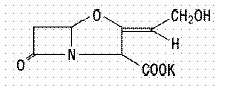
Each film coated tablet contains 500 mg amoxicillin as the trihydrate and 125 mg clavulanic acid as the potassium salt or 875 mg amoxicillin as the trihydrate and 125 mg clavulanic acid as the potassium salt. In addition, each 500 mg/125 mg and 875 mg/125 mg amoxicillin and clavulanate potassium tablet contains 0.63 mEq potassium.
Inactive Ingredients: Colloidal silicon dioxide, croscarmellose sodium dried, crospovidone dried, ethylcellulose, hydroxypropyl cellulose, magnesium stearate, microcrystalline cellulose dried, polysorbate 80, talc, titanium dioxide, triethyl citrat.
Amoxicillin and Clavulanate Potassium Tablets, USP 875/125 mg are white to off-white, oblong film coated tablets with beveled edges, scored and debossed with 875/125 on one side and AMC on the other side.
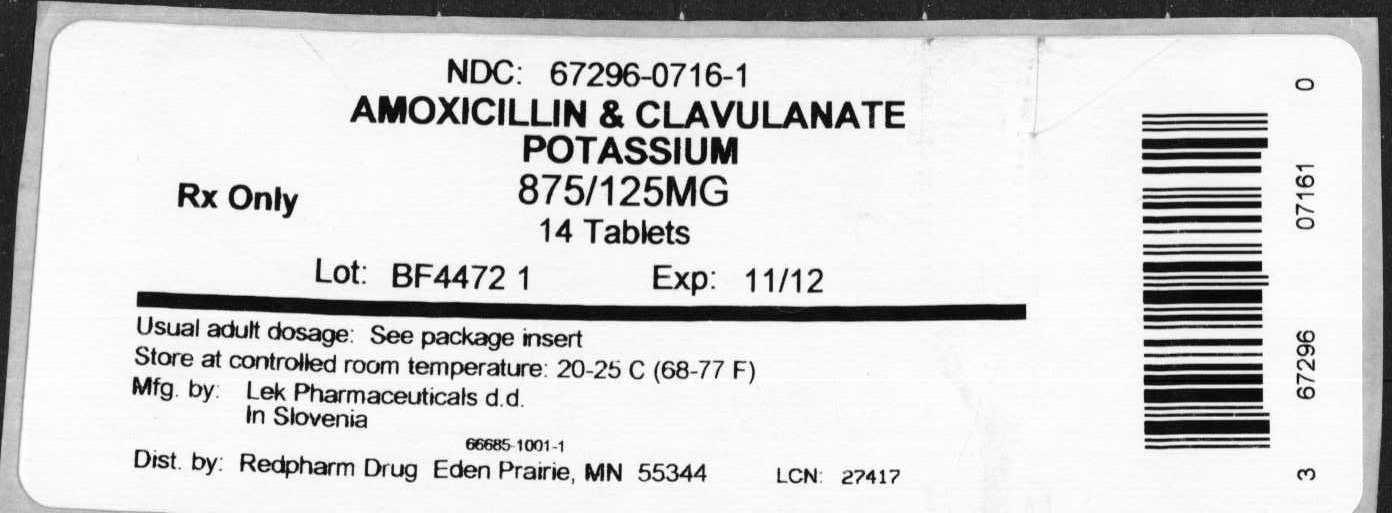
They are supplied in plastic bottles of 14 tablets.
Store tablets at 20 - 25°C (68 - 77°F) [See USP Controlled Room Temperature]. Dispense in tightly closed, moisture-proof containers.
Photos of the product and/or packaging supplied by the manufacturer.
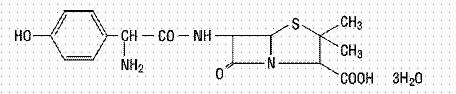
AMOXICILLIN, 875 mg, as the trihydrate and CLAVULANIC ACID, 125 mg, as
clavulanate potassium
Rx only
Amoxicillin and clavulanate potassium are well absorbed from the gastrointestinal tract after oral administration of amoxicillin/clavulanate potassium. Dosing in the fasted or fed state has minimal effect on the pharmacokinetics of amoxicillin. While amoxicillin/clavulanate potassium can be given without regard to meals, absorption of clavulanate potassium when taken with food is greater relative to the fasted state. In 1 study, the relative bioavailability of clavulanate was reduced when amoxicillin/clavulanate potassium was dosed at 30 and 150 minutes after the start of a high-fat breakfast. The safety and efficacy of amoxicillin/clavulanate potassium have been established in clinical trials where amoxicillin/clavulanate potassium was taken without regard to meals.
Mean* amoxicillin and clavulanate potassium pharmacokinetic parameters are shown in the table below:
| Dose† and regimen |
AUC0-24 (mcg·hr/mL) |
Cmax (mcg/mL) | ||
| amoxicillin/clavulanate potassium |
amoxicillin (± S.D.) |
clavulanate potassium (± S.D.) |
amoxicillin (± S.D.) |
clavulanate potassium (± S.D.) |
| 250/125 mg q8h | 26.7 ± 4.56 | 12.6 ±3.25 | 3.3 ± 1.12 | 1.5 ± 0.70 |
| 500/125 mg q12h | 33.4 ± 6.76 | 8.6 ± 1.95 | 6.5 ± 1.41 | 1.8 ± 0.61 |
| 500/125 mg q8h | 53.4 ± 8.87 | 15.7 ± 3.86 | 7.2 ± 2.26 | 2.4 ± 0.83 |
| 875/125 mg q12h | 53.5 ± 12.31 | 10.2 ± 3.04 | 11.6 ± 2.78 | 2.2 ± 0.99 |
*Mean values of 14 normal volunteers (n=15 for clavulanate potassium in the low-dose regimens). Peak concentrations occurred approximately 1.5 hours after the dose.
† Administered at the start of a light meal.
Amoxicillin serum concentrations achieved with amoxicillin/clavulanate potassium are similar to those produced by the oral administration of equivalent doses of amoxicillin alone. The half-life of amoxicillin after the oral administration of amoxicillin/clavulanate potassium is 1.3 hours and that of clavulanic acid is 1.0 hour.
Approximately 50% to 70% of the amoxicillin and approximately 25% to 40% of the clavulanic acid are excreted unchanged in urine during the first 6 hours after administration of a single 250-mg or 500-mg tablet of amoxicillin/clavulanate potassium.
Concurrent administration of probenecid delays amoxicillin excretion but does not delay renal excretion of clavulanic acid.
Neither component in amoxicillin/clavulanate potassium is highly protein-bound; clavulanic acid has been found to be approximately 25% bound to human serum and amoxicillin approximately 18% bound.
Amoxicillin diffuses readily into most body tissues and fluids with the exception of the brain and spinal fluid. The results of experiments involving the administration of clavulanic acid to animals suggest that this compound, like amoxicillin, is well distributed in body tissues.
Mutagenesis:
The mutagenic potential of amoxicillin/clavulanate potassium was investigated in vitro with an Ames test, a human lymphocyte cytogenetic assay, a yeast test and a mouse lymphoma forward mutation assay, and in vivo with mouse micronucleus tests and a dominant lethal test. All were negative apart from the in vitro mouse lymphoma assay where weak activity was found at very high, cytotoxic concentrations.
Impairment of Fertility:
Amoxicillin/clavulanate potassium at oral doses of up to 1200 mg/kg/day (5.7 times the maximum human dose, 1480 mg/m2/day, based on body surface area) was found to have no effect on fertility and reproductive performance in rats, dosed with a 2:1 ratio formulation of amoxicillin:clavulanate.
Teratogenic effects. Pregnancy (Category B):
Reproduction studies performed in pregnant rats and mice given amoxicillin/clavulanate potassium at oral dosages up to 1200 mg/kg/day, equivalent to 7200 and 4080 mg/m2/day, respectively (4.9 and 2.8 times the maximum human oral dose based on body surface area), revealed no evidence of harm to the fetus due to amoxicillin/clavulanate potassium. There are, however, no adequate and well-controlled studies in pregnant women. Because animal reproduction studies are not always predictive of human response, this drug should be used during pregnancy only if clearly needed.
Data from 2 pivotal studies in 1.191 patients treated for either lower respiratory tract infections or complicated urinary tract infections compared a regimen of 875 mg/125 mg amoxicillin/clavulanate potassium tablets q12h to 500 mg/125 mg amoxicillin/clavulanate potassium tablets dosed q8h (584 and 607 patients, respectively). Comparable efficacy was demonstrated between the q12h and q8h dosing regimens. There was no significant difference in the percentage of adverse events in each group. The most frequently reported adverse event was diarrhea; incidence rates were similar for the 875 mg/125 mg q12h and 500 mg/125 mg q8h dosing regimens (14.9% and 14.3%, respectively); however, there was a statistically significant difference (p less than 0.05) in rates of severe diarrhea or withdrawals with diarrhea between the regimens: 1.0% for 875 mg/125 mg q12h dosing versus 2.5% for the 500 mg/125 mg q8h dosing.
In one of these pivotal studies, 629 patients with either pyelonephritis or a complicated urinary tract infection (i.e., patients with abnormalities of the urinary tract that predispose to relapse of bacteriuria following eradication) were randomized to receive either 875 mg/125 mg amoxicillin/clavulanate potassium tablets q12h or 500 mg/125 mg amoxicillin/clavulanate potassium tablets q8h in the following distribution:
|
875 mg/125 mg q12 h |
500 mg/125 mg q8h | |
| Pyelonephritis | 173 patients | 188 patients |
| Complicated UTI | 135 patients | 133 patients |
| Total patients | 308 | 321 |
The number of bacteriologically evaluable patients was comparable between the two dosing regimens. Amoxicillin/clavulanate potassium produced comparable bacteriological success rates in patients assessed 2 to 4 days immediately following end of therapy. The bacteriologic efficacy rates were comparable at one of the follow-up visits (5 to 9 days post-therapy) and at a late post-therapy visit (in the majority of cases, this was 2 to 4 weeks post-therapy), as seen in the table below:
| 875 mg/125 mg q12h | 500 mg/125 mg q8h | |
| 2 to 4 days | 81%, n=58 | 80%, n=54 |
| 5 to 9 days | 58.5%, n=41 | 51.9%, n=52 |
| 2 to 4 weeks | 52.5%, n=101 | 54.8%, n=104 |
As noted before, though there was no significant difference in the percentage of adverse events in each group, there was a statistically significant difference in rates of severe diarrhea or withdrawals with diarrhea between the regimens.
Create a free account to view complete drug information, save medications, and more.
Free forever · No credit card required