 MedLens
Loading…
Generic name: hydrocodone bitartrate and ibuprofen
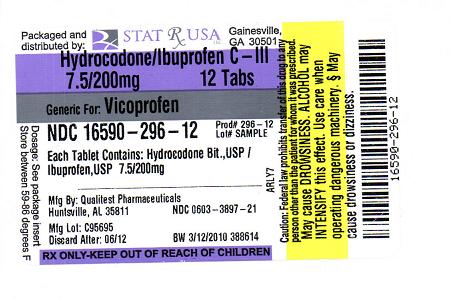
TABLETS 7.5 mg/200 mg · STAT RX USA LLC
Dosage Form
TABLETS 7.5 mg/200 mg
Manufacturer
STAT RX USA LLC
This medication contains important usage instructions, warnings, and side effect information that you should review before use.
Carefully consider the potential benefits and risks of hydrocodone bitartrate and ibuprofen tablets and other treatment options before deciding to use hydrocodone bitartrate and ibuprofen tablets. Use the lowest effective dose for the shortest duration consistent with individual patient treatment goals (see WARNINGS ).
Hydrocodone bitartrate and ibuprofen tablets are indicated for the short-term (generally less than 10 days) management of acute pain. Hydrocodone bitartrate and ibuprofen tablets are not indicated for the treatment of such conditions as osteoarthritis or rheumatoid arthritis.
Carefully consider the potential benefits and risks of hydrocodone bitartrate and ibuprofen tablets and other treatment options before deciding to use hydrocodone bitartrate and ibuprofen tablets. Use the lowest effective dose for the shortest duration consistent with individual patient treatment goals (see WARNINGS ).
After observing the response to initial therapy with hydrocodone bitartrate and ibuprofen tablets, the dose and frequency should be adjusted to suit an individual patient's needs.
For the short-term (generally less than 10 days) management of acute pain, the recommended dose of hydrocodone bitartrate and ibuprofen tablets is one tablet every 4 to 6 hours, as necessary. Dosage should not exceed 5 tablets in a 24-hour period. It should be kept in mind that tolerance to hydrocodone can develop with continued use and that the incidence of untoward effects is dose related.
The lowest effective dose or the longest dosing interval should be sought for each patient (see WARNINGS ), especially in the elderly. After observing the initial response to therapy with hydrocodone bitartrate and ibuprofen tablets, the dose and frequency of dosing should be adjusted to suit the individual patient's need, without exceeding the total daily dose recommended.
Hydrocodone bitartrate and ibuprofen tablets are contraindicated in patients with known hypersensitivity to hydrocodone or ibuprofen. Patients known to be hypersensitive to other opioids may exhibit cross-sensitivity to hydrocodone.
Hydrocodone bitartrate and ibuprofen tablets should not be given to patients who have experienced asthma, urticaria, or allergic-type reactions after taking aspirin or other NSAIDs. Severe, rarely fatal, anaphylactic-like reactions to NSAIDs have been reported in such patients (see WARNINGS - Anaphylactoid Reactions , and PRECAUTIONS - Pre-existing Asthma ).
Hydrocodone bitartrate and ibuprofen tablets are contraindicated for the treatment of peri-operative pain in the setting of coronary artery bypass graft (CABG) surgery (see WARNINGS ).
Reports suggest that NSAIDs may diminish the antihypertensive effect of ACE-inhibitors. This interaction should be given consideration in patients taking hydrocodone bitartrate and ibuprofen tablets concomitantly with ACE-inhibitors.
The concurrent use of anticholinergics with hydrocodone preparations may produce paralytic ileus.
The use of Monoamine Oxidase Inhibitors (MAOIs) or tricyclic antidepressants with hydrocodone bitartrate and ibuprofen tablets may increase the effect of either the antidepressant or hydrocodone.
MAOIs have been reported to intensify the effects of at least one opioid drug causing anxiety, confusion and significant depression of respiration or coma. The use of hydrocodone is not recommended for patients taking MAOIs or within 14 days of stopping such treatment.
When hydrocodone bitartrate and ibuprofen tablets are administered with aspirin, the protein binding of aspirin is reduced, although the clearance of free hydrocodone bitartrate and ibuprofen tablets are not altered. The clinical significance of this interaction is not known; however, as with other NSAID-containing products, concomitant administration of hydrocodone bitartrate and ibuprofen tablets and aspirin is not generally recommended because of the potential of increased adverse effects.
Patients receiving other opioids, antihistamines, antipsychotics, antianxiety agents, or other CNS depressants (including alcohol) concomitantly with hydrocodone bitartrate and ibuprofen tablets may exhibit an additive CNS depression. When combined therapy is contemplated, the dose of one or both agents should be reduced.
Ibuprofen has been shown to reduce the natriuretic effect of furosemide and thiazides in some patients. This response has been attributed to inhibition of renal prostaglandin synthesis. During concomitant therapy with hydrocodone bitartrate and ibuprofen tablets the patient should be observed closely for signs of renal failure (see WARNINGS - Renal Effects ), as well as diuretic efficacy.
Ibuprofen has been shown to elevate plasma lithium concentration and reduce renal lithium clearance. The mean minimum lithium concentration increased 15% and the renal clearance was decreased by approximately 20%. This effect has been attributed to inhibition of renal prostaglandin synthesis by ibuprofen. Thus, when hydrocodone bitartrate and ibuprofen tablets and lithium are administered concurrently, patients should be observed for signs of lithium toxicity.
Ibuprofen, as well as other NSAIDs, has been reported to competitively inhibit methotrexate accumulation in rabbit kidney slices. This may indicate that ibuprofen could enhance the toxicity of methotrexate. Caution should be used when hydrocodone bitartrate and ibuprofen tablets are administered concomitantly with methotrexate.
Agonist/antagonist analgesics (i.e., pentazocine, nalbuphine, butorphanol and buprenorphine) should be administered with caution to patients who have received or are receiving a course of therapy with a pure opioid agonist analgesic such as hydrocodone. In this situation, mixed agonist/antagonist analgesics may reduce the analgesic effect of hydrocodone and/or may precipitate withdrawal symptoms in these patients.
Hydrocodone, as well as other opioid analgesics, may enhance the neuromuscular blocking action of skeletal muscle relaxants and produce an increased degree of respiratory depression.
The effects of warfarin and NSAIDs on GI bleeding are synergistic, such that users of both drugs together have a risk of serious GI bleeding higher than users of either drug alone.
Hydrocodone bitartrate and ibuprofen tablets were administered to approximately 300 pain patients in a safety study that employed dosages and a duration of treatment sufficient to encompass the recommended usage (see DOSAGE AND ADMINISTRATION ). Adverse event rates generally increased with increasing daily dose. The event rates reported below are from approximately 150 patients who were in a group that received one tablet of hydrocodone bitartrate and ibuprofen an average of three to four times daily. The overall incidence rates of adverse experiences in the trials were fairly similar for this patient group and those who received the comparison treatment, acetaminophen 600 mg with codeine 60 mg.
The following lists adverse events that occurred with an incidence of 1% or greater in clinical trials of hydrocodone bitartrate and ibuprofen tablets, without regard to the causal relationship of the events to the drug. To distinguish different rates of occurrence in clinical studies, the adverse events are listed as follows:
name of adverse event = less than 3%
adverse events marked with an asterisk * = 3% to 9%
adverse event rates over 9% are in parentheses.
Body as a Whole: Abdominal pain*; Asthenia*; Fever; Flu syndrome; Headache (27%); Infection*; Pain.
Cardiovascular: Palpitations; Vasodilation.
Central Nervous System: Anxiety*; Confusion; Dizziness (14%); Hypertonia; Insomnia*; Nervousness*; Paresthesia; Somnolence (22%); Thinking abnormalities.
Digestive: Anorexia; Constipation (22%); Diarrhea*; Dry mouth*; Dyspepsia (12%); Flatulence*; Gastritis; Melena; Mouth ulcers; Nausea (21%); Thirst; Vomiting*.
Metabolic and Nutritional Disorders: Edema*.
Respiratory: Dyspnea; Hiccups; Pharyngitis; Rhinitis.
Skin and Appendages: Pruritus*; Sweating*.
Special Senses: Tinnitus.
Urogenital: Urinary frequency.
Incidence less than 1%
Body as a Whole: Allergic reaction.
Cardiovascular: Arrhythmia; Hypotension; Tachycardia.
Central Nervous System: Agitation; Abnormal dreams; Decreased libido; Depression; Euphoria; Mood changes; Neuralgia; Slurred speech; Tremor, Vertigo.
Digestive: Chalky stool; "Clenching teeth"; Dysphagia; Esophageal spasm; Esophagitis; Gastroenteritis; Glossitis; Liver enzyme elevation.
Metabolic and Nutritional: Weight decrease.
Musculoskeletal: Arthralgia; Myalgia.
Respiratory: Asthma; Bronchitis; Hoarseness; Increased cough; Pulmonary congestion; Pneumonia; Shallow breathing; Sinusitis.
Skin and Appendages: Rash; Urticaria.
Special Senses: Altered vision; Bad taste; Dry eyes.
Urogenital: Cystitis; Glycosuria; Impotence; Urinary incontinence; Urinary retention.
It is not known whether hydrocodone is excreted in human milk. In limited studies, an assay capable of detecting 1 mcg/mL did not demonstrate ibuprofen in the milk of lactating mothers. However, because of the limited nature of the studies, and because of the potential for serious adverse reactions in nursing infants from hydrocodone bitartrate and ibuprofen tablets, a decision should be made whether to discontinue nursing or to discontinue the drug, taking into account the importance of the drug to the mother.
The safety and effectiveness of hydrocodone bitartrate and ibuprofen tablets in pediatric patients below the age of 16 have not been established.
In controlled clinical trials there was no difference in tolerability between patients < 65 years of age and those ≥ 65, apart from an increased tendency of the elderly to develop constipation. However, because the elderly may be more sensitive to the renal and gastrointestinal effects of nonsteroidal anti-inflammatory agents as well as possible increased risk of respiratory depression with opioids, extra caution and reduced dosages should be used when treating the elderly with hydrocodone bitartrate and ibuprofen tablets.
Following an acute overdosage, toxicity may result from hydrocodone and/or ibuprofen.
Serious overdose with hydrocodone is characterized by respiratory depression (a decrease in respiratory rate and/or tidal volume, Cheyne-Stokes respiration, cyanosis) extreme somnolence progressing to stupor or coma, skeletal muscle flaccidity, cold and clammy skin, and sometimes bradycardia and hypotension. In severe overdosage, apnea, circulatory collapse, cardiac arrest and death may occur.
Symptoms include gastrointestinal irritation with erosion and hemorrhage or perforation, kidney damage, liver damage, heart damage, hemolytic anemia, agranulocytosis, thrombocytopenia, aplastic anemia, and meningitis. Other symptoms may include headache, dizziness, tinnitus, confusion, blurred vision, mental disturbances, skin rash, stomatitis, edema, reduced retinal sensitivity, corneal deposits, and hyperkalemia.
Primary attention should be given to the re-establishment of adequate respiratory exchange through provision of a patent airway and the institution of assisted or controlled ventilation. Naloxone, a narcotic antagonist, can reverse respiratory depression and coma associated with opioid overdose or unusual sensitivity to opioids, including hydrocodone. Therefore, an appropriate dose of naloxone hydrochloride should be administered intravenously with simultaneous efforts at respiratory resuscitation. Since the duration of action of hydrocodone may exceed that of the naloxone, the patient should be kept under continuous surveillance and repeated doses of the antagonist should be administered as needed to maintain adequate respiration. Supportive measures should be employed as indicated. Gastric emptying may be useful in removing unabsorbed drug. In cases where consciousness is impaired it may be inadvisable to perform gastric lavage. If gastric lavage is performed, little drug will likely be recovered if more than an hour has elapsed since ingestion. Ibuprofen is acidic and is excreted in the urine; therefore, it may be beneficial to administer alkali and induce diuresis. In addition to supportive measures the use of oral activated charcoal may help to reduce the absorption and reabsorption of ibuprofen. Dialysis is not likely to be effective for removal of ibuprofen because it is very highly bound to plasma proteins.
Store at 20°-25°C (68°-77°F) [see USP Controlled Room Temperature].
Dispense in a tight, light-resistant container.
Patients should be informed of the following information before initiating therapy with an NSAID and periodically during the course of ongoing therapy. Patients should also be encouraged to read the Hydrocodone Bitartrate and Ibuprofen Tablets Medication Guide that accompanies each prescription dispensed.
(See the end of this Medication Guide for a list of prescription NSAID medicines.)
What is the most important information I should know about medicines called Non-Steroidal Anti-Inflammatory Drugs (NSAIDs)?
NSAID medicines may increase the chance of a heart attack or stroke that can lead to death.This chance increases:
NSAID medicines should never be used right before or after a heart surgery called a "coronary artery bypass graft (CABG)."
NSAID medicines can cause ulcers and bleeding in the stomach and intestines at any time during treatment. Ulcers and bleeding:
The chance of a person getting an ulcer or bleeding increases with:
NSAID medicines should only be used:
What are Non-Steroidal Anti-Inflammatory Drugs (NSAIDs)?
NSAID medicines are used to treat pain and redness, swelling, and heat (inflammation) from medical conditions such as:
Who should not take a Non-Steroidal Anti-Inflammatory Drug (NSAID)?
Do not take an NSAID medicine:
Tell your healthcare provider:
| Serious side effects include: | Other side effects include: |
|
|
Get emergency help right away if you have any of the following symptoms:
Stop your NSAID medicine and call your healthcare provider right away if you have any of the following symptoms:
These are not all the side effects with NSAID medicines. Talk to your healthcare provider or pharmacist for more information about NSAID medicines. Call your doctor for medical advice about side effects. You may report side effects to FDA at 1–800-FDA-1088.
Other information about Non-Steroidal Anti-Inflammatory Drugs (NSAIDs)
NSAID medicines that need a prescription
| Generic Name | Tradename |
| Celecoxib | Celebrex |
| Diclofenac | Cataflam, Voltaren, Arthtotec (combined with misoprostol) |
| Diflunisal | Dolobid |
| Etodolac | Lodine, Lodine XL |
| Fenoprofen | Nelfon, Nalfon 200 |
| Flurbirofen | Ansaid |
| Ibuprofen | Motrin, Tab-Profen, Vicoprofen (combined with hydrocodone), Combunox (combined with oxycodone) |
| Indomethacin | Indocin, Indocin SR, Indo-Lemmon, Indomethagan |
| Ketoprofen | Oruvail |
| Ketorolac | Toradol |
| Mefenamic Acid | Ponstel |
| Meloxicam | Mobic |
| Nabumetone | Relafen |
| Naproxen | Naprosyn, Anaprox, Anaprox DS, EC-Naproxyn, Naprelan, Naprapac (copackaged with lansoprazole) |
| Oxaprozin | Daypro |
| Piroxicam | Feldene |
| Sulindac | Clinoril |
| Tolmetin | Tolectin, Tolectin DS, Tolectin 600 |
This Medication Guide has been approved by the U.S. Food and Drug Administration.
Manufactured for:
QUALITEST PHARMACEUTICALS
Huntsville, AL 35811
8181958
R8/08-R1
Each hydrocodone bitartrate and ibuprofen tablet 7.5 mg/200 mg contains:
Hydrocodone Bitartrate, USP ................................ 7.5 mg
Ibuprofen, USP ...................................................... 200 mg
Hydrocodone bitartrate and ibuprofen is supplied in a fixed combination tablet form for oral administration. Hydrocodone bitartrate and ibuprofen combines the opioid analgesic agent, hydrocodone bitartrate, with the nonsteroidal anti-inflammatory (NSAID) agent, ibuprofen.
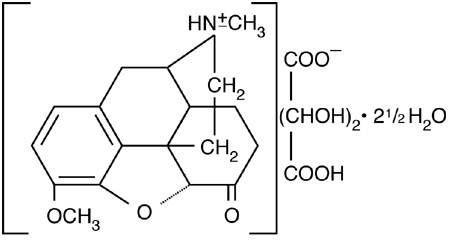
Hydrocodone bitartrate is a semisynthetic and centrally acting opioid analgesic. Its chemical name is 4,5α-epoxy-3-methoxy-17-methylmorphinan-6-one tartrate (1:1) hydrate (2:5). Its chemical formula is C18H21NO3•C4H6O6•2½H2O, and the molecular weight is 494.50. Its structural formula is:
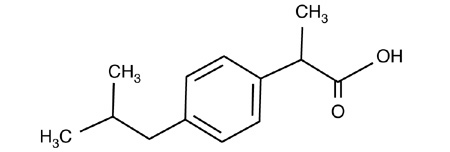
[image: MM1]Ibuprofen is a nonsteroidal anti-inflammatory agent [nonselective COX inhibitor] with analgesic and antipyretic properties. Its chemical name is (±)-2-(p-isobutylphenyl) propionic acid. Its chemical formula is C13H18O2, and the molecular weight is 206.29. Its structural formula is:
[image: MM2]Hydrocodone bitartrate and ibuprofen tablets 7.5 mg/200 mg are available as:
White, film-coated, round, debossed "3585" on one side and debossed "V" on the reverse side in bottles of 10, 100, 500, and 1000.
Photos of the product and/or packaging supplied by the manufacturer.
CIII
Rx only
Hydrocodone is a semisynthetic opioid analgesic and antitussive with multiple actions qualitatively similar to those of codeine. Most of these involve the central nervous system and smooth muscle. The precise mechanism of action of hydrocodone and other opioids is not known, although it is believed to relate to the existence of opiate receptors in the central nervous system. In addition to analgesia, opioids may produce drowsiness, changes in mood, and mental clouding.
Ibuprofen is a nonsteroidal anti-inflammatory agent that possesses analgesic and antipyretic activities. Its mode of action, like that of other NSAIDs, is not completely understood, but may be related to inhibition of cyclooxygenase activity and prostaglandin synthesis. Ibuprofen is a peripherally acting analgesic. Ibuprofen does not have any known effects on opiate receptors.
After oral dosing with the hydrocodone bitartrate and ibuprofen tablet, a peak hydrocodone plasma level of 27 ng/mL is achieved at 1.7 hours, and a peak ibuprofen plasma level of 30 mcg/mL is achieved at 1.8 hours. The effect of food on the absorption of either component from the hydrocodone bitartrate and ibuprofen tablet has not been established.
Ibuprofen is highly protein-bound (99%) like most other nonsteroidal anti-inflammatory agents. Although the extent of protein binding of hydrocodone in human plasma has not been definitely determined, structural similarities to related opioid analgesics suggest that hydrocodone is not extensively protein-bound. As most agents in the 5-ring morphinan group of semi-synthetic opioids bind plasma protein to a similar degree (range 19% [hydromorphone] to 45% [oxycodone]), hydrocodone is expected to fall within this range.
Hydrocodone exhibits a complex pattern of metabolism, including O-demethylation, N-demethylation, and 6-keto reduction to the corresponding 6-α- and 6-β-hydroxy metabolites. Hydromorphone, a potent opioid, is formed from the O-demethylation of hydrocodone and contributes to the total analgesic effect of hydrocodone. The O- and N-demethylation processes are mediated by separate P-450 isoenzymes: CYP2D6 and CYP3A4, respectively.
Ibuprofen is present in this product as a racemate, and following absorption it undergoes interconversion in the plasma from the R-isomer to the S-isomer. Both the R- and S-isomers are metabolized to two primary metabolites: (+)-2-4'-(2hydroxy-2-methyl-propyl) phenyl propionic acid and (+)-2-4'-(2carboxypropyl) phenyl propionic acid, both of which circulate in the plasma at low levels relative to the parent.
Hydrocodone and its metabolites are eliminated primarily in the kidneys, with a mean plasma half-life of 4.5 hours. Ibuprofen is excreted in the urine, 50% to 60% as metabolites and approximately 15% as unchanged drug and conjugate. The plasma half-life is 2.2 hours.
No significant pharmacokinetic differences based on age or gender have been demonstrated. The pharmacokinetics of hydrocodone and ibuprofen from hydrocodone bitartrate and ibuprofen tablets has not been evaluated in children.
The effect of renal insufficiency on the pharmacokinetics of the hydrocodone bitartrate and ibuprofen tablet dosage form has not been determined.
In single-dose studies of post surgical pain (abdominal, gynecological, orthopedic), 940 patients were studied at doses of one or two tablets. Hydrocodone bitartrate and ibuprofen tablets produced greater efficacy than placebo and each of its individual components given at the same dose. No advantage was demonstrated for the two-tablet dose.
The carcinogenic and mutagenic potential of hydrocodone bitartrate and ibuprofen tablets has not been investigated. The ability of hydrocodone bitartrate and ibuprofen tablets to impair fertility has not been assessed.
As with other drugs known to inhibit prostaglandin synthesis, an increased incidence of dystocia and delayed parturition occurred in rats. Administration of hydrocodone bitartrate and ibuprofen tablets is not recommended during labor and delivery. The effects of hydrocodone bitartrate and ibuprofen tablets on labor and delivery in pregnant women are unknown.
Manufactured for:
QUALITEST PHARMACEUTICALS
Huntsville, AL 35811
8181835
R8/08-R3
A SUPPLY OF MEDICATION GUIDES AS PRINTED AT THE END OF THIS INSERT IS AVAILABLE, FREE OF CHARGE, BY CALLING (800) 444-4011.
Create a free account to view complete drug information, save medications, and more.
Free forever · No credit card required