 MedLens
Loading…
TABLETS USP CIII · McKesson Packaging Services Business Unit of McKesson Corporation
Dosage Form
TABLETS USP CIII
Manufacturer
McKesson Packaging Services Business Unit of McKesson Corporation
This medication contains important usage instructions, warnings, and side effect information that you should review before use.
Hydrocodone bitartrate and acetaminophen tablets are indicated for the relief of moderate to moderately severe pain.
Dosage should be adjusted according to the severity of pain and response of the patient. However, it should be kept in mind that tolerance to hydrocodone can develop with continued use and that the incidence of untoward effects is dose related.
The usual adult dosage for Hydrocodone Bitartrate and Acetaminophen Tablets USP is:
|
Product Strength |
Usual Adult Dosage as needed for pain |
The total 24-hour dosage should not exceed |
| 5 mg/325 mg | One to two tablets every four to six hours | 12 tablets |
| 5 mg/500 mg | One to two tablets every four to six hours | 8 tablets |
| 7.5 mg/325 mg | One tablet every four to six hours | 8 tablets |
| 7.5 mg/500 mg | One tablet every four to six hours | 6 tablets |
| 7.5 mg/650 mg | One tablet every four to six hours | 6 tablets |
| 7.5 mg/750 mg | One tablet every four to six hours | 5 tablets |
| 10 mg/325 mg | One tablet every four to six hours | 6 tablets |
| 10 mg/500 mg | One tablet every four to six hours | 6 tablets |
| 10 mg/650 mg | One tablet every four to six hours | 6 tablets |
| 10 mg/660 mg | One tablet every four to six hours | 6 tablets |
| 10 mg/750 mg | One tablet every four to six hours | 5 tablets |
This product should not be administered to patients who have previously exhibited hypersensitivity to hydrocodone or acetaminophen.
Patients known to be hypersensitive to other opioids may exhibit cross-sensitivity to hydrocodone.
Drug Interactions – Patients receiving narcotics, antihistamines, antipsychotics, antianxiety agents, or other CNS depressants (including alcohol) concomitantly with hydrocodone bitartrate and acetaminophen tablets may exhibit an additive CNS depression. When combined therapy is contemplated, the dose of one or both agents should be reduced.
The use of MAO inhibitors or tricyclic antidepressants with hydrocodone preparations may increase the effect of either the antidepressant or hydrocodone.
The most frequently reported adverse reactions are light-headedness, dizziness, sedation, nausea and vomiting. These effects seem to be more prominent in ambulatory than in non-ambulatory patients, and some of these adverse reactions may be alleviated if the patient lies down.
Other adverse reactions include:
Nursing Mothers – Acetaminophen is excreted in breast milk in small amounts, but the significance of its effects on nursing infants is not known. It is not known whether hydrocodone is excreted in human milk. Because many drugs are excreted in human milk and because of the potential for serious adverse reactions in nursing infants from hydrocodone and acetaminophen, a decision should be made whether to discontinue nursing or to discontinue the drug, taking into account the importance of the drug to the mother.
Pediatric Use – Safety and effectiveness in pediatric patients have not been established.
Geriatric Use – Clinical studies of hydrocodone bitartrate and acetaminophen tablets did not include sufficient numbers of subjects aged 65 and over to determine whether they respond differently from younger subjects. Other reported clinical experience has not identified differences in responses between the elderly and younger patients. In general, dose selection for an elderly patient should be cautious, usually starting at the low end of the dosing range, reflecting the greater frequency of decreased hepatic, renal, or cardiac function, and of concomitant disease or other drug therapy.
Hydrocodone and the major metabolites of acetaminophen are known to be substantially excreted by the kidney. Thus the risk of toxic reactions may be greater in patients with impaired renal function due to the accumulation of the parent compound and/or metabolites in the plasma. Because elderly patients are more likely to have decreased renal function, care should be taken in dose selection, and it may be useful to monitor renal function.
Hydrocodone may cause confusion and over-sedation in the elderly; elderly patients generally should be started on low doses of hydrocodone bitartrate and acetaminophen tablets and observed closely.
Following an acute overdosage, toxicity may result from hydrocodone or acetaminophen.
Information for Patients – Hydrocodone, like all narcotics, may impair mental and/or physical abilities required for the performance of potentially hazardous tasks such as driving a car or operating machinery; patients should be cautioned accordingly.
Alcohol and other CNS depressants may produce an additive CNS depression, when taken with this combination product, and should be avoided.
Hydrocodone may be habit-forming. Patients should take the drug only for as long as it is prescribed, in the amounts prescribed, and no more frequently than prescribed.
Hydrocodone Bitartrate and Acetaminophen Tablets are supplied in tablet form for oral administration.
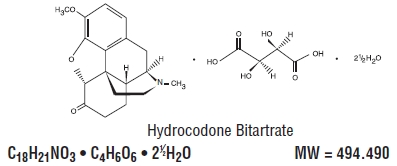
Hydrocodone bitartrate is an opioid analgesic and antitussive and occurs as fine, white crystals or as a crystalline powder. It is affected by light. The chemical name is: 4,5α-epoxy-3-methoxy-17-methylmorphinan-6-one tartrate (1:1) hydrate (2:5). It has the following structural formula:
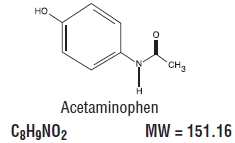
[image: id_331052e6-222f-458a-b0dd-d822f4bbb3ce]Acetaminophen, 4'-hydroxyacetanilide, a slightly bitter, white, odorless, crystalline powder, is a non-opiate, non-salicylate analgesic and antipyretic. It has the following structural formula:
[image: id_6d098e01-d257-4eb8-b18b-f564eeb31ad8]Each Hydrocodone Bitartrate and Acetaminophen Tablet USP contains:
| Tablet | Hydrocodone Bitartrate USP | Acetaminophen USP |
| 5 mg/325 mg | 5 mg | 325 mg |
| 5 mg/500 mg | 5 mg | 500 mg |
| 7.5 mg/325 mg | 7.5 mg | 325 mg |
| 7.5 mg/500 mg | 7.5 mg | 500 mg |
| 7.5 mg/650 mg | 7.5 mg | 650 mg |
| 7.5 mg/750 mg | 7.5 mg | 750 mg |
| 10 mg/325 mg | 10 mg | 325 mg |
| 10 mg/500 mg | 10 mg | 500 mg |
| 10 mg/650 mg | 10 mg | 650 mg |
| 10 mg/660 mg | 10 mg | 660 mg |
| 10 mg/750 mg | 10 mg | 750 mg |
In addition, each tablet contains the following inactive ingredients: crospovidone, magnesium stearate, microcrystalline cellulose, povidone, pregelatinized starch, silicon dioxide, and stearic acid.
The 10 mg/650 mg tablet also contains FD & C Blue No. 1 Aluminum Lake 12%.
Meets USP Dissolution Test 1.
[image: id_d10972f9-9381-49f9-b481-8e8dc0fc7289]
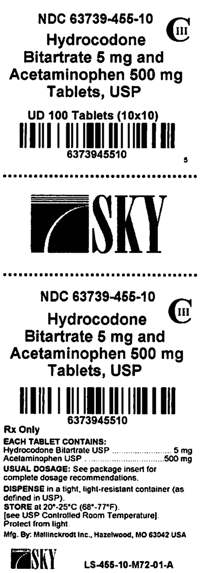
NDC 63739-455-10
Hydrocodone Bitartrate 5 mg
and Acetaminophen 500 mg
Tablets, USP CIII
UD 100 Tablets (10x10)
Rx Only
EACH TABLET CONTAINS:
Hydrocodone Bitartrate USP .......................... 5 mg
Acetaminophen USP ...................................500 mg
USUAL DOSAGE: See package insert for complete dosage recommendations.
DISPENSE in a tight, light-resistant container (as defined in USP).
STORE at 20°-25°C (68°-77°F).
[see USP Controlled Room Temperature].
Protect from light.
Mfg. By: Mallinckrodt Inc., Hazelwood, MO 63042 USA
Hydrocodone Bitartrate and Acetaminophen Tablets USP 5 mg/325 mg are supplied as a capsule-shaped white tablet debossed with M365 on one side and bisected on the other side.
Hydrocodone Bitartrate and Acetaminophen Tablets USP 5 mg/500 mg are supplied as a capsule-shaped white tablet debossed with M357 on one side and bisected on the other side. The tablets are supplied in:
Boxes of 10x10 UD 100 NDC 63739-455-10
Boxes of 25x30 UD 750 NDC 63739-455-01
Hydrocodone Bitartrate and Acetaminophen Tablets USP 7.5 mg/325 mg are supplied as an unscored oval-shaped white tablet debossed with M366 on one side.
Hydrocodone Bitartrate and Acetaminophen Tablets USP 7.5 mg/500 mg are supplied as a capsule-shaped white tablet debossed with M358 on one side and bisected on the other side.
Hydrocodone Bitartrate and Acetaminophen Tablets USP 7.5 mg/650 mg are supplied as a capsule-shaped white tablet debossed with M359 on one side and bisected on the other side.
Hydrocodone Bitartrate and Acetaminophen Tablets USP 7.5 mg/750 mg are supplied as a capsule-shaped white tablet debossed with M360 on one side and bisected on the other side.
Hydrocodone Bitartrate and Acetaminophen Tablets USP 10 mg/325 mg are supplied as a capsule-shaped white tablet debossed with M367 on one side and bisected on the other side.
Hydrocodone Bitartrate and Acetaminophen Tablets USP 10 mg/500 mg are supplied as a capsule-shaped white tablet debossed with M363 on one side and bisected on the other side.
Hydrocodone Bitartrate and Acetaminophen Tablets USP 10 mg/650 mg are supplied as a capsule-shaped blue tablet debossed with M361 on one side and bisected on the other side.
Hydrocodone Bitartrate and Acetaminophen Tablets USP 10 mg/660 mg are supplied as a capsule-shaped white tablet debossed with M362 on one side and bisected on the other side.
Hydrocodone Bitartrate and Acetaminophen Tablets USP 10 mg/750 mg are supplied as a capsule-shaped white tablet debossed with M364 on one side and bisected on the other side.
Dispense in a tight, light-resistant container (as defined in USP) with a child-resistant closure.
Photos of the product and/or packaging supplied by the manufacturer.
Rx only
Hydrocodone is a semisynthetic narcotic analgesic and antitussive with multiple actions qualitatively similar to those of codeine. Most of these involve the central nervous system and smooth muscle. The precise mechanism of action of hydrocodone and other opiates is not known, although it is believed to relate to the existence of opiate receptors in the central nervous system. In addition to analgesia, narcotics may produce drowsiness, changes in mood and mental clouding.
The analgesic action of acetaminophen involves peripheral influences, but the specific mechanism is as yet undetermined. Antipyretic activity is mediated through hypothalamic heat regulating centers. Acetaminophen inhibits prostaglandin synthetase. Therapeutic doses of acetaminophen have negligible effects on the cardiovascular or respiratory systems; however, toxic doses may cause circulatory failure and rapid, shallow breathing.
Pharmacokinetics – The behavior of the individual components is described below.
Hydrocodone – Following a 10 mg oral dose of hydrocodone administered to five adult male subjects, the mean peak concentration was 23.6 ± 5.2 ng/mL. Maximum serum levels were achieved at 1.3 ± 0.3 hours and the half-life was determined to be 3.8 ± 0.3 hours. Hydrocodone exhibits a complex pattern of metabolism including O-demethylation, N-demethylation and 6-keto reduction to the corresponding 6-α- and 6-β-hydroxymetabolites (see OVERDOSAGE for toxicity information).
Acetaminophen – Acetaminophen is rapidly absorbed from the gastrointestinal tract and is distributed throughout most body tissues. The plasma half-life is 1.25 to 3 hours, but may be increased by liver damage and following overdosage. Elimination of acetaminophen is principally by liver metabolism (conjugation) and subsequent renal excretion of metabolites. Approximately 85% of an oral dose appears in the urine within 24 hours of administration, most as the glucuronide conjugate, with small amounts of other conjugates and unchanged drug (see OVERDOSAGE for toxicity information).
Respiratory Depression – At high doses or in sensitive patients, hydrocodone may produce dose-related respiratory depression by acting directly on the brain stem respiratory center. Hydrocodone also affects the center that controls respiratory rhythm, and may produce irregular and periodic breathing.
Head Injury and Increased Intracranial Pressure – The respiratory depressant effects of narcotics and their capacity to elevate cerebrospinal fluid pressure may be markedly exaggerated in the presence of head injury, other intracranial lesions or a pre-existing increase in intracranial pressure. Furthermore, narcotics produce adverse reactions which may obscure the clinical course of patients with head injuries.
Acute Abdominal Conditions – The administration of narcotics may obscure the diagnosis or clinical course of patients with acute abdominal conditions.
Special Risk Patients – As with any narcotic analgesic agent, hydrocodone bitartrate and acetaminophen tablets should be used with caution in elderly or debilitated patients, and those with severe impairment of hepatic or renal function, hypothyroidism, Addison's disease, prostatic hypertrophy or urethral stricture. The usual precautions should be observed and the possibility of respiratory depression should be kept in mind.
Cough Reflex – Hydrocodone suppresses the cough reflex; as with all narcotics, caution should be exercised when hydrocodone bitartrate and acetaminophen tablets are used post-operatively and in patients with pulmonary disease.
Carcinogenesis, Mutagenesis, Impairment of Fertility – No adequate studies have been conducted in animals to determine whether hydrocodone or acetaminophen have a potential for carcinogenesis, mutagenesis, or impairment of fertility.
Labor and Delivery – As with all narcotics, administration of this product to the mother shortly before delivery may result in some degree of respiratory depression in the newborn, especially if higher doses are used.
Central Nervous System – Drowsiness, mental clouding, lethargy, impairment of mental and physical performance, anxiety, fear, dysphoria, psychic dependence, mood changes.
Gastrointestinal System – Prolonged administration of hydrocodone bitartrate and acetaminophen tablets may produce constipation.
Genitourinary System – Ureteral spasm, spasm of vesical sphincters and urinary retention have been reported with opiates.
Respiratory Depression – Hydrocodone bitartrate may produce dose-related respiratory depression by acting directly on the brain stem respiratory centers (see OVERDOSAGE ).
Special Senses – Cases of hearing impairment or permanent loss have been reported predominantly in patients with chronic overdose.
Dermatological – Skin rash, pruritus.
The following adverse drug events may be borne in mind as potential effects of acetaminophen: allergic reactions, rash, thrombocytopenia, agranulocytosis.
Potential effects of high dosage are listed in the OVERDOSAGE section.
Hydrocodone – Serious overdose with hydrocodone is characterized by respiratory depression (a decrease in respiratory rate and/or tidal volume, Cheyne-Stokes respiration, cyanosis), extreme somnolence progressing to stupor or coma, skeletal muscle flaccidity, cold and clammy skin, and sometimes bradycardia and hypotension. In severe overdosage, apnea, circulatory collapse, cardiac arrest and death may occur.
Acetaminophen – In acetaminophen overdosage: dose-dependent, potentially fatal hepatic necrosis is the most serious adverse effect. Renal tubular necrosis, hypoglycemic coma, and thrombocytopenia may also occur.
Early symptoms following a potentially hepatotoxic overdose may include: nausea, vomiting, diaphoresis and general malaise. Clinical and laboratory evidence of hepatic toxicity may not be apparent until 48 to 72 hours post-ingestion.
In adults, hepatic toxicity has rarely been reported with acute overdoses of less than 10 grams and fatalities with less than 15 grams.
Treatment – A single or multiple overdose with hydrocodone and acetaminophen is a potentially lethal polydrug overdose, and consultation with a regional poison control center is recommended.
Immediate treatment includes support of cardiorespiratory function and measures to reduce drug absorption. Vomiting should be induced mechanically, or with syrup of ipecac, if the patient is alert (adequate pharyngeal and laryngeal reflexes). Oral activated charcoal (1 g/kg) should follow gastric emptying. The first dose should be accompanied by an appropriate cathartic. If repeated doses are used, the cathartic might be included with alternate doses as required. Hypotension is usually hypovolemic and should respond to fluids. Vasopressors and other supportive measures should be employed as indicated. A cuffed endo-tracheal tube should be inserted before gastric lavage of the unconscious patient and, when necessary, to provide assisted respiration.
Meticulous attention should be given to maintaining adequate pulmonary ventilation. In severe cases of intoxication, peritoneal dialysis, or preferably hemodialysis may be considered. If hypoprothrombinemia occurs due to acetaminophen overdose, vitamin K should be administered intravenously.
Naloxone, a narcotic antagonist, can reverse respiratory depression and coma associated with opioid overdose. Naloxone hydrochloride 0.4 mg to 2 mg is given parenterally. Since the duration of action of hydrocodone may exceed that of naloxone, the patient should be kept under continuous surveillance and repeated doses of the antagonist should be administered as needed to maintain adequate respiration. A narcotic antagonist should not be administered in the absence of clinically significant respiratory or cardiovascular depression.
If the dose of acetaminophen may have exceeded 140 mg/kg, acetylcysteine should be administered as early as possible. Serum acetaminophen levels should be obtained, since levels four or more hours following ingestion help predict acetaminophen toxicity. Do not await acetaminophen assay results before initiating treatment. Hepatic enzymes should be obtained initially, and repeated at 24-hour intervals.
Methemoglobinemia over 30% should be treated with methylene blue by slow intravenous administration.
The toxic dose of acetaminophen for adults is 10 grams.
Storage – Store at 20° to 25°C (68° to 77°F) [see USP Controlled Room Temperature]. Protect from light.
A Schedule III Narcotic.
Manufactured By:
Mallinckrodt Inc.,
Hazelwood, MO 63042 USA.
Distributed By:
McKesson Packaging Services
a business unit of McKesson Corporation
7101 Weddington Rd. Concord, NC 28027
IS-455-M72-01-A1
September 2010
Create a free account to view complete drug information, save medications, and more.
Free forever · No credit card required