 MedLens
Loading…
Tablets, USP Rx only · Preferred Pharmaceuticals Inc.
Dosage Form
Tablets, USP Rx only
Manufacturer
Preferred Pharmaceuticals Inc.
This medication contains important usage instructions, warnings, and side effect information that you should review before use.
WARNING: LACTIC ACIDOSIS
Post-marketing cases of metformin-associated lactic acidosis have resulted in death, hypothermia, hypotension, and resistant bradyarrhythmias. The onset of metformin-associated lactic acidosis is often subtle, accompanied only by nonspecific symptoms such as malaise, myalgias, respiratory distress, somnolence, and abdominal pain. Metformin-associated lactic acidosis was characterized by elevated blood lactate levels (>5 mmol/Liter), anion gap acidosis (without evidence of ketonuria or ketonemia), an increased lactate/pyruvate ratio; and metformin plasma levels generally >5 mcg/mL (see PRECAUTIONS).
Risk factors for metformin-associated lactic acidosis include renal impairment, concomitant use of certain drugs (e.g., carbonic anhydrase inhibitors such as topiramate), age 65 years old or greater, having a radiological study with contrast, surgery and other procedures, hypoxic states (e.g. acute congestive heart failure), excessive alcohol intake, and hepatic impairment.
Steps to reduce the risk of and manage metformin-associated lactic acidosis in these high risk groups are provided (see DOSAGE AND ADMINISTRATION, CONTRAINDICATIONS, and PRECAUTIONS).
If metformin-associated lactic acidosis is suspected, immediately discontinue GLUCOVANCE and institute general supportive measures in a hospital setting. Prompt hemodialysis is recommended (see PRECAUTIONS).
Glyburide and Metformin Hydrochloride Tablets, USP are indicated as an adjunct to diet and exercise to improve glycemic control in adults with type 2 diabetes mellitus.
Glyburide and metformin hydrochloride tablets are contraindicated in patients with:
1
Severe renal impairment (eGFR below 30 mL/min/1.73m2) (see WARNINGS and PRECAUTIONS ).2
Known hypersensitivity to metformin hydrochloride or glyburide.3
Acute or chronic metabolic acidosis, including diabetic ketoacidosis, with or without coma. Diabetic ketoacidosis should be treated with insulin.4
Concomitant administration of bosentan.Glyburide and Metformin Hydrochloride
In double-blind clinical trials involving glyburide and metformin hydrochloride as initial therapy or as second-line therapy, a total of 642 patients received glyburide and metformin hydrochloride, 312 received metformin therapy, 324 received glyburide therapy, and 161 received placebo. The percent of patients reporting events and types of adverse events reported in clinical trials of glyburide and metformin hydrochloride (all strengths) as initial therapy and second-line therapy are listed in Table 6 .
|
Number (%) of Patients
|
||||
|
Adverse Event
|
Placebo
|
Glyburide N=324
|
Metformin N=312
|
Glyburide and Metformin Hydrochloride N=642
|
|
Upper respiratory infection |
22 (13.7) |
57 (17.6) |
51 (16.3) |
111 (17.3) |
|
Diarrhea |
9 (5.6) |
20 (6.2) |
64 (20.5) |
109 (17) |
|
Headache |
17 (10.6) |
37 (11.4) |
29 (9.3) |
57 (8.9) |
|
Nausea/vomiting |
10 (6.2) |
17 (5.2) |
38 (12.2) |
49 (7.6) |
|
Abdominal pain |
6 (3.7) |
10 (3.1) |
25 (8) |
44 (6.9) |
|
Dizziness |
7 (4.3) |
18 (5.6) |
12 (3.8) |
35 (5.5) |
In a controlled clinical trial of rosiglitazone versus placebo in patients treated with glyburide and metformin hydrochloride (n=365), 181 patients received glyburide and metformin hydrochloride with rosiglitazone and 184 received glyburide and metformin hydrochloride with placebo.
Edema was reported in 7.7% (14/181) of patients treated with rosiglitazone compared to 2.2% (4/184) of patients treated with placebo. A mean weight gain of 3 kg was observed in rosiglitazone-treated patients.
Disulfiram-like reactions have very rarely been reported in patients treated with glyburide tablets.
Glyburide
Overdosage of sulfonylureas, including glyburide tablets, can produce hypoglycemia. Mild hypoglycemic symptoms, without loss of consciousness or neurological findings, should be treated aggressively with oral glucose and adjustments in drug dosage and/or meal patterns. Close monitoring should continue until the physician is assured that the patient is out of danger. Severe hypoglycemic reactions with coma, seizure, or other neurological impairment occur infrequently, but constitute medical emergencies requiring immediate hospitalization. If hypoglycemic coma is diagnosed or suspected, the patient should be given a rapid intravenous injection of concentrated (50%) glucose solution. This should be followed by a continuous infusion of a more dilute (10%) glucose solution at a rate that will maintain the blood glucose at a level above 100 mg/dL. Patients should be closely monitored for a minimum of 24 to 48 hours, since hypoglycemia may recur after apparent clinical recovery.
Metformin Hydrochloride
Overdose of metformin hydrochloride has occurred, including ingestion of amounts >50 g. Hypoglycemia was reported in approximately 10% of cases, but no causal association with metformin hydrochloride has been established. Lactic acidosis has been reported in approximately 32% of metformin overdose cases (see WARNINGS ). Metformin is dialyzable with a clearance of up to 170 mL/min under good hemodynamic conditions. Therefore, hemodialysis may be useful for removal of accumulated drug from patients in whom metformin overdosage is suspected.
Glyburide and Metformin Hydrochloride Tablets, USP contain 2 oral antihyperglycemic drugs used in the management of type 2 diabetes, glyburide, USP and metformin hydrochloride, USP.
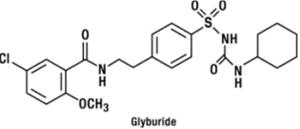
Glyburide, USP is an oral antihyperglycemic drug of the sulfonylurea class. The chemical name for glyburide is 1-[[p-[2-(5-chloro-o-anisamido)ethyl]phenyl]sulfonyl]-3-cyclo-hexylurea. Glyburide, USP is a white or almost white, crystalline powder with a molecular formula of C23H28ClN3O5S and a molecular weight of 494. The glyburide used in glyburide and metformin hydrochloride tablets, USP has a particle size at least 20% are less than 2 micron, at least 80% are less than 10 micron and 100% are less than 40 micron. The structural formula is represented below.
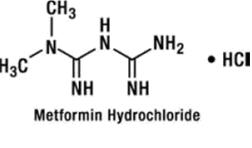
[image: MM1]Metformin hydrochloride, USP is an oral antihyperglycemic drug used in the management of type 2 diabetes. Metformin hydrochloride (N,N-dimethylimidodicarbonimidic diamide monohydrochloride) is not chemically or pharmacologically related to sulfonylureas, thiazolidinediones, or α-glucosidase inhibitors. It is a white crystals with a molecular formula of C4H12ClN5 (monohydrochloride) and a molecular weight of 165.62. Metformin hydrochloride, USP is freely soluble in water, slightly soluble in ethanol (95%), practically insoluble in acetone and in methylene chloride. The structural formula is as shown:
[image: MM2]Each glyburide and metformin hydrochloride tablet, USP intended for oral administration contains 1.25 mg glyburide USP with 250 mg metformin hydrochloride USP, 2.5 mg glyburide USP with 500 mg metformin hydrochloride USP and 5 mg glyburide USP with 500 mg metformin hydrochloride USP. In addition, each tablet contains the following inactive ingredients: calcium carbonate, croscarmellose sodium, magnesium stearate, microcrystalline cellulose and povidone.
Additionally, 1.25 mg/250 mg tablets contain opadry II white 33F28398 which contains hypromellose, lactose monohydrate, polyethylene glycol, talc and titanium dioxide.
Additionally, 2.5 mg/500 mg tablets contain opadry II orange 31F530003 which contains FD&C blue #2 aluminum lake, FD&C yellow #5 aluminum lake, FD&C yellow #6 aluminum lake, hypromellose, lactose monohydrate, polyethylene glycol and titanium dioxide.
Additionally, 5 mg/500 mg tablets contain opadry II green 31F510000 which contains iron oxide black, iron oxide red, iron oxide yellow, hypromellose, lactose monohydrate, polyethylene glycol and titanium dioxide.
NDC 68788-6915
Glyburide and Metformin Hydrochloride Tablets USP, 5 mg/500 mg
Rx only
Zydus
Repackaged By: Preferred Pharmaceuticals
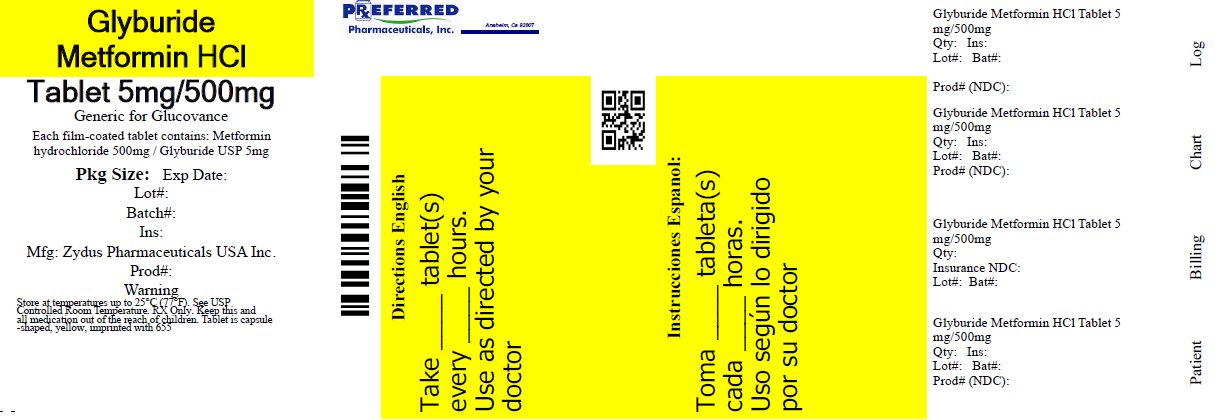
[image: MM3]Glyburide and Metformin Hydrochloride Tablets USP, 5 mg/500 mg are pale yellow colored, capsule shaped, biconvex coated tablets, debossed with "655" on one side and plain on the other side and are supplied as follows:
NDC 68788-6915-3 in bottles of 30 tablets
NDC 68788-6915-6 in bottles of 60 tablets
NDC 68788-6915-9 in bottles of 90 tablets
NDC 68788-6915-1 in bottles of 100 tablets
NDC 68788-6915-8 in bottles of 120 tablets
STORAGE
Store at 20° to 25°C (68° to 77°F) [See USP Controlled Room Temperature].
Dispense in a tight container (USP).
GLUCOPHAGE® is a registered trademark of Merck SantÉ S.A.S., an associate of Merck KGaA of Darmstadt, Germany. Licensed to Bristol-Myers Squibb Company.
Micronase® is a registered trademark of Pharmacia & Upjohn Company.
Manufactured by:
Cadila Healthcare Ltd.
Baddi, India
Distributed by:
Zydus Pharmaceuticals USA Inc.
Pennington, NJ 08534
Rev.: 04/17
Photos of the product and/or packaging supplied by the manufacturer.
Glyburide and metformin hydrochloride tablet combines glyburide and metformin hydrochloride, 2 antihyperglycemic agents with complementary mechanisms of action, to improve glycemic control in patients with type 2 diabetes.
Glyburide appears to lower blood glucose acutely by stimulating the release of insulin from the pancreas, an effect dependent upon functioning beta cells in the pancreatic islets. The mechanism by which glyburide lowers blood glucose during long-term administration has not been clearly established. With chronic administration in patients with type 2 diabetes, the blood glucose-lowering effect persists despite a gradual decline in the insulin secretory response to the drug. Extrapancreatic effects may be involved in the mechanism of action of oral sulfonylurea hypoglycemic drugs.
Metformin hydrochloride is an antihyperglycemic agent that improves glucose tolerance in patients with type 2 diabetes, lowering both basal and postprandial plasma glucose. Metformin hydrochloride decreases hepatic glucose production, decreases intestinal absorption of glucose, and improves insulin sensitivity by increasing peripheral glucose uptake and utilization.
Absorption and Bioavailability
Glyburide and Metformin Hydrochloride
In bioavailability studies of glyburide and metformin hydrochloride 2.5 mg/500 mg and 5 mg/500 mg, the mean area under the plasma concentration versus time curve (AUC) for the glyburide component was 18% and 7%, respectively, greater than that of the Micronase® brand of glyburide coadministered with metformin. The glyburide component of glyburide and metformin hydrochloride, therefore, is not bioequivalent to Micronase®. The metformin component of glyburide and metformin hydrochloride is bioequivalent to metformin coadministered with glyburide.
Following administration of a single glyburide and metformin hydrochloride 5 mg/500 mg tablet with either a 20% glucose solution or a 20% glucose solution with food, there was no effect of food on the Cmax and a relatively small effect of food on the AUC of the glyburide component. The Tmax for the glyburide component was shortened from 7.5 hours to 2.75 hours with food compared to the same tablet strength administered fasting with a 20% glucose solution. The clinical significance of an earlier Tmax for glyburide after food is not known. The effect of food on the pharmacokinetics of the metformin component was indeterminate.
Glyburide
Single-dose studies with Micronase® tablets in normal subjects demonstrate significant absorption of glyburide within 1 hour, peak drug levels at about 4 hours, and low but detectable levels at 24 hours. Mean serum levels of glyburide, as reflected by areas under the serum concentration-time curve, increase in proportion to corresponding increases in dose. Bioequivalence has not been established between glyburide and metformin hydrochloride and single-ingredient glyburide products.
Metformin Hydrochloride
The absolute bioavailability of a 500 mg metformin hydrochloride tablet given under fasting conditions is approximately 50% to 60%. Studies using single oral doses of metformin tablets of 500 mg and 1500 mg, and 850 mg to 2550 mg, indicate that there is a lack of dose proportionality with increasing doses, which is due to decreased absorption rather than an alteration in elimination.
Food decreases the extent of and slightly delays the absorption of metformin, as shown by approximately a 40% lower peak concentration and a 25% lower AUC in plasma and a 35-minute prolongation of time to peak plasma concentration following administration of a single 850 mg tablet of metformin with food, compared to the same tablet strength administered fasting. The clinical relevance of these decreases is unknown.
Glyburide
Sulfonylurea drugs are extensively bound to serum proteins. Displacement from protein binding sites by other drugs may lead to enhanced hypoglycemic action. In vitro, the protein binding exhibited by glyburide is predominantly non-ionic, whereas that of other sulfonylureas (chlorpropamide, tolbutamide, tolazamide) is predominantly ionic. Acidic drugs, such as phenylbutazone, warfarin, and salicylates, displace the ionic-binding sulfonylureas from serum proteins to a far greater extent than the non-ionic binding glyburide. It has not been shown that this difference in protein binding results in fewer drug-drug interactions with glyburide tablets in clinical use.
Metformin Hydrochloride
The apparent volume of distribution (V/F) of metformin following single oral doses of 850 mg averaged 654±358 L. Metformin is negligibly bound to plasma proteins. Metformin partitions into erythrocytes, most likely as a function of time. At usual clinical doses and dosing schedules of metformin, steady-state plasma concentrations of metformin are reached within 24 to 48 hours and are generally <1 mcg/mL. During controlled clinical trials, maximum metformin plasma levels did not exceed 5 mcg/mL, even at maximum doses.
Glyburide
The decrease of glyburide in the serum of normal healthy individuals is biphasic; the terminal half-life is about 10 hours. The major metabolite of glyburide is the 4-trans-hydroxy derivative. A second metabolite, the 3-cis-hydroxy derivative, also occurs. These metabolites probably contribute no significant hypoglycemic action in humans since they are only weakly active (1/400 and 1/40 as active, respectively, as glyburide) in rabbits. Glyburide is excreted as metabolites in the bile and urine, approximately 50% by each route. This dual excretory pathway is qualitatively different from that of other sulfonylureas, which are excreted primarily in the urine.
Metformin Hydrochloride
Intravenous single-dose studies in normal subjects demonstrate that metformin is excreted unchanged in the urine and does not undergo hepatic metabolism (no metabolites have been identified in humans) nor biliary excretion. Renal clearance (see Table 1 ) is approximately 3.5 times greater than creatinine clearance, which indicates that tubular secretion is the major route of metformin elimination. Following oral administration, approximately 90% of the absorbed drug is eliminated via the renal route within the first 24 hours, with a plasma elimination half-life of approximately 6.2 hours. In blood, the elimination half-life is approximately 17.6 hours, suggesting that the erythrocyte mass may be a compartment of distribution.
Specific Populations
Patients With Type 2 Diabetes
Multiple-dose studies with glyburide in patients with type 2 diabetes demonstrate drug level concentration-time curves similar to single-dose studies, indicating no buildup of drug in tissue depots.
In the presence of normal renal function, there are no differences between single- or multiple-dose pharmacokinetics of metformin between patients with type 2 diabetes and normal subjects (see Table 1 ), nor is there any accumulation of metformin in either group at usual clinical doses.
Hepatic Impairment
No pharmacokinetic studies have been conducted in patients with hepatic insufficiency for either glyburide or metformin (see PRECAUTIONS ).
Renal Impairment
No information is available on the pharmacokinetics of glyburide in patients with renal insufficiency.
In patients with decreased renal function the plasma and blood half-life of metformin is prolonged and the renal clearance is decreased (see Table 1 ; also, see CONTRAINDICATIONS, WARNINGS, PRECAUTIONS, and DOSAGE AND ADMINISTRATION).
Geriatrics
There is no information on the pharmacokinetics of glyburide in elderly patients.
Limited data from controlled pharmacokinetic studies of metformin in healthy elderly subjects suggest that total plasma clearance is decreased, the half-life is prolonged, and Cmax is increased, when compared to healthy young subjects. From these data, it appears that the change in metformin pharmacokinetics with aging is primarily accounted for by a change in renal function (see Table 1; also see WARNINGS, PRECAUTIONS, and DOSAGE AND ADMINISTRATION ).
|
Subject Groups: Metformin Dose
(number of subjects)
|
Cmax
|
Tmax
|
Renal Clearance (mL/min)
|
|
Healthy, nondiabetic adults:
|
|||
|
500 mg SD (24) |
1.03 (±0.33) |
2.75 (±0.81) |
600 (±132) |
|
850 mg SD (74) |
1.60 (±0.38) |
2.64 (±0.82) |
552 (±139) |
|
850 mg t.i.d. for 19 doses (9) |
2.01 (±0.42) |
1.79 (±0.94) |
642 (±173) |
|
Adults with type 2 diabetes:
|
|||
|
850 mg SD (23) |
1.48 (±0.5) |
3.32 (±1.08) |
491 (±138) |
|
850 mg t.i.d. for 19 doses (9) |
1.90 (±0.62) |
2.01 (±1.22) |
550 (±160) |
|
Elderly
, healthy nondiabetic adults:
|
|||
|
850 mg SD (12) |
2.45 (±0.70) |
2.71 (±1.05) |
412 (±98) |
|
Renal-impaired adults: 850 mg SD
|
|||
|
Mild (CLcr
61 to 90 mL/min) (5) |
1.86 (±0.52) |
3.20 (±0.45) |
384 (±122) |
|
Moderate (CLcr 31 to 60 mL/min) (4) |
4.12 (±1.83) |
3.75 (±0.50) |
108 (±57) |
|
Severe (CLcr 10 to 30 mL/min) (6) |
3.93 (±0.92) |
4.01 (±1.10) |
130 (±90) |
Pediatrics
After administration of a single oral GLUCOPHAGE® (metformin hydrochloride) 500 mg tablet with food, geometric mean metformin Cmax and AUC differed <5% between pediatric type 2 diabetic patients (12 to 16 years of age) and gender- and weight-matched healthy adults (20 to 45 years of age), all with normal renal function.
After administration of a single oral glyburide and metformin hydrochloride tablet with food, dose-normalized geometric mean glyburide Cmax and AUC in pediatric patients with type 2 diabetes (11 to 16 years of age, n=28, mean body weight of 97 kg) differed <6% from historical values in healthy adults.
Gender
There is no information on the effect of gender on the pharmacokinetics of glyburide.
Metformin pharmacokinetic parameters did not differ significantly in subjects with or without type 2 diabetes when analyzed according to gender (males=19, females=16). Similarly, in controlled clinical studies in patients with type 2 diabetes, the antihyperglycemic effect of metformin was comparable in males and females.
Race
No information is available on race differences in the pharmacokinetics of glyburide.
No studies of metformin pharmacokinetic parameters according to race have been performed. In controlled clinical studies of metformin in patients with type 2 diabetes, the antihyperglycemic effect was comparable in whites (n=249), blacks (n=51), and Hispanics (n=24).
Patients with Inadequate Glycemic Control on Diet and Exercise Alone
In a 20-week, double-blind, multicenter U.S. clinical trial, a total of 806 drug-naive patients with type 2 diabetes, whose hyperglycemia was not adequately controlled with diet and exercise alone (baseline fasting plasma glucose [FPG] <240 mg/dL, baseline hemoglobin A1c [HbA1c] between 7% and 11%), were randomized to receive initial therapy with placebo, 2.5 mg glyburide, 500 mg metformin, glyburide and metformin hydrochloride 1.25 mg/250 mg, or glyburide and metformin hydrochloride 2.5 mg/500 mg. After 4 weeks, the dose was progressively increased (up to the 8-week visit) to a maximum of 4 tablets daily as needed to reach a target FPG of 126 mg/dL. Trial data at 20 weeks are summarized in Table 2 .
|
Placebo
|
Glyburide 2.5 mg tablets
|
Metformin 500 mg tablets
|
Glyburide and Metformin Hydrochloride 1.25 mg/250 mg tablets
|
Glyburide and Metformin Hydrochloride 2.5 mg/500 mg tablets
|
|
|
Mean Final Dose
|
0 mg |
5.3 mg |
1317 mg |
2.78 mg/557 mg |
4.1 mg/824 mg |
|
Hemoglobin A1c
|
N=147 |
N=142 |
N=141 |
N=149 |
N=152 |
|
Baseline Mean (%) |
8.14 |
8.14 |
8.23 |
8.22 |
8.2 |
|
Mean Change from Baseline |
−0.21 |
−1.24 |
−1.03 |
−1.48 |
−1.53 |
|
Difference from Placebo |
−1.02 |
−0.82 |
−1.26
|
−1.31
|
|
|
Difference from Glyburide |
−0.24
|
−0.29
|
|||
|
Difference from Metformin |
−0.44
|
−0.49
|
|||
|
Fasting Plasma Glucose
|
N=159 |
N=158 |
N=156 |
N=153 |
N=154 |
|
Baseline Mean FPG (mg/dL) |
177.2 |
178.9 |
175.1 |
178 |
176.6 |
|
Mean Change from Baseline |
4.6 |
−35.7 |
−21.2 |
−41.5 |
−40.1 |
|
Difference from Placebo |
−40.3 |
−25.8 |
−46.1
|
−44.7
|
|
|
Difference from Glyburide |
−5.8
|
−4.5
|
|||
|
Difference from Metformin |
−20.3
|
−18.9
|
|||
|
Body Weight Mean
|
−0.7 kg |
+1.7 kg |
−0.6 kg |
+1.4 kg |
+1.9 kg |
|
Final HbA1c Distribution (%)
|
N=147 |
N=142 |
N=141 |
N=149 |
N=152 |
|
<7% |
19.7% |
59.9% |
50.4% |
66.4% |
71.7% |
|
≥7% and <8% |
37.4% |
26.1% |
29.8% |
25.5% |
19.1% |
|
≥8% |
42.9% |
14.1% |
19.9% |
8.1% |
9.2% |
Treatment with glyburide and metformin hydrochloride resulted in significantly greater reduction in HbA1c and postprandial plasma glucose (PPG) compared to glyburide, metformin, or placebo. Also, glyburide and metformin hydrochloride therapy resulted in greater reduction in FPG compared to glyburide, metformin, or placebo, but the differences from glyburide and metformin did not reach statistical significance.
Changes in the lipid profile associated with glyburide and metformin hydrochloride treatment were similar to those seen with glyburide, metformin, and placebo.
The double-blind, placebo-controlled trial described above restricted enrollment to patients with HbA1c <11% or FPG <240 mg/dL. Screened patients ineligible for the first trial because of HbA1c and/or FPG exceeding these limits were treated directly with glyburide and metformin hydrochloride 2.5 mg/500 mg in an open-label, uncontrolled protocol. In this study, 3 out of 173 patients (1.7%) discontinued because of inadequate therapeutic response.
Across the group of 144 patients who completed 26 weeks of treatment, mean HbA1c was reduced from a baseline of 10.6% to 7.1%. The mean baseline FPG was 283 mg/dL and reduced to 164 and 161 mg/dL after 2 and 26 weeks, respectively. The mean final titrated dose of glyburide and metformin hydrochloride was 7.85 mg/1569 mg (equivalent to approximately 3 glyburide and metformin hydrochloride 2.5 mg/500 mg tablets per day).
Patients with Inadequate Glycemic Control on Sulfonylurea Alone
In a 16-week, double-blind, active-controlled U.S. clinical trial, a total of 639 patients with type 2 diabetes not adequately controlled (mean baseline HbA1c 9.5%, mean baseline FPG 213 mg/dL) while being treated with at least one-half the maximum dose of a sulfonylurea (e.g., glyburide 10 mg, glipizide 20 mg) were randomized to receive glyburide (fixed dose, 20 mg), metformin (500 mg), glyburide and metformin hydrochloride 2.5 mg/500 mg, or glyburide and metformin hydrochloride 5 mg/500 mg. The doses of metformin and glyburide and metformin hydrochloride were titrated to a maximum of 4 tablets daily as needed to achieve FPG <140 mg/dL. Trial data at 16 weeks are summarized in Table 3 .
|
Glyburide 5 mg tablets
|
Metformin 500 mg tablets
|
Glyburide and Metformin Hydrochloride 2.5 mg/500 mg tablets
|
Glyburide and Metformin Hydrochloride
|
|
|
Mean Final Dose
|
20 mg |
1840 mg |
8.8 mg/1760 mg |
17 mg/1740 mg |
|
Hemoglobin A1c
|
N=158 |
N=142 |
N=154 |
N=159 |
|
Baseline Mean (%) |
9.63 |
9.51 |
9.43 |
9.44 |
|
Final Mean |
9.61 |
9.82 |
7.92 |
7.91 |
|
Difference from Glyburide |
−1.69 |
−1.70 |
||
|
Difference from Metformin |
−1.90 |
−1.91 |
||
|
Fasting Plasma Glucose
|
N=163 |
N=152 |
N=160 |
N=160 |
|
Baseline Mean (mg/dL) |
218.4 |
213.4 |
212.2 |
210.2 |
|
Final Mean |
221 |
233.8 |
169.6 |
161.1 |
|
Difference from Glyburide |
−51.3 |
−59.9 |
||
|
Difference from Metformin |
−64.2 |
−72.7 |
||
|
Body Weight Mean
|
+0.43 kg |
−2.76 kg |
+0.75 kg |
+0.47 kg |
|
Final HbA1c Distribution (%)
|
N=158 |
N=142 |
N=154 |
N=159 |
|
<7% |
2.5% |
2.8% |
24.7% |
22.6% |
|
≥7% and <8% |
9.5% |
11.3% |
33.1% |
37.1% |
|
≥8% |
88% |
85.9% |
42.2% |
40.3% |
After 16 weeks, there was no significant change in the mean HbA1c in patients randomized to glyburide or metformin therapy. Treatment with glyburide and metformin hydrochloride at doses up to 20 mg/2000 mg per day resulted in significant lowering of HbA1c, FPG, and PPG from baseline compared to glyburide or metformin alone.
Addition of Thiazolidinediones to Glyburide and Metformin Hydrochloride Therapy
In a 24-week, double-blind, multicenter U.S. clinical trial, patients with type 2 diabetes not adequately controlled on current oral antihyperglycemic therapy (either monotherapy or combination therapy) were first switched to open label glyburide and metformin hydrochloride 2.5 mg/500 mg tablets and titrated to a maximum daily dose of 10 mg/2000 mg. A total of 365 patients inadequately controlled (HbA1c >7% and ≤10%) after 10 to 12 weeks of a daily glyburide and metformin hydrochloride dose of at least 7.5 mg/1500 mg were randomized to receive add-on therapy with rosiglitazone 4 mg or placebo once daily. After 8 weeks, the rosiglitazone dose was increased to a maximum of 8 mg daily as needed to reach a target mean daily glucose of 126 mg/dL or HbA1c <7%. Trial data at 24 weeks or the last prior visit are summarized in Table 4 .
|
Placebo +
|
Rosiglitazone +
|
|
|
Mean Final Dose
|
||
|
Glyburide and Metformin Hydrochloride
|
10 mg/1992 mg |
9.6 mg/1914 mg |
|
Rosiglitazone
|
0 mg |
7.4 mg |
|
Hemoglobin A1c
|
N=178 |
N=177 |
|
Baseline Mean (%) |
8.09 |
8.14 |
|
Final Mean |
8.21 |
7.23 |
|
Difference from Placebo |
−1.02 |
|
|
Fasting Plasma Glucose
|
N=181 |
N=176 |
|
Baseline Mean (mg/dL) |
173.1 |
178.4 |
|
Final Mean |
181.4 |
136.3 |
|
Difference from Placebo |
−48.5 |
|
|
Body Weight Mean Change from Baseline
|
+0.03 kg |
+3.03 kg |
|
Final HbA1c Distribution (%)
|
N=178 |
N=177 |
|
<7% |
13.5% |
42.4% |
|
≥7% and <8% |
32% |
38.4% |
|
≥8% |
54.5% |
19.2% |
For patients who did not achieve adequate glycemic control on glyburide and metformin hydrochloride, the addition of rosiglitazone, compared to placebo, resulted in significant lowering of HbA1c and FPG.
The administration of oral hypoglycemic drugs has been reported to be associated with increased cardiovascular mortality as compared to treatment with diet alone or diet plus insulin. This warning is based on the study conducted by the University Group Diabetes Program (UGDP), a long-term prospective clinical trial designed to evaluate the effectiveness of glucose-lowering drugs in preventing or delaying vascular complications in patients with non-insulin-dependent diabetes. The study involved 823 patients who were randomly assigned to 1 of 4 treatment groups (Diabetes 19 (Suppl. 2):747-830, 1970).
UGDP reported that patients treated for 5 to 8 years with diet plus a fixed dose of tolbutamide (1.5 g per day) had a rate of cardiovascular mortality approximately 2½ times that of patients treated with diet alone.
A significant increase in total mortality was not observed, but the use of tolbutamide was discontinued based on the increase in cardiovascular mortality, thus limiting the opportunity for the study to show an increase in overall mortality. Despite controversy regarding the interpretation of these results, the findings of the UGDP study provide an adequate basis for this warning. The patient should be informed of the potential risks and benefits of glyburide and of alternative modes of therapy.
Although only 1 drug in the sulfonylurea class (tolbutamide) was included in this study, it is prudent from a safety standpoint to consider that this warning may also apply to other hypoglycemic drugs in this class, in view of their close similarities in mode of action and chemical structure.
In controlled clinical trials of glyburide and metformin hydrochloride there were no hypoglycemic episodes requiring medical intervention and/or pharmacologic therapy; all events were managed by the patients. The incidence of reported symptoms of hypoglycemia (such as dizziness, shakiness, sweating, and hunger), in the initial therapy trial of glyburide and metformin hydrochloride are summarized in Table 7 .
The frequency of hypoglycemic symptoms in patients treated with glyburide and metformin hydrochloride 1.25 mg/250 mg was highest in patients with a baseline HbA1c <7%, lower in those with a baseline HbA1c of between 7% and 8%, and was comparable to placebo and metformin in those with a baseline HbA1c >8%. For patients with a baseline HbA1c between 8% and 11% treated with glyburide and metformin hydrochloride 2.5 mg/500 mg as initial therapy, the frequency of hypoglycemic symptoms was 30% to 35%. As second-line therapy in patients inadequately controlled on sulfonylurea alone, approximately 6.8% of all patients treated with glyburide and metformin hydrochloride experienced hypoglycemic symptoms. When rosiglitazone was added to glyburide and metformin hydrochloride therapy, 22% of patients reported 1 or more fingerstick glucose measurements ≤50 mg/dL compared to 3.3% of placebo-treated patients. All hypoglycemic events were managed by the patients and only 1 patient discontinued for hypoglycemia. (See PRECAUTIONS: General: Addition of Thiazolidinediones to Glyburide and Metformin Hydrochloride Therapy.)
The incidence of gastrointestinal (GI) side effects (diarrhea, nausea/vomiting, and abdominal pain) in the initial therapy trial are summarized in Table 7 . Across all glyburide and metformin hydrochloride trials, GI symptoms were the most common adverse events with glyburide and metformin hydrochloride and were more frequent at higher dose levels. In controlled trials, <2% of patients discontinued glyburide and metformin hydrochloride therapy due to GI adverse events.
|
Variable
|
Placebo
|
Glyburide Tablets
|
Metformin Tablets
|
Glyburide and Metformin Hydrochloride 1.25 mg/250 mg Tablets
|
Glyburide and Metformin Hydrochloride 2.5 mg/500 mg Tablets
|
|
Mean Final Dose |
0 mg |
5.3 mg |
1317 mg |
2.78 mg/557 mg |
4.1 mg/824 mg |
|
Number (%) of patients |
5 (3.1) |
34 (21.3) |
5 (3.1) |
18 (11.4) |
61 (37.7) |
|
Number (%) of patients |
39 (24.2) |
38 (23.8) |
69 (43.3) |
50 (31.6) |
62 (38.3) |
Metformin Hydrochloride
Cholestatic, hepatocellular, and mixed hepatocellular liver injury have been reported with postmarketing use of metformin.
Glyburide
Gastrointestinal Reactions
Cholestatic jaundice and hepatitis may occur rarely which may progress to liver failure; the drug should be discontinued if this occurs. Liver function abnormalities, including isolated transaminase elevations, have been reported.
Dermatologic Reactions
Allergic skin reactions, e.g., pruritus, erythema, urticaria, and morbilliform or maculopapular eruptions, occur in 1.5% of glyburide-treated patients. These may be transient and may disappear despite continued use; if skin reactions persist, the drug should be discontinued.
Postmarketing Adverse Reactions
The following adverse reactions have been identified during post-approval use. Because these reactions are reported voluntarily from a population of uncertain size, it is generally not possible to reliably estimate their frequency or establish a causal relationship to drug exposure.
Allergic: Angioedema, arthralgia, myalgia, and vasculitis have been reported.
Dermatologic: Porphyria cutanea tarda and photosensitivity reactions have been reported with sulfonylureas.
Hematologic: Leukopenia, agranulocytosis, thrombocytopenia, which occasionally may present as purpura, hemolytic anemia, aplastic anemia, and pancytopenia, have been reported with sulfonylureas.
Metabolic: Hepatic porphyria reactions have been reported with sulfonylureas; however, these have not been reported with glyburide. Disulfiram-like reactions have been reported very rarely with glyburide. Cases of hyponatremia have been reported with glyburide and all other sulfonylureas, most often in patients who are on other medications or have medical conditions known to cause hyponatremia or increase release of antidiuretic hormone.
Other Reactions: Changes in accommodation and/or blurred vision have been reported with glyburide and other sulfonylureas. These are thought to be related to fluctuation in glucose levels.
Dosage of glyburide and metformin hydrochloride tablets must be individualized on the basis of both effectiveness and tolerance while not exceeding the maximum recommended daily dose of 20 mg glyburide/2000 mg metformin. Glyburide and metformin hydrochloride tablets should be given with meals and should be initiated at a low dose, with gradual dose escalation as described below, in order to avoid hypoglycemia (largely due to glyburide), reduce GI side effects (largely due to metformin), and permit determination of the minimum effective dose for adequate control of blood glucose for the individual patient.
With initial treatment and during dose titration, appropriate blood glucose monitoring should be used to determine the therapeutic response to glyburide and metformin hydrochloride tablets and to identify the minimum effective dose for the patient. Thereafter, HbA1c should be measured at intervals of approximately 3 months to assess the effectiveness of therapy. The therapeutic goal in all patients with type 2 diabetes is to decrease FPG, PPG, and HbA1c to normal or as near normal as possible. Ideally, the response to therapy should be evaluated using HbA1c (glycosylated hemoglobin), which is a better indicator of long-term glycemic control than FPG alone.
No studies have been performed specifically examining the safety and efficacy of switching to glyburide and metformin hydrochloride tablets therapy in patients taking concomitant glyburide (or other sulfonylurea) plus metformin. Changes in glycemic control may occur in such patients, with either hyperglycemia or hypoglycemia possible. Any change in therapy of type 2 diabetes should be undertaken with care and appropriate monitoring.
Recommended starting dose: 1.25 mg glyburide and 250 mg metformin hydrochloride once or twice daily with meals. Glyburide 1.25 mg and metformin hydrochloride 250mg tablets are available as individual components or a combination tablet.
For patients with type 2 diabetes whose hyperglycemia cannot be satisfactorily managed with diet and exercise alone, the recommended starting dose is 1.25 mg glyburide and 250 mg metformin hydrochloride once a day with a meal. As initial therapy in patients with baseline HbA1c >9% or an FPG >200 mg/dL, a starting dose of 1.25 mg glyburide and 250 mg metformin hydrochloride twice daily with the morning and evening meals may be used. Dosage increases should be made in increments of 1.25 mg glyburide and 250 mg metformin hydrochloride per day every 2 weeks up to the minimum effective dose necessary to achieve adequate control of blood glucose. In clinical trials of glyburide and metformin hydrochloride tablets as initial therapy, there was no experience with total daily doses >10 mg/2000 mg per day. Glyburide and metformin hydrochloride tablets 5 mg/500 mg should not be used as initial therapy due to an increased risk of hypoglycemia.
Recommended starting dose: 2.5 mg/500 mg or 5 mg/500 mg twice daily with meals.
For patients not adequately controlled on either glyburide (or another sulfonylurea) or metformin alone, the recommended starting dose of glyburide and metformin hydrochloride tablet is 2.5 mg/500 mg or 5 mg/500 mg twice daily with the morning and evening meals. In order to avoid hypoglycemia, the starting dose of glyburide and metformin hydrochloride tablets should not exceed the daily doses of glyburide or metformin already being taken. The daily dose should be titrated in increments of no more than 5 mg/500 mg up to the minimum effective dose to achieve adequate control of blood glucose or to a maximum dose of 20 mg/2000 mg per day.
For patients previously treated with combination therapy of glyburide (or another sulfonylurea) plus metformin, if switched to glyburide and metformin hydrochloride tablets, the starting dose should not exceed the daily dose of glyburide (or equivalent dose of another sulfonylurea) and metformin already being taken. Patients should be monitored closely for signs and symptoms of hypoglycemia following such a switch and the dose of glyburide and metformin hydrochloride tablets should be titrated as described above to achieve adequate control of blood glucose.
For patients not adequately controlled on glyburide and metformin hydrochloride tablets, a thiazolidinedione can be added to glyburide and metformin hydrochloride tablets therapy. When a thiazolidinedione is added to glyburide and metformin hydrochloride tablets therapy, the current dose of glyburide and metformin hydrochloride tablets can be continued and the thiazolidinedione initiated at its recommended starting dose. For patients needing additional glycemic control, the dose of the thiazolidinedione can be increased based on its recommended titration schedule. The increased glycemic control attainable with glyburide and metformin hydrochloride tablets plus a thiazolidinedione may increase the potential for hypoglycemia at any time of day. In patients who develop hypoglycemia when receiving glyburide and metformin hydrochloride tablets and a thiazolidinedione, consideration should be given to reducing the dose of the glyburide component of glyburide and metformin hydrochloride tablets. As clinically warranted, adjustment of the dosages of the other components of the antidiabetic regimen should also be considered.
When colesevelam is coadministered with glyburide, maximum plasma concentration and total exposure to glyburide is reduced. Therefore, glyburide and metformin hydrochloride tablets should be administered at least 4 hours prior to colesevelam.
Assess renal function prior to initiation of glyburide and metformin hydrochloride tablets and periodically thereafter.
Glyburide and metformin hydrochloride tablets are contraindicated in patients with an estimated glomerular filtration rate (eGFR) below 30 mL/minute/1.73 m2.
Initiation of glyburide and metformin hydrochloride tablets in patients with an eGFR between 30 – 45 mL/minute/1.73 m2 is not recommended.
In patients taking glyburide and metformin hydrochloride tablets whose eGFR later falls below 45 mL/min/1.73 m2, assess the benefit risk of continuing therapy.
Discontinue glyburide and metformin hydrochloride tablets if the patient's eGFR later falls below 30 mL/minute/1.73 m2. (See WARNINGS and PRECAUTIONS ).
Discontinue glyburide and metformin hydrochloride tablets at the time of, or prior to, an iodinated contrast imaging procedure in patients with an eGFR between 30 and 60 mL/min/1.73 m2; in patients with a history of liver disease, alcoholism or heart failure; or in patients who will be administered intra-arterial iodinated contrast. Re-evaluate eGFR 48 hours after the imaging procedure; restart glyburide and metformin hydrochloride tablets if renal function is stable.
Glyburide and metformin hydrochloride tablets are not recommended for use during pregnancy. The initial and maintenance dosing of glyburide and metformin hydrochloride tablets should be conservative in patients with advanced age, due to the potential for decreased renal function in this population. Any dosage adjustment requires a careful assessment of renal function.
Create a free account to view complete drug information, save medications, and more.
Free forever · No credit card required