 MedLens
Loading…
Tablets, USP · A-S Medication Solutions
Dosage Form
Tablets, USP
Manufacturer
A-S Medication Solutions
This medication contains important usage instructions, warnings, and side effect information that you should review before use.
WARNING: LACTIC ACIDOSIS
Post-marketing cases of metformin-associated lactic acidosis have resulted in death,hypothermia, hypotension, and resistant bradyarrhythmias. The onset of metformin-associated lactic acidosis is often subtle, accompanied only by nonspecific symptoms such as malaise, myalgias, respiratory distress, somnolence, and abdominal pain. Metformin-associated lactic acidosis was characterized by elevated blood lactate levels (> 5 mmol/Liter), anion gap acidosis (without evidence of ketonuria or ketonemia), an increased lactate/pyruvate ratio; and metformin plasma levels generally > 5 mcg/mL [see PRECAUTIONS] Risk factors for metformin-associated lactic acidosis include renal impairment, concomitant use of certain drugs (e.g., carbonic anhydrase inhibitors such as topiramate), age 65 years old or greater, having a radiological study with contrast, surgery and other procedures, hypoxic states (e.g., acute congestive heart failure), excessive alcohol intake, and hepatic impairment. Steps to reduce the risk of and manage metformin-associated lactic acidosis in these high risk groups are provided [see PRECAUTIONS].
If metformin-associated lactic acidosis is suspected, immediately discontinue glipizide and metformin hydrochloride and institute general supportive measures in a hospital setting.
Prompt hemodialysis is recommended [see PRECAUTIONS].
Glipizide and metformin hydrochloride tablets are indicated as an adjunct to diet and exercise to improve glycemic control in adults with type 2 diabetes mellitus.
Glipizide and metformin hydrochloride tablets are contraindicated in patients with:
Although it is not known whether glipizide is excreted in human milk, some sulfonylurea drugs are known to be excreted in human milk. Studies in lactating rats show that metformin is excreted into milk and reaches levels comparable to those in plasma. Similar studies have not been conducted in nursing mothers. Because the potential for hypoglycemia in nursing infants may exist, a decision should be made whether to discontinue nursing or to discontinue glipizide and metformin hydrochloride tablets, taking into account the importance of the drug to the mother. If glipizide and metformin hydrochloride tablets are discontinued, and if diet alone is inadequate for controlling blood glucose, insulin therapy should be considered.
Safety and effectiveness of glipizide and metformin hydrochloride tablets in pediatric patients have not been established.
Of the 345 patients who received glipizide and metformin hydrochloride tablets 2.5 mg/250 mg and 2.5 mg/500 mg in the initial therapy trial, 67 (19.4%) were aged 65 and older while 5 (1.4%) were aged 75 and older. Of the 87 patients who received glipizide and metformin hydrochloride tablets in the second-line therapy trial, 17 (19.5%) were aged 65 and older while one (1.1%) was at least aged 75. No overall differences in effectiveness or safety were observed between these patients and younger patients in either the initial therapy trial or the second-line therapy trial, and other reported clinical experience has not identified differences in response between the elderly and younger patients, but greater sensitivity of some older individuals cannot be ruled out.
In general, dose selection for an elderly patient should be cautious, usually starting at the low end of the dosing range, reflecting the greater frequency of decreased hepatic, renal, or cardiac function, and of concomitant disease or other drug therapy and the higher risk of lactic acidosis. Assess renal function more frequently in elderly patients (see also WARNINGS, PRECAUTION and DOSAGE AND ADMINISTRATION).
Store at 20°C to 25° C (68°F to 77° F) [See USP Controlled Room Temperature].
Dispense in a tight container.
Manufactured by:
Zydus Lifesciences Ltd.
Ahmedabad, India
Distributed by:
Zydus Pharmaceuticals (USA) Inc.
Pennington, NJ 08534
Rev.: 02/23
Glipizide and metformin hydrochloride tablets contain two oral antihyperglycemic drugs used in the management of type 2 diabetes, glipizide and metformin hydrochloride.
Glipizide is an oral antihyperglycemic drug of the sulfonylurea class. The chemical name for glipizide is 1-cyclohexyl-3-[[p-[2-(5-methylpyrazinecarboxamido)ethyl]phenyl] sulfonyl]urea. Glipizide, USP is a white to almost white; crystalline powder with a molecular formula of C21H27N5O4S, a molecular weight of 445.55 and a pKa of 5.9. The structural formula is represented below.
[image: MM1]Metformin hydrochloride, USP is an oral antihyperglycemic drug used in the management of type 2 diabetes. Metformin hydrochloride (N,N-dimethylimidodicarbonimidic diamide monohydrochloride) is not chemically or pharmacologically related to sulfonylureas, thiazolidinediones, or α-glucosidase inhibitors. It is white crystalline compound with a molecular formula of C4H12ClN5 (monohydrochloride) and a molecular weight of 165.63. Metformin hydrochloride is freely soluble in water, slightly soluble in alcohol, practically insoluble in acetone and in methylene chloride. The pKa of metformin is 12.4. The pH of a 1% aqueous solution of metformin hydrochloride is 6.68. The structural formula is as shown:
[image: MM2]Each glipizide and metformin hydrochloride tablet intended for oral administration contains glipizide, 2.5 mg or 5 mg and metformin hydrochloride, 250 mg or 500 mg. In addition, each tablet contains the following inactive ingredients: croscarmellose sodium, hydroxypropyl methylcellulose, magnesium stearate, microcrystalline cellulose, polyethylene glycol, povidone and titanium dioxide. Additionally each 2.5 mg/250 mg and 5 mg/500 mg tablet contains iron oxide red and each 2.5 mg/500 mg tablet contains polysorbate 80.
Product: 50090-2492
NDC: 50090-2492-0 180 TABLET, FILM COATED in a BOTTLE
Product: 50090-2556
NDC: 50090-2556-0 180 TABLET, FILM COATED in a BOTTLE
Photos of the product and/or packaging supplied by the manufacturer.


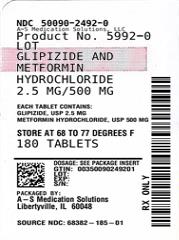
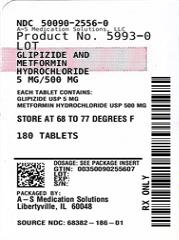
Glipizide and metformin hydrochloride tablet combines glipizide and metformin hydrochloride, two antihyperglycemic agents with complementary mechanisms of action, to improve glycemic control in patients with type 2 diabetes.
Glipizide appears to lower blood glucose acutely by stimulating the release of insulin from the pancreas, an effect dependent upon functioning beta cells in the pancreatic islets. Extrapancreatic effects may play a part in the mechanism of action of oral sulfonylurea hypoglycemic drugs. The mechanism by which glipizide lowers blood glucose during long-term administration has not been clearly established. In man, stimulation of insulin secretion by glipizide in response to a meal is undoubtedly of major importance. Fasting insulin levels are not elevated even on long-term glipizide administration, but the post prandial insulin response continues to be enhanced after at least 6 months of treatment.
Metformin hydrochloride is an antihyperglycemic agent that improves glucose tolerance in patients with type 2 diabetes, lowering both basal and postprandial plasma glucose. Metformin hydrochloride decreases hepatic glucose production, decreases intestinal absorption of glucose, and improves insulin sensitivity by increasing peripheral glucose uptake and utilization.
Patient Information Leaflet
Glipizide and Metformin Hydrochloride
((glip'-i-zide and met-for'-min hye"-dro-klor'-ide))
Tablets, USP
WARNING:
A small number of people who have taken metformin hydrochloride have developed a serious condition called lactic acidosis. Tell your doctor if you have severe kidney problems. (see Question Nos. 9 to 12).
Q1. Why do I need to take Glipizide and Metformin Hydrochloride Tablets?
Your doctor has prescribed glipizide and metformin hydrochloride tablets to treat your type 2 diabetes. This is also known as non-insulin-dependent diabetes mellitus.
Q2. What is type 2 diabetes?
People with diabetes are not able to make enough insulin and/or respond normally to the insulin their body does make. When this happens, sugar (glucose) builds up in the blood. This can lead to serious medical problems including kidney damage, amputations, and blindness. Diabetes is also closely linked to heart disease. The main goal of treating diabetes is to lower your blood sugar to a normal level.
Q3. Why is it important to control type 2 diabetes?
The main goal of treating diabetes is to lower your blood sugar to a normal level. Studies have shown that good control of blood sugar may prevent or delay complications such as heart disease, kidney disease, or blindness.
Q4. How is type 2 diabetes usually controlled?
High blood sugar can be lowered by diet and exercise, by a number of oral medications, and by insulin injections. Before taking glipizide and metformin hydrochloride tablets you should first try to control your diabetes by exercise and weight loss. Even if you are taking glipizide and metformin hydrochloride tablets, you should still exercise and follow the diet recommended for your diabetes.
Q5. Does Glipizide and Metformin Hydrochloride Tablet work differently from other glucose-control medications?
Yes it does. Glipizide and metformin hydrochloride tablet combines two glucose lowering drugs, glipizide and metformin. These two drugs work together to improve the different metabolic defects found in type 2 diabetes. Glipizide lowers blood sugar primarily by causing more of the body's own insulin to be released, and metformin lowers blood sugar, in part, by helping your body use your own insulin more effectively. Together, they are efficient in helping you achieve better glucose control.
Q6. What happens if my blood sugar is still too high?
When blood sugar cannot be lowered enough by glipizide and metformin hydrochloride tablets, your doctor may prescribe injectable insulin or take other measures to control your diabetes.
Q7. Can Glipizide and Metformin Hydrochloride Tablets cause side effects?
Glipizide and metformin hydrochloride tablets, like all blood sugar-lowering medications, can cause side effects in some patients. Most of these side effects are minor. However, there are also serious, but rare, side effects related to glipizide and metformin hydrochloride tablets (see Question Nos. 9-13).
Q8. What are the most common side effects of Glipizide and Metformin Hydrochloride Tablets?
The most common side effects of glipizide and metformin hydrochloride tablets are normally minor ones such as diarrhea, nausea, and upset stomach. If these side effects occur, they usually occur during the first few weeks of therapy. Taking your glipizide and metformin hydrochloride tablets with meals can help reduce these side effects.
Symptoms of hypoglycemia (low blood sugar), such as lightheadedness, dizziness, shakiness, or hunger may occur. The risk of hypoglycemic symptoms increases when meals are skipped, too much alcohol is consumed, or heavy exercise occurs without enough food. Following the advice of your doctor can help you to avoid these symptoms.
Q9. Are there any serious side effects that Glipizide and Metformin Hydrochloride Tablets can cause?
People who have a condition known as glucose-6-phosphate dehydrogenase (G6PD) deficiency and who take glipizide and metformin hydrochloride may develop hemolytic anemia (fast breakdown of red blood cells). G6PD deficiency usually runs in families. Tell your doctor if you or any members of your family have been diagnosed with G6PD deficiency before you start taking Glipizide and metformin hydrochloride tablets.
Glipizide and metformin hydrochloride tablets rarely cause serious side effects. Metformin, one of the medicines in glipizide and metformin hydrochloride can cause a rare but serious condition called lactic acidosis (a buildup of an acid in the blood) that can cause death. Lactic acidosis is a medical emergency and must be treated in the hospital.
Call your doctor right away if you have any of the following symptoms, which could be
signs of lactic acidosis:
Most people who have had lactic acidosis with metformin have other things that, combined with the metformin, led to the lactic acidosis. Tell your doctor if you have any of the following, because you have a higher chance for getting lactic acidosis with glipizide and metformin hydrochloride if you:
The best way to keep from having a problem with lactic acidosis from metformin is to tell your doctor if you have any of the problems in the list above. Your doctor may decide to stop your glipizide and metformin hydrochloride for a while if you have any of these things.
Glipizide and metformin hydrochloride can have other serious side effects. See "What are the possible side effects of glipizide and metformin hydrochloride?"
Q10. Can I take Glipizide and Metformin Hydrochloride Tablets with other medications?
Remind your doctor that you are taking glipizide and metformin hydrochloride tablets when any new drug is prescribed or a change is made in how you take a drug already prescribed.
Glipizide and metformin hydrochloride tablets may interfere with the way some drugs work and some drugs may interfere with the action of glipizide and metformin hydrochloride tablets.
Q11. What if I become pregnant while taking Glipizide and Metformin Hydrochloride Tablets?
Tell your doctor if you plan to become pregnant or have become pregnant. As with other oral glucose-control medications, you should not take glipizide and metformin hydrochloride tablets during pregnancy.
Usually your doctor will prescribe insulin while you are pregnant. As with all medications, you and your doctor should discuss the use of glipizide and metformin hydrochloride tablets if you are nursing a child.
Q12. How do I take Glipizide and Metformin Hydrochloride Tablets?
Your doctor will tell you how many glipizide and metformin hydrochloride tablets to take and how often.
This should also be printed on the label of your prescription. You will probably be started on a low dose of glipizide and metformin hydrochloride tablets and your dosage will be increased gradually until your blood sugar is controlled.
Q13. Where can I get more information about Glipizide and Metformin Hydrochloride Tablets?
This leaflet is a summary of the most important information about glipizide and metformin hydrochloride tablets.
If you have any questions or problems, you should talk to your doctor or other healthcare provider about type 2 diabetes as well as glipizide and metformin hydrochloride tablets and its side effects. There is also a leaflet (package insert) written for health professionals that your pharmacist can let you read.
Call your doctor for medical advice about side effects. You may report side effects to FDA at 1-800-FDA-1088.
Manufactured by:
Zydus Lifesciences Ltd.
Ahmedabad, India
Distributed by:
Zydus Pharmaceuticals (USA) Inc.
Pennington, NJ 08534
Rev.: 02/23
Create a free account to view complete drug information, save medications, and more.
Free forever · No credit card required