 MedLens
Loading…
TABLETS safely and effectively. See full prescribing information for ATORVASTATIN CALCIUM TABLETS. ATORVASTATIN CALCIUM tablets, for oral useInitial U.S. Approval:1996 · A-S Medication Solutions
Dosage Form
TABLETS safely and effectively. See full prescribing information for ATORVASTATIN CALCIUM TABLETS. ATORVASTATIN CALCIUM tablets, for oral useInitial U.S. Approval:1996
Manufacturer
A-S Medication Solutions
This medication contains important usage instructions, warnings, and side effect information that you should review before use.
Risk Summary
Atorvastatin calcium is contraindicated for use in pregnant women since safety in pregnant women has not been established and there is no apparent benefit of lipid lowering drugs during pregnancy. Because HMG-CoA reductase inhibitors decrease cholesterol synthesis and possibly the synthesis of other biologically active substances derived from cholesterol, atorvastatin calcium may cause fetal harm when administered to a pregnant woman. Atorvastatin calcium should be discontinued as soon as pregnancy is recognized [see Contraindications (4)]. Limited published data on the use of atorvastatin are insufficient to determine a drug-associated risk of major congenital malformations or miscarriage. In animal reproduction studies in rats and rabbits there was no evidence of embryo-fetal toxicity or congenital malformations at doses up to 30 and 20 times, respectively, the human exposure at the maximum recommended human dose (MRHD) of 80 mg, based on body surface area (mg/m2). In rats administered atorvastatin during gestation and lactation, decreased postnatal growth and development was observed at doses ≥ 6 times the MRHD (see Data).
The estimated background risk of major birth defects and miscarriage for the indicated population is unknown. In the U.S. general population, the estimated background risk of major birth defects and miscarriage in clinically recognized pregnancies is 2% to 4% and 15% to 20%, respectively.
Data
Human Data
Limited published data on atorvastatin calcium from observational studies, meta-analyses and case reports have not shown an increased risk of major congenital malformations or miscarriage. Rare reports of congenital anomalies have been received following intrauterine exposure to other HMG-CoA reductase inhibitors. In a review of approximately 100 prospectively followed pregnancies in women exposed to simvastatin or lovastatin, the incidences of congenital anomalies, spontaneous abortions, and fetal deaths/stillbirths did not exceed what would be expected in the general population. The number of cases is adequate to exclude a ≥3 to 4-fold increase in congenital anomalies over the background incidence. In 89% of the prospectively followed pregnancies, drug treatment was initiated prior to pregnancy and was discontinued at some point in the first trimester when pregnancy was identified.
Animal Data
Atorvastatin crosses the rat placenta and reaches a level in fetal liver equivalent to that of maternal plasma. Atorvastatin was administered to pregnant rats and rabbits during organogenesis at oral doses up to 300 mg/kg/day and 100mg/kg/day, respectively. Atorvastatin was not teratogenic in rats at doses up to 300 mg/kg/day or in rabbits at doses up to 100 mg/kg/day. These doses resulted in multiples of about 30 times (rat) or 20 times (rabbit) the human exposure at the MRHD based on surface area (mg/m2). In rats, the maternally toxic dose of 300 mg/kg resulted in increased post-implantation loss and decreased fetal body weight. At the maternally toxic doses of 50 and 100 mg/kg/day in rabbits, there was increased post-implantation loss, and at 100 mg/kg/day fetal body weights were decreased.
In a study in pregnant rats administered 20, 100, or 225 mg/kg/day from gestation day 7 through to lactation day 20 (weaning), there was decreased survival at birth, postnatal day 4, weaning, and post-weaning in pups of mothers dosed with 225 mg/kg/day, a dose at which maternal toxicity was observed. Pup body weight was decreased through postnatal day 21 at 100 mg/kg/day, and through postnatal day 91 at 225 mg/kg/day. Pup development was delayed (rotarod performance at 100 mg/kg/day and acoustic startle at 225 mg/kg/day; pinnae detachment and eye-opening at 225 mg/kg/day). These doses correspond to 6 times (100 mg/kg) and 22 times (225 mg/kg) the human exposure at the MRHD, based on AUC.
Contraception
Atorvastatin calcium may cause fetal harm when administered to a pregnant woman. Advise females of reproductive potential to use effective contraception during treatment with atorvastatin calcium [see Use in Specific Populations (8.1)].
Heterozygous Familial Hypercholesterolemia (HeFH)
The safety and effectiveness of atorvastatin calcium have been established in pediatric patients, 10 years to 17 years of age, with HeFH as an adjunct to diet to reduce total cholesterol, LDL-C, and apo B levels when, after an adequate trial of diet therapy, the following are present:
Use of atorvastatin calcium for this indication is supported by evidence from [see Dosage and Administration (2.2), Adverse Reactions (6.1), Clinical Pharmacology (12.3), and Clinical Studies (14.6)]:
Advise postmenarchal girls of contraception recommendations, if appropriate for the patient [see Use in Specific Populations (8.1), (8.3)].
The long-term efficacy of atorvastatin calcium therapy initiated in childhood to reduce morbidity and mortality in adulthood has not been established.
The safety and efficacy of atorvastatin calcium have not been established in pediatric patients younger than 10 years of age with HeFH.
Homozygous Familial Hypercholesterolemia (HoFH)
Clinical efficacy of atorvastatin calcium with dosages up to 80mg/day for 1 year was evaluated in an uncontrolled study of patients with HoFH including 8 pediatric patients [see Clinical Studies (14.5)].
Of the 39,828 patients who received atorvastatin calcium in clinical studies, 15,813 (40%) were ≥ 65 years old and 2,800 (7%) were ≥ 75 years old. No overall differences in safety or effectiveness were observed between these subjects and younger subjects, and other reported clinical experience has not identified differences in responses between the elderly and younger patients, but greater sensitivity of some older adults cannot be ruled out. Since advanced age (≥ 65 years) is a predisposing factor for myopathy, atorvastatin calcium should be prescribed with caution in the elderly.
Product: 50090-4685
NDC: 50090-4685-0 30 TABLET in a BOTTLE
NDC: 50090-4685-1 90 TABLET in a BOTTLE
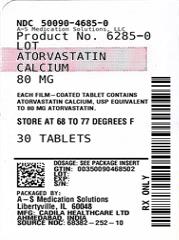
Photos of the product and/or packaging supplied by the manufacturer.
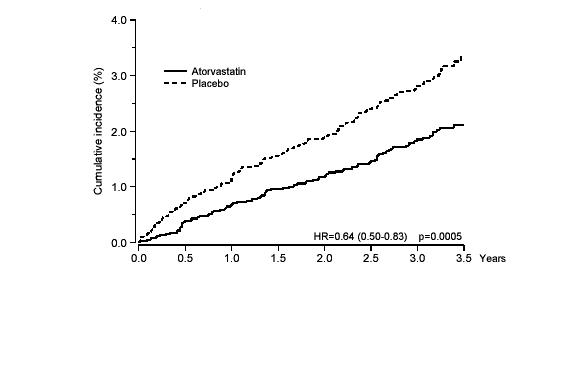
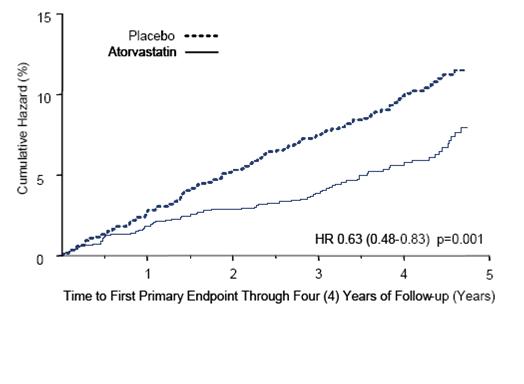
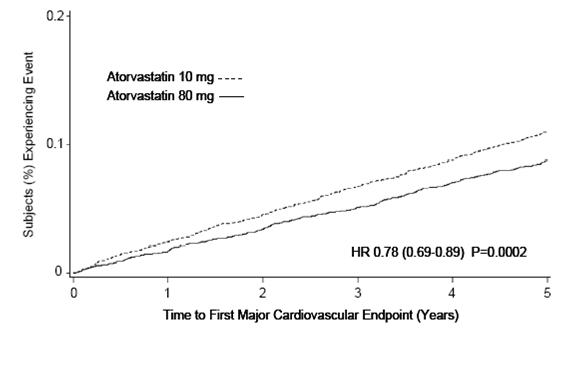
Therapy with lipid-altering agents should be only one component of multiple risk factor intervention in individuals at significantly increased risk for atherosclerotic vascular disease due to hypercholesterolemia. Drug therapy is recommended as an adjunct to diet when the response to a diet restricted in saturated fat and cholesterol and other nonpharmacologic measures alone has been inadequate. In patients with CHD or multiple risk factors for CHD, atorvastatin calcium tablets can be started simultaneously with diet.
Atorvastatin calcium tablets, USP are white to off-white, oval-shaped, beveled, biconvex, film-coated, and are available in four strengths (see Table 1).
|
Tablet Strength
|
Identifying Features
|
| 10 mg of atorvastatin |
"249" on one side and plain on the other |
| 20 mg of atorvastatin |
"250" on one side and plain on the other. |
| 40 mg of atorvastatin |
"251" on one side and plain on the other |
| 80 mg of atorvastatin |
"252" on one side and plain on the other |
There is no specific treatment for atorvastatin calcium overdosage. In the event of an overdose, the patient should be treated symptomatically, and supportive measures instituted as required. Due to extensive drug binding to plasma proteins, hemodialysis is not expected to significantly enhance atorvastatin calcium clearance.
Atorvastatin calcium is a synthetic lipid-lowering agent. Atorvastatin is an inhibitor of 3-hydroxy-3-methylglutaryl-coenzyme A (HMG-CoA) reductase. This enzyme catalyzes the conversion of HMG-CoA to mevalonate, an early and rate-limiting step in cholesterol biosynthesis.
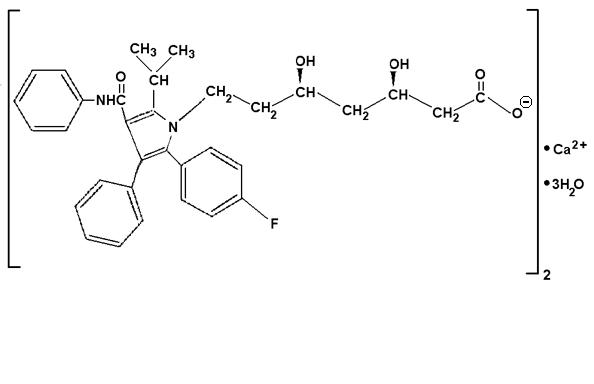
Atorvastatin calcium is [R-(R*, R*)]-2-(4-fluorophenyl)-ß, δ-dihydroxy-5-(1-methylethyl)-3-phenyl-4-[(phenylamino)carbonyl]-1H- pyrrole-1-heptanoic acid, calcium salt (2:1) trihydrate. The molecular formula of atorvastatin calcium is (C33H34FN2O5)2Ca•3H2O and its molecular weight is 1209.42. Its structural formula is:
[image: MM1]Atorvastatin calcium, USP is a white to off-white crystalline powder that is insoluble in aqueous solutions of pH 4 and below. Atorvastatin calcium, USP is very slightly soluble in distilled water, pH 7.4 phosphate buffer, and acetonitrile; slightly soluble in alcohol; and freely soluble in methanol.
Atorvastatin calcium tablets, USP for oral administration contain 10, 20, 40, or 80 mg of atorvastatin and the following inactive ingredients: calcium carbonate, croscarmellose sodium, hydroxypropyl cellulose, hypromellose, lactose monohydrate, magnesium stearate, microcrystalline cellulose, polyethylene glycol, polysorbate 80, titanium dioxide, and talc.
Atorvastatin calcium is a selective, competitive inhibitor of HMG-CoA reductase, the rate-limiting enzyme that converts 3-hydroxy-3- methylglutaryl-coenzyme A to mevalonate, a precursor of sterols, including cholesterol.
In animal models, atorvastatin calcium lowers plasma cholesterol and lipoprotein levels by inhibiting HMG-CoA reductase and cholesterol synthesis in the liver and by increasing the number of hepatic LDL receptors on the cell surface to enhance uptake and catabolism of LDL; atorvastatin calcium also reduces LDL production and the number of LDL particles.
Atorvastatin calcium, as well as some of its metabolites, are pharmacologically active in humans. The liver is the primary site of action and the principal site of cholesterol synthesis and LDL clearance. Drug dosage, rather than systemic drug concentration, correlates better with LDL-C reduction. Individualization of drug dosage should be based on therapeutic response [see Dosage and Administration (2)].
Absorption
Atorvastatin calcium is rapidly absorbed after oral administration; maximum plasma concentrations occur within 1 to 2 hours. Extent of absorption increases in proportion to atorvastatin calcium dose. The absolute bioavailability of atorvastatin (parent drug) is approximately 14% and the systemic availability of HMG-CoA reductase inhibitory activity is approximately 30%. The low systemic availability is attributed to presystemic clearance in gastrointestinal mucosa and/or hepatic first-pass metabolism. Although food decreases the rate and extent of drug absorption by approximately 25% and 9%, respectively, as assessed by Cmax and AUC, LDL-C reduction is similar whether atorvastatin calcium is given with or without food. Plasma atorvastatin calcium concentrations are lower (approximately 30% for Cmax and AUC) following evening drug administration compared with morning. However, LDL-C reduction is the same regardless of the time of day of drug administration [see Dosage and Administration (2)].
Distribution
Mean volume of distribution of atorvastatin calcium is approximately 381 liters. Atorvastatin calcium is ≥ 98% bound to plasma proteins. A blood/plasma ratio of approximately 0.25 indicates poor drug penetration into red blood cells. Based on observations in rats, atorvastatin calcium is likely to be secreted in human milk [see Contraindications (4) and Use in Specific Populations (8.2)].
Metabolism
Atorvastatin calcium is extensively metabolized to ortho- and parahydroxylated derivatives and various beta-oxidation products. In vitro inhibition of HMG-CoA reductase by ortho- and parahydroxylated metabolites is equivalent to that of atorvastatin calcium. Approximately 70% of circulating inhibitory activity for HMG-CoA reductase is attributed to active metabolites. In vitro studies suggest the importance of atorvastatin calcium metabolism by cytochrome P450 3A4, consistent with increased plasma concentrations of atorvastatin calcium in humans following co-administration with erythromycin, a known inhibitor of this isozyme [see Drug Interactions (7.1)]. In animals, the ortho-hydroxy metabolite undergoes further glucuronidation.
Excretion
Atorvastatin calcium and its metabolites are eliminated primarily in bile following hepatic and/or extra-hepatic metabolism; however, the drug does not appear to undergo enterohepatic recirculation. Mean plasma elimination half-life of atorvastatin calcium in humans is approximately 14 hours, but the half-life of inhibitory activity for HMG-CoA reductase is 20 to 30 hours due to the contribution of active metabolites. Less than 2% of a dose of atorvastatin calcium is recovered in urine following oral administration.
Specific Populations
Geriatric
Plasma concentrations of atorvastatin calcium are higher (approximately 40% for Cmax and 30% for AUC) in healthy elderly subjects (age ≥ 65 years) than in young adults. Clinical data suggest a greater degree of LDL-lowering at any dose of drug in the elderly patient population compared to younger adults [see Use in Specific Populations (8.5)].
Pediatric
Apparent oral clearance of atorvastatin in pediatric subjects appeared similar to that of adults when scaled allometrically by body weight as the body weight was the only significant covariate in atorvastatin population PK model with data including pediatric HeFH patients (ages 10 years to 17 years of age, n=29) in an open-label, 8-week study.
Gender
Plasma concentrations of atorvastatin calcium in women differ from those in men (approximately 20% higher for Cmax and 10% lower for AUC); however, there is no clinically significant difference in LDL-C reduction with atorvastatin calcium between men and women.
Renal Impairment
Renal disease has no influence on the plasma concentrations or LDL-C reduction of atorvastatin calcium; thus, dose adjustment in patients with renal dysfunction is not necessary [see Dosage and Administration (2.5) and Warnings and Precautions (5.1)].
Hemodialysis
While studies have not been conducted in patients with end-stage renal disease, hemodialysis is not expected to significantly enhance clearance of atorvastatin calcium since the drug is extensively bound to plasma proteins.
Hepatic Impairment
In patients with chronic alcoholic liver disease, plasma concentrations of atorvastatin calcium are markedly increased. Cmax and AUC are each 4-fold greater in patients with Childs-Pugh A disease. Cmax and AUC are approximately 16-fold and 11-fold increased, respectively, in patients with Childs-Pugh B disease [see Contraindications (4)].
Drug Interaction Studies
Atorvastatin is a substrate of the hepatic transporters, OATP1B1 and OATP1B3 transporter. Metabolites of atorvastatin are substrates of OATP1B1. Atorvastatin is also identified as a substrate of the efflux transporter BCRP, which may limit the intestinal absorption and biliary clearance of atorvastatin.
|
& Represents ratio of treatments (co-administered drug plus atorvastatin vs. atorvastatin alone). |
|||
|
# See Sections 5.1 and 7 for clinical significance. |
|||
|
* Greater increases in AUC (ratio of AUC up to 2.5) and/or Cmax (ratio of Cmax up to 1.71) have been reported with excessive grapefruit consumption (≥ 750 mL -1.2 liters per day). |
|||
|
** Ratio based on a single sample taken 8 to 16 h post dose. |
|||
|
† Due to the dual interaction mechanism of rifampin, simultaneous co-administration of atorvastatin with rifampin is recommended, as delayed administration of atorvastatin after administration of rifampin has been associated with a significant reduction in atorvastatin plasma concentrations. |
|||
|
‡ The dose of saquinavir plus ritonavir in this study is not the clinically used dose. The increase in atorvastatin exposure when used clinically is likely to be higher than what was observed in this study. Therefore, caution should be applied and the lowest dose necessary should be used. |
|||
|
a Once daily |
|||
|
b Twice daily |
|||
|
c Single dose |
|||
|
d Three times daily |
|||
|
e Four times daily |
|||
|
f Every 8 hours |
|||
|
Co-administered drug and dosing regimen
|
Atorvastatin
|
||
|
Dose (mg)
|
Ratio of AUC&
|
Ratio of C
max
&
|
|
|
#Cyclosporine 5.2 mg/kg/day, stable dose |
10 mg QDa for 28 days |
8.69 |
10.66 |
|
#Tipranavir 500 mg BIDb/ritonavir 200 mg BIDb, 7 days |
10 mg, SDc
|
9.36 |
8.58 |
|
#Glecaprevir 400 mg QDa/pibrentasvir 120 mg QDa, 7 days |
10 mg QDa for 7 days |
8.28 |
22.00 |
|
#Telaprevir 750 mg q8hf, 10 days |
20 mg, SDc
|
7.88 |
10.60 |
|
#, ‡Saquinavir 400 mg BIDb/ ritonavir 400 mg BIDb, 15 days |
40 mg QDa for 4 days |
3.93 |
4.31 |
|
#Elbasvir 50 mg QDa/grazoprevir 200 mg QDa, 13 days |
10 mg SDc
|
1.94 |
4.34 |
|
#Simeprevir 150 mg QDa, 10 days |
40 mg SDc
|
2.12 |
1.70 |
|
#Clarithromycin 500 mg BIDb, 9 days |
80 mg QDa for 8 days |
4.54 |
5.38 |
|
#Darunavir 300 mg BIDb/ritonavir 100 mg BIDb, 9 days |
10 mg QDa for 4 days |
3.45 |
2.25 |
|
#Itraconazole 200 mg QDa, 4 days |
40 mg SDc
|
3.32 |
1.20 |
|
#Letermovir 480 mg QDa, 10 days |
20 mg SDc
|
3.29 |
2.17 |
|
#Fosamprenavir 700 mg BIDb/ritonavir 100 mg BIDb, 14 days |
10 mg QDa for 4 days |
2.53 |
2.84 |
|
#Fosamprenavir 1400 mg BIDb, 14 days |
10 mg QDa for 4 days |
2.30 |
4.04 |
|
#Nelfinavir 1250 mg BIDb, 14 days |
10 mg QDa for 28 days |
1.74 |
2.22 |
|
#Grapefruit Juice, 240 mL QDa,*
|
40 mg, SDc
|
1.37 |
1.16 |
| Diltiazem 240 mg QDa, 28 days |
40 mg, SDc
|
1.51 |
1.00 |
| Erythromycin 500 mg QIDe, 7 days |
10 mg, SDc
|
1.33 |
1.38 |
| Amlodipine 10 mg, single dose |
80 mg, SDc
|
1.18 |
0.91 |
| Cimetidine 300 mg QIDe, 2 weeks |
10 mg QDa for 2 weeks |
1.00 |
0.89 |
| Colestipol 10 g BIDb, 24 weeks |
40 mg QDa for 8 weeks |
NA |
0.74**
|
| Maalox TC® 30 mL QIDe, 17 days |
10 mg QDa for 15 days |
0.66 |
0.67 |
| Efavirenz 600 mg QDa, 14 days |
10 mg for 3 days |
0.59 |
1.01 |
|
#Rifampin 600 mg QDa, 7 days (co-administered) †
|
40 mg SDc
|
1.12 |
2.90 |
|
#Rifampin 600 mg QDa, 5 days (doses separated) †
|
40 mg SDc
|
0.20 |
0.60 |
|
#Gemfibrozil 600 mg BIDb, 7 days |
40 mg SDc
|
1.35 |
1.00 |
|
#Fenofibrate 160 mg QDa, 7 days |
40 mg SDc
|
1.03 |
1.02 |
| Boceprevir 800 mg TIDd, 7 days |
40 mg SDc
|
2.32 |
2.66 |
|
# See Section 7 for clinical significance. |
|||
|
a Once daily |
|||
|
b Twice daily |
|||
|
c Single dose |
|||
|
Atorvastatin
|
Co-administered drug and dosing regimen
|
||
|
Drug/Dose (mg)
|
Ratio of AUC
|
Ratio of Cmax
|
|
| 80 mg QDa for 15 days |
Antipyrine, 600 mg SDc
|
1.03 |
0.89 |
| 80 mg QDa for 10 days |
# Digoxin 0.25 mg QDa, 20 days |
1.15 |
1.20 |
| 40 mg QDa for 22 days |
Oral contraceptive QDa, 2 months -norethindrone 1 mg -ethinyl estradiol 35 mcg |
1.28 1.19 |
1.23 1.30 |
| 10 mg, SDc
|
Tipranavir 500 mg BIDb/ritonavir 200 mg BIDb, 7 days |
1.08 |
0.96 |
| 10 mg QDa for 4 days |
Fosamprenavir 1400 mg BIDb, 14 days |
0.73 |
0.82 |
| 10 mg QDa for 4 days |
Fosamprenavir 700 mg BIDb/ritonavir 100 mg BIDb, 14 days |
0.99 |
0.94 |
Atorvastatin calcium had no clinically significant effect on prothrombin time when administered to patients receiving chronic warfarin treatment.
Advise the patient to read the FDA-approved patient labeling (Patient Information).
Patients taking atorvastatin calcium should be advised that cholesterol is a chronic condition and they should adhere to their medication along with their National Cholesterol Education Program (NCEP)-recommended diet, a regular exercise program as appropriate, and periodic testing of a fasting lipid panel to determine goal attainment.
Patients should be advised about substances they should not take concomitantly with atorvastatin [see Warnings and Precautions (5.1)]. Patients should also be advised to inform other healthcare professionals prescribing a new medication that they are taking atorvastatin calcium.
Manufactured by:
Cadila Healthcare Ltd.
Ahmedabad, India
Distributed by:
Zydus Pharmaceuticals (USA) Inc.
Pennington, NJ 08534
Rev.: 11/20
Manufactured by:
Cadila Healthcare Ltd.
Ahmedabad, India
Distributed by:
Zydus Pharmaceuticals (USA) Inc.
Pennington, NJ 08534
Rev.: 07/20
Create a free account to view complete drug information, save medications, and more.
Free forever · No credit card required