 MedLens
Loading…
CAPSULE for ORAL use.Initial U.S. Approval: 2013 · New Horizon Rx Group, LLC
Dosage Form
CAPSULE for ORAL use.Initial U.S. Approval: 2013
Manufacturer
New Horizon Rx Group, LLC
This medication contains important usage instructions, warnings, and side effect information that you should review before use.
Omeprazole delayed-release capsules should be taken before eating. In the clinical trials, antacids were used concomitantly with omeprazole.
Patients should be informed that the omeprazole delayed-release capsule should be swallowed whole.
For patients unable to swallow an intact capsule, alternative administration options are available [See Dosage and Administration (2.8)].
Omeprazole delayed-release capsules, USP 10 mg are hard gelatin capsules with a pink opaque body and a reddish brown opaque cap. “APO 010” is imprinted on each capsule in black ink.
Omeprazole delayed-release capsules, USP 20 mg are hard gelatin capsules with a pink opaque body and a reddish brown opaque cap. “APO 020” is imprinted on each capsule in black ink.
Omeprazole delayed-release capsules, USP 40 mg are hard gelatin capsules with a pink opaque body and a reddish brown opaque cap. “APO 040” is imprinted on each capsule in black ink.
Omeprazole delayed-release capsules are contraindicated in patients with known hypersensitivity to substituted benzimidazoles or to any component of the formulation. Hypersensitivity reactions may include anaphylaxis, anaphylactic shock, angioedema, bronchospasm, interstitial nephritis, and urticaria [See Adverse Reactions (6)].
For information about contraindications of antibacterial agents (clarithromycin and amoxicillin) indicated in combination with omeprazole, refer to the CONTRAINDICATIONS section of their package inserts.
Pregnancy Category C
Reproductive studies in rats and rabbits with omeprazole and multiple cohort studies in pregnant women with omeprazole use during the first trimester do not show an increased risk of congenital anomalies or adverse pregnancy outcomes. There are no adequate and well-controlled studies on the use of omeprazole in pregnant women. Because animal reproduction studies are not always predictive of human response, this drug should be used during pregnancy only if clearly needed. The vast majority of reported experience with omeprazole during human pregnancy is first trimester exposure and the duration of use is rarely specified, e.g., intermittent vs. chronic. An expert review of published data on experiences with omeprazole use during pregnancy by TERIS – the Teratogen Information System – concluded that therapeutic doses during pregnancy are unlikely to pose a substantial teratogenic risk (the quantity and quality of data were assessed as fair).
Three epidemiological studies compared the frequency of congenital abnormalities among infants born to women who used omeprazole during pregnancy with the frequency of abnormalities among infants of women exposed to H2-receptor antagonists or other controls. A population-based prospective cohort epidemiological study from the Swedish Medical Birth Registry, covering approximately 99% of pregnancies, reported on 955 infants (824 exposed during the first trimester with 39 of these exposed beyond first trimester, and 131 exposed after the first trimester) whose mothers used omeprazole during pregnancy. In utero exposure to omeprazole was not associated with increased risk of any malformation (odds ratio 0.82, 95% CI 0.50 to 1.34), low birth weight or low Apgar score. The number of infants born with ventricular septal defects and the number of stillborn infants was slightly higher in the omeprazole-exposed infants than the expected number in the normal population. The author concluded that both effects may be random.
A retrospective cohort study reported on 689 pregnant women exposed to either H2-blockers or omeprazole in the first trimester (134 exposed to omeprazole). The overall malformation rate was 4.4% (95% CI 3.6 to 5.3) and the malformation rate for first trimester exposure to omeprazole was 3.6% (95% CI 1.5 to 8.1). The relative risk of malformations associated with first trimester exposure to omeprazole compared with non-exposed women was 0.9 (95% CI 0.3 to 2.2). The study could effectively rule out a relative risk greater than 2.5 for all malformations. Rates of preterm delivery or growth retardation did not differ between the groups.
A controlled prospective observational study followed 113 women exposed to omeprazole during pregnancy (89% first trimester exposures). The reported rates of major congenital malformations was 4% for the omeprazole group, 2% for controls exposed to non-teratogens, and 2.8% in disease-paired controls (background incidence of major malformations 1 to 5%). Rates of spontaneous and elective abortions, preterm deliveries, gestational age at delivery, and mean birth weight did not differ between the groups. The sample size in this study has 80% power to detect a 5-fold increase in the rate of major malformation.
Several studies have reported no apparent adverse short-term effects on the infant when single dose oral or intravenous omeprazole was administered to over 200 pregnant women as premedication for cesarean section under general anesthesia.
Reproductive studies conducted with omeprazole on rats at oral doses up to 56 times the human dose and in rabbits at doses up to 56 times the human dose did not show any evidence of teratogenicity. In pregnant rabbits, omeprazole at doses about 5.5 to 56 times the human dose produced dose-related increases in embryo-lethality, fetal resorptions, and pregnancy loss. In rats treated with omeprazole at doses about 5.6 to 56 times the human dose, dose-related embryo/fetal toxicity and postnatal developmental toxicity occurred in offspring. [See Animal Toxicology and/or Pharmacology (13.2).]
Omeprazole concentrations have been measured in breast milk of a woman following oral administration of 20 mg. The peak concentration of omeprazole in breast milk was less than 7% of the peak serum concentration. This concentration would correspond to 0.004 mg of omeprazole in 200 mL of milk. Because omeprazole is excreted in human milk, because of the potential for serious adverse reactions in nursing infants from omeprazole, and because of the potential for tumorigenicity shown for omeprazole in rat carcinogenicity studies, a decision should be made whether to discontinue nursing or to discontinue the drug, taking into account the importance of the drug to the mother.
Use of omeprazole in pediatric and adolescent patients 2 to 16 years of age for the treatment of GERD is supported by a) extrapolation of results, already included in the currently approved labeling, from adequate and well-controlled studies that supported the approval of omeprazole for adults, and b) safety and pharmacokinetic studies performed in pediatric and adolescent patients. [See Clinical Pharmacology, Pharmacokinetics, Pediatric for pharmacokinetic information (12.3) and Dosage and Administration (2), Adverse Reactions (6.1) and Clinical Studies, (14.6)]. The safety and effectiveness of omeprazole for the treatment of GERD in patients <1 year of age have not been established. The safety and effectiveness of omeprazole for other pediatric uses have not been established.
Omeprazole was administered to over 2000 elderly individuals (≥ 65 years of age) in clinical trials in the U.S. and Europe. There were no differences in safety and effectiveness between the elderly and younger subjects. Other reported clinical experience has not identified differences in response between the elderly and younger subjects, but greater sensitivity of some older individuals cannot be ruled out.
Pharmacokinetic studies have shown the elimination rate was somewhat decreased in the elderly and bioavailability was increased. The plasma clearance of omeprazole was 250 mL/min (about half that of young volunteers) and its plasma half-life averaged one hour, about twice that of young healthy volunteers. However, no dosage adjustment is necessary in the elderly. [See Clinical Pharmacology (12.3)]
Reports have been received of overdosage with omeprazole in humans. Doses ranged up to 2400 mg (120 times the usual recommended clinical dose). Manifestations were variable, but included confusion, drowsiness, blurred vision, tachycardia, nausea, vomiting, diaphoresis, flushing, headache, dry mouth, and other adverse reactions similar to those seen in normal clinical experience. [See Adverse Reactions (6)] Symptoms were transient, and no serious clinical outcome has been reported when omeprazole was taken alone. No specific antidote for omeprazole overdosage is known. Omeprazole is extensively protein bound and is, therefore, not readily dialyzable. In the event of overdosage, treatment should be symptomatic and supportive.
As with the management of any overdose, the possibility of multiple drug ingestion should be considered. For current information on treatment of any drug overdose, contact a Poison Control Center at 1-800-222-1222.
Single oral doses of omeprazole at 1350, 1339, and 1200 mg/kg were lethal to mice, rats, and dogs, respectively. Animals given these doses showed sedation, ptosis, tremors, convulsions, and decreased activity, body temperature, and respiratory rate and increased depth of respiration.
“See FDA-Approved Medication Guide”
Omeprazole delayed-release capsule should be taken before eating. Patients should be informed that the omeprazole delayed-release capsule should be swallowed whole.
For patients who have difficulty swallowing capsules, the contents of an omeprazole delayed-release capsule can be added to applesauce. One tablespoon of applesauce should be added to an empty bowl and the capsule should be opened. All of the pellets inside the capsule should be carefully emptied on the applesauce. The pellets should be mixed with the applesauce and then swallowed immediately with a glass of cool water to ensure complete swallowing of the pellets. The applesauce used should not be hot and should be soft enough to be swallowed without chewing. The pellets should not be chewed or crushed. The pellets/applesauce mixture should not be stored for future use.
Advise patients to immediately report and seek care for diarrhea that does not improve. This may be a sign of Clostridium difficile associated diarrhea [see Warnings and Precautions (5.3)].
Advise patients to immediately report and seek care for any cardiovascular or neurological symptoms including palpitations, dizziness, seizures, and tetany as these may be signs of hypomagnesemia [see Warnings and Precautions (5.6)].
APOTEX, INC.
OMEPRAZOLE DELAYED-RELEASE CAPSULES, USP
10 mg, 20 mg, and 40 mg
Manufactured by:
Apotex Inc.
Toronto, Ontario
Canada M9L 1T9
Distributed by:
New Horizon Rx Group, LLC
Kenner, LA 70062
Rev. 11/13
MEDICATION GUIDE
Omeprazole Delayed-Release Capsules, USP
Read this Medication Guide before you start taking omeprazole and each time you get a refill. There may be new information. This information does not take the place of talking with your doctor about your medical condition or your treatment.
What is the most important information I should know about omeprazole?
Omeprazole may help your acid-related symptoms, but you could still have serious stomach problems. Talk with your doctor.
Omeprazole can cause serious side effects, including:
Omeprazole can have other serious side effects. See “What are the possible side effects of omeprazole?”
WHAT IS OMEPRAZOLE DELAYED-RELEASE CAPSULES?
Omeprazole delayed-release capsules is a prescription medicine called a proton pump inhibitor (PPI). Omeprazole delayed-release capsules reduces the amount of acid in your stomach. Omeprazole delayed-release capsules are used in adults:
For children and adolescents 2 to 17 years of age, omeprazole delayed-release capsules are used:
It is not known if omeprazole is safe and effective for the treatment of gastroesophageal reflux disease (GERD) in children under 1 year of age.
WHO SHOULD NOT TAKE OMEPRAZOLE DELAYED-RELEASE CAPSULES?
Do not take omeprazole delayed-release capsules if you:
WHAT SHOULD I TELL MY DOCTOR BEFORE TAKING OMEPRAZOLE DELAYED-RELEASE CAPSULES?
Before you take omeprazole, Tell your doctor if you:
Tell your doctor about all of the medicines you take including prescription and non-prescription drugs, anti-cancer drugs, vitamins and herbal supplements. Omeprazole delayed-release capsules may affect how other medicines work, and other medicines may affect how omeprazole delayed-release capsules works.
Especially tell your doctor if you take:
Ask your doctor or pharmacist for a list of these medicines if you are not sure.
Know the medicines that you take. Keep a list of them to show your doctor and pharmacist when you get a new medicine.
HOW SHOULD I TAKE OMEPRAZOLE DELAYED-RELEASE CAPSULES?
WHAT ARE THE POSSIBLE SIDE EFFECTS OF OMEPRAZOLE DELAYED-RELEASE CAPSULES?
Omeprazole can cause serious side effects, including:
Tell your doctor right away if you develop any of these symptoms:
Your doctor may check the level of magnesium in your body before you start taking omeprazole delayed-release capsules or during treatment if you will be taking omeprazole delayed-release capsules for a long period of time.
The most common side effects with omeprazole delayed-release capsules in adults and children include:
In addition to the side effects listed above, the most common side effects in children 2 to 16 years of age include:
Other side effects:
Serious allergic reactions. Tell your doctor if you get any of the following symptoms with omeprazole:
λ
rashλ
face swellingλ
throat tightnessλ
difficulty breathingYour doctor may stop omeprazole if these symptoms happen.
Tell your doctor if you have any side effect that bothers you or that do not go away. These are not all the possible side effects with omeprazole.
Call your doctor for medical advice about side effects. You may report side effects to FDA at 1-800-FDA-1088.
HOW SHOULD I STORE OMEPRAZOLE DELAYED-RELEASE CAPSULES?
λ
Store omeprazole delayed-release capsules at room temperature between 68°F to 77°F (20°C to 25°C).λ
Keep the container of omeprazole delayed-release capsules closed tightly.Keep omeprazole delayed-release capsules and all medicines out of the reach of children.
GENERAL information about omeprazole
Medicines are sometimes prescribed for purposes other than those listed in a Medication Guide. Do not use omeprazole delayed-release capsules for a condition for which it was not prescribed. Do not give omeprazole delayed-release capsules to other people, even if they have the same symptoms you have. It may harm them.
This Medication Guide summarizes the most important information about omeprazole delayed-release capsules.
For more information, ask your doctor. You can ask your doctor or pharmacist for information that is written for healthcare professionals.
For more information contact Apotex Corp., Drug Safety at 1-800-667-4708.
INSTRUCTIONS FOR USE
For instructions on taking omeprazole delayed-release capsules, please see
“HOW SHOULD I TAKE OMEPRAZOLE DELAYED-RELEASE CAPSULES?”
WHAT ARE THE INGREDIENTS IN OMEPRAZOLE DELAYED-RELEASE CAPSULES?
Active ingredient in OMEPRAZOLE DELAYED-RELEASE CAPSULES: omeprazole
Inactive ingredients in OMEPRAZOLE DELAYED-RELEASE CAPSULES
magnesium hydroxide, mannitol, methacrylic acid copolymer dispersion, povidone and triethyl citrate. The capsule shells have the following inactive ingredients: gelatin, red iron oxide and titanium dioxide. The capsule imprinting ink contains ammonium hydroxide, black iron oxide, ethyl alcohol, isopropyl alcohol, n-butyl alcohol, potassium hydroxide, propylene glycol and shellac.
This Medication Guide and Instructions for Use has been approved by the U.S. Food and Drug Administration.
Manufactured by:
Apotex Inc.
Toronto, Ontario
Canada M9L 1T9
Distributed by:
New Horizon Rx Group, LLC
Kenner, LA 70062
Rev. 11/13
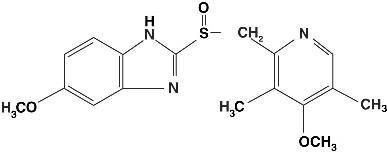
The active ingredient in omeprazole delayed-release capsules is a substituted benzimidazole, 5-methoxy-2-[[(4-methoxy-3, 5-dimethyl-2-pyridinyl) methyl] sulfinyl]-1H-benzimidazole, a compound that inhibits gastric acid secretion. Its empirical formula is C17H19N3O3S, with a molecular weight of 345.42. The structural formula is:
[image: MM1]Omeprazole is a white to off-white crystalline powder that melts with decomposition at about 155°C. It is a weak base, freely soluble in ethanol and methanol, and slightly soluble in acetone and isopropanol and very slightly soluble in water. The stability of omeprazole is a function of pH; it is rapidly degraded in acid media, but has acceptable stability under alkaline conditions.
Omeprazole Delayed-Release Capsules meet USP Dissolution Test 2.
Omeprazole is supplied as delayed-release capsules for oral administration. Each delayed-release capsule contains either 10 mg, 20 mg or 40 mg of omeprazole in the form of enteric-coated granules with the following inactive ingredients: magnesium hydroxide, mannitol, methacrylic acid copolymer dispersion, povidone and triethyl citrate.
The capsule shells have the following inactive ingredients: gelatin, red iron oxide and titanium dioxide. The capsule imprinting ink contains ammonium hydroxide, black iron oxide, ethyl alcohol, isopropyl alcohol, n-butyl alcohol, potassium hydroxide, propylene glycol and shellac.
Omeprazole delayed-release capsules, USP 10 mg are available for oral administration as hard gelatin capsules with a pink opaque body and a reddish brown opaque cap. “APO 010” is imprinted on each capsule in black ink.
Omeprazole delayed-release capsules, USP 20 mg are available for oral administration as hard gelatin capsules with a pink opaque body and a reddish brown opaque cap. “APO 020” is imprinted on each capsule in black ink.
Bottles of 30 (NDC 58517-020-30)
Omeprazole delayed-release capsules, USP 40 mg are available for oral administration as hard gelatin capsules with a pink opaque body and a reddish brown opaque cap. “APO 040” is imprinted on each capsule in black ink.
Storage
Store omeprazole delayed-release capsules in a tight container protected from light and moisture.
Store at 20° to 25°C (68° to 77°F); excursions permitted to 15° to 30°C (59° to 86°F) [see USP Controlled Room Temperature].
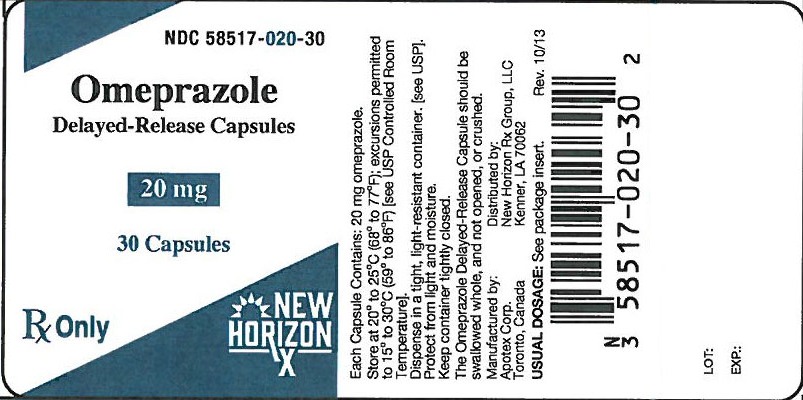
Photos of the product and/or packaging supplied by the manufacturer.
Omeprazole belongs to a class of antisecretory compounds, the substituted benzimidazoles, that suppress gastric acid secretion by specific inhibition of the H+/K+ ATPase enzyme system at the secretory surface of the gastric parietal cell. Because this enzyme system is regarded as the acid (proton) pump within the gastric mucosa, omeprazole has been characterized as a gastric acid-pump inhibitor, in that it blocks the final step of acid production. This effect is dose-related and leads to inhibition of both basal and stimulated acid secretion irrespective of the stimulus. Animal studies indicate that after rapid disappearance from plasma, omeprazole can be found within the gastric mucosa for a day or more.
Antisecretory Activity
After oral administration, the onset of the antisecretory effect of omeprazole occurs within one hour, with the maximum effect occurring within two hours. Inhibition of secretion is about 50% of maximum at 24 hours and the duration of inhibition lasts up to 72 hours. The antisecretory effect thus lasts far longer than would be expected from the very short (less than one hour) plasma half-life, apparently due to prolonged binding to the parietal H+/K+ ATPase enzyme. When the drug is discontinued, secretory activity returns gradually, over 3 to 5 days. The inhibitory effect of omeprazole on acid secretion increases with repeated once-daily dosing, reaching a plateau after four days.
Results from numerous studies of the antisecretory effect of multiple doses of 20 mg and 40 mg of omeprazole in normal volunteers and patients are shown below. The “max” value represents determinations at a time of maximum effect (2 to 6 hours after dosing), while “min” values are those 24 hours after the last dose of omeprazole.
Table 1
| Omeprazole 20 mg | Omeprazole 40 mg | |||
| Parameter | Max | Min | Max | Min |
| *Single Studies | ||||
| Single daily oral doses of omeprazole ranging from a dose of 10 mg to 40 mg have produced 100% inhibition of 24-hour intragastric acidity in some patients. | ||||
| % Decrease in Basal Acid Output | 78* | 58 to 80 | 94* | 80 to 93 |
| % Decrease in Peak Acid Output | 79* | 50 to 59 | 88* | 62 to 68 |
| % Decrease in 24–hr Intragastric Acidity | 80 to97 | 92 to 94 |
Serum Gastrin Effects
In studies involving more than 200 patients, serum gastrin levels increased during the first 1 to 2 weeks of once-daily administration of therapeutic doses of omeprazole in parallel with inhibition of acid secretion. No further increase in serum gastrin occurred with continued treatment. In comparison with histamine H2-receptor antagonists, the median increases produced by 20 mg doses of omeprazole were higher (1.3 to 3.6 fold vs. 1.1 to 1.8 fold increase). Gastrin values returned to pretreatment levels, usually within 1 to 2 weeks after discontinuation of therapy.
Increased gastrin causes enterochromaffin-like cell hyperplasia and increased serum Chromogranin A (CgA) levels. The increased CgA levels may cause false positive results in diagnostic investigations for neuroendocrine tumors.
Enterochromaffin-like (ECL) Cell Effects
Human gastric biopsy specimens have been obtained from more than 3000 patients treated with omeprazole in long-term clinical trials. The incidence of ECL cell hyperplasia in these studies increased with time; however, no case of ECL cell carcinoids, dysplasia, or neoplasia has been found in these patients. [See Clinical Pharmacology (12)] However, these studies are of insufficient duration and size to rule out the possible influence of long-term administration of omeprazole on the development of any premalignant or malignant conditions.
Other Effects
Systemic effects of omeprazole in the CNS, cardiovascular and respiratory systems have not been found to date. Omeprazole, given in oral doses of 30 or 40 mg for 2 to 4 weeks, had no effect on thyroid function, carbohydrate metabolism, or circulating levels of parathyroid hormone, cortisol, estradiol, testosterone, prolactin, cholecystokinin or secretin.
No effect on gastric emptying of the solid and liquid components of a test meal was demonstrated after a single dose of omeprazole 90 mg. In healthy subjects, a single I.V. dose of omeprazole (0.35 mg/kg) had no effect on intrinsic factor secretion. No systematic dose-dependent effect has been observed on basal or stimulated pepsin output in humans.
However, when intragastric pH is maintained at 4.0 or above, basal pepsin output is low, and pepsin activity is decreased.
As do other agents that elevate intragastric pH, omeprazole administered for 14 days in healthy subjects produced a significant increase in the intragastric concentrations of viable bacteria. The pattern of the bacterial species was unchanged from that commonly found in saliva. All changes resolved within three days of stopping treatment.
The course of Barrett’s esophagus in 106 patients was evaluated in a U.S. double-blind controlled study of omeprazole 40 mg twice daily for 12 months followed by 20 mg twice daily for 12 months or ranitidine 300 mg twice daily for 24 months. No clinically significant impact on Barrett’s mucosa by antisecretory therapy was observed. Although neosquamous epithelium developed during antisecretory therapy, complete elimination of Barrett’s mucosa was not achieved. No significant difference was observed between treatment groups in development of dysplasia in Barrett’s mucosa and no patient developed esophageal carcinoma during treatment. No significant differences between treatment groups were observed in development of ECL cell hyperplasia, corpus atrophic gastritis, corpus intestinal metaplasia, or colon polyps exceeding 3 mm in diameter [See Clinical Pharmacology (12)].
Absorption
Omeprazole delayed-release capsules contain an enteric-coated granule formulation of omeprazole (because omeprazole is acid-labile), so that absorption of omeprazole begins only after the granules leave the stomach. Absorption is rapid, with peak plasma levels of omeprazole occurring within 0.5 to 3.5 hours. Peak plasma concentrations of omeprazole and AUC are approximately proportional to doses up to 40 mg, but because of a saturable first-pass effect, a greater than linear response in peak plasma concentration and AUC occurs with doses greater than 40 mg. Absolute bioavailability (compared with intravenous administration) is about 30 to 40% at doses of 20 to 40 mg, due in large part to presystemic metabolism. In healthy subjects the plasma half-life is 0.5 to 1 hour, and the total body clearance is 500 to 600 mL/min.
The bioavailability of omeprazole increases slightly upon repeated administration of omeprazole delayed-release capsules.
Omeprazole delayed-release capsule 40 mg was bioequivalent when administered with and without applesauce. However, omeprazole delayed-release capsule 20 mg was not bioequivalent when administered with and without applesauce. When administered with applesauce, a mean 25% reduction in Cmax was observed without a significant change in AUC for omeprazole delayed-release capsule 20 mg. The clinical relevance of this finding is unknown.
Distribution
Protein binding is approximately 95%.
Metabolism
Omeprazole is extensively metabolized by the cytochrome P450 (CYP) enzyme system.
Excretion
Following single dose oral administration of a buffered solution of omeprazole, little if any unchanged drug was excreted in urine. The majority of the dose (about 77%) was eliminated in urine as at least six metabolites. Two were identified as hydroxyomeprazole and the corresponding carboxylic acid. The remainder of the dose was recoverable in feces. This implies a significant biliary excretion of the metabolites of omeprazole. Three metabolites have been identified in plasma — the sulfide and sulfone derivatives of omeprazole, and hydroxyomeprazole. These metabolites have very little or no antisecretory activity.
Combination Therapy with Antimicrobials
Omeprazole 40 mg daily was given in combination with clarithromycin 500 mg every 8 hours to healthy adult male subjects. The steady state plasma concentrations of omeprazole were increased (Cmax, AUC0-24, and T1/2 increases of 30%, 89% and 34% respectively) by the concomitant administration of clarithromycin. The observed increases in omeprazole plasma concentration were associated with the following pharmacological effects. The mean 24-hour gastric pH value was 5.2 when omeprazole was administered alone and 5.7 when co-administered with clarithromycin.
The plasma levels of clarithromycin and 14-hydroxy-clarithromycin were increased by the concomitant administration of omeprazole. For clarithromycin, the mean Cmax was 10% greater, the mean Cmin was 27% greater, and the mean AUC0-8 was 15% greater when clarithromycin was administered with omeprazole than when clarithromycin was administered alone. Similar results were seen for 14-hydroxy-clarithromycin, the mean Cmax was 45% greater, the mean Cmin was 57% greater, and the mean AUC0-8 was 45% greater. Clarithromycin concentrations in the gastric tissue and mucus were also increased by concomitant administration of omeprazole.
Table 2
| Clarithromycin Tissue Concentrations 2 hours after Dose 1 | ||
| Tissue | Clarithromycin | Clarithromycin + Omeprazole |
| 1 Mean ± SD (mcg/g) | ||
| Antrum | 10.48 ± 2.01 (n = 5) | 19.96 ± 4.71 (n=5) |
| Fundus | 20.81 ± 7.64 (n = 5) | 24.25 ± 6.37 (n= 5) |
| Mucus | 4.15 ± 7.74 (n = 4) | 39.29 ± 32.79 (n=4) |
Concomitant Use with Clopidogrel
In a crossover clinical study, 72 healthy subjects were administered clopidogrel (300 mg loading dose followed by 75 mg per day) alone and with omeprazole (80 mg at the same time as clopidogrel) for 5 days. The exposure to the active metabolite of clopidogrel was decreased by 46% (Day 1) and 42% (Day 5) when clopidogrel and omeprazole were administered together.
Results from another crossover study in healthy subjects showed a similar pharmacokinetic interaction between clopidogrel (300 mg loading dose/75 mg daily maintenance dose) and omeprazole 80 mg daily when coadministered for 30 days. Exposure to the active metabolite of clopidogrel was reduced by 41% to 46% over this time period.
In another study, 72 healthy subjects were given the same doses of clopidogrel and 80 mg omeprazole but the drugs were administered 12 hours apart; the results were similar, indicating that administering clopidogrel and omeprazole at different times does not prevent their interaction.
Special Populations
Geriatric Population
The elimination rate of omeprazole was somewhat decreased in the elderly, and bioavailability was increased. Omeprazole was 76% bioavailable when a single 40 mg oral dose of omeprazole (buffered solution) was administered to healthy elderly volunteers, versus 58% in young volunteers given the same dose. Nearly 70% of the dose was recovered in urine as metabolites of omeprazole and no unchanged drug was detected. The plasma clearance of omeprazole was 250 mL/min (about half that of young volunteers) and its plasma half-life averaged one hour, about twice that of young healthy volunteers.
Pediatric Use
The pharmacokinetics of omeprazole has been investigated in pediatric patients 2 to 16 years of age:
Table 3
| Single or Repeated Oral Dosing/ Parameter | Children† ≤ 20 kg 2 to 5 years 10 mg | Children† > 20 kg 6 to 16 years 20 mg | Adults‡ (mean 76 kg) 23 to 29 years (n=12) |
| Note: * = plasma concentration adjusted to an oral dose of 1 mg/kg. | |||
| † Data from single and repeated dose studies | |||
| ‡ Data from a single and repeated dose study | |||
| Single Dosing | |||
| Cmax * | 288 | 495 | 668 |
| (ng/mL) | (n=10) | (n=49) | |
| AUC | 511 | 1140 | |
| (ng h/mL) | (n=7) | (n=32) | 1220 |
| Repeated Dosing | |||
| Cmax * | 539 | 851 | 1458 |
| (ng/mL) | (n=4) | (n=32) | |
| AUC | 1179 | 2276 | |
| (ng h/mL) | (n=2) | (n=23) | 3352 |
Doses of 10, 20 and 40 mg omeprazole as enteric-coated granules
Following comparable mg/kg doses of omeprazole, younger children (2 to 5 years of age) have lower AUCs than children 6 to 16 years of age or adults; AUCs of the latter two groups did not differ. [See Dosage and Administration (2)]
Hepatic Impairment
In patients with chronic hepatic disease, the bioavailability increased to approximately 100% compared with an I.V. dose, reflecting decreased first-pass effect, and the plasma half-life of the drug increased to nearly 3 hours compared with the half-life in normals of 0.5 to 1 hour. Plasma clearance averaged 70 mL/min, compared with a value of 500 to 600 mL/min in normal subjects. Dose reduction, particularly where maintenance of healing of erosive esophagitis is indicated, for the hepatically impaired should be considered.
Renal Impairment
In patients with chronic renal impairment, whose creatinine clearance ranged between 10 and 62 mL/min/1.73 m2, the disposition of omeprazole was very similar to that in healthy volunteers, although there was a slight increase in bioavailability. Because urinary excretion is a primary route of excretion of omeprazole metabolites, their elimination slowed in proportion to the decreased creatinine clearance. No dose reduction is necessary in patients with renal impairment.
Asian Population
In pharmacokinetic studies of single 20 mg omeprazole doses, an increase in AUC of approximately four-fold was noted in Asian subjects compared with Caucasians. Dose reduction, particularly where maintenance of healing of erosive esophagitis is indicated, for Asian subjects should be considered.
In two 24-month carcinogenicity studies in rats, omeprazole at daily doses of 1.7, 3.4, 13.8, 44.0 and 140.8 mg/kg/day (about 0.7 to 57 times a human dose of 20 mg/day, as expressed on a body surface area basis) produced gastric ECL cell carcinoids in a dose-related manner in both male and female rats; the incidence of this effect was markedly higher in female rats, which had higher blood levels of omeprazole. Gastric carcinoids seldom occur in the untreated rat. In addition, ECL cell hyperplasia was present in all treated groups of both sexes. In one of these studies, female rats were treated with 13.8 mg omeprazole/kg/day (about 6 times a human dose of 20 mg/day, based on body surface area) for one year, and then followed for an additional year without the drug. No carcinoids were seen in these rats. An increased incidence of treatment-related ECL cell hyperplasia was observed at the end of one year (94% treated vs 10% controls). By the second year the difference between treated and control rats was much smaller (46% vs 26%) but still showed more hyperplasia in the treated group. Gastric adenocarcinoma was seen in one rat (2%). No similar tumor was seen in male or female rats treated for two years. For this strain of rat no similar tumor has been noted historically, but a finding involving only one tumor is difficult to interpret. In a 52-week toxicity study in Sprague-Dawley rats, brain astrocytomas were found in a small number of males that received omeprazole at dose levels of 0.4, 2, and 16 mg/kg/day (about 0.2 to 6.5 times the human dose on a body surface area basis). No astrocytomas were observed in female rats in this study. In a 2-year carcinogenicity study in Sprague-Dawley rats, no astrocytomas were found in males or females at the high dose of 140.8 mg/kg/day (about 57 times the human dose on a body surface area basis). A 78-week mouse carcinogenicity study of omeprazole did not show increased tumor occurrence, but the study was not conclusive. A 26-week p53 (+/-) transgenic mouse carcinogenicity study was not positive.
Omeprazole was positive for clastogenic effects in an in vitro human lymphocyte chromosomal aberration assay, in one of two in vivo mouse micronucleus tests, and in an in vivo bone marrow cell chromosomal aberration assay. Omeprazole was negative in the in vitro Ames test, an in vitro mouse lymphoma cell forward mutation assay, and an in vivo rat liver DNA damage assay.
Omeprazole at oral doses up to 138 mg/kg/day in rats (about 56 times the human dose on a body surface area basis) was found to have no effect on fertility and reproductive performance.
In 24-month carcinogenicity studies in rats, a dose-related significant increase in gastric carcinoid tumors and ECL cell hyperplasia was observed in both male and female animals [See Warnings and Precautions (5)] Carcinoid tumors have also been observed in rats subjected to fundectomy or long-term treatment with other proton pump inhibitors or high doses of H2-receptor antagonists.
Create a free account to view complete drug information, save medications, and more.
Free forever · No credit card required