 MedLens
Loading…
Proficient Rx LP
Dosage Form
N/A
Manufacturer
Proficient Rx LP
This medication contains important usage instructions, warnings, and side effect information that you should review before use.
Respiratory depression and death have occurred in children who received codeine following tonsillectomy and/or adenoidectomy and had evidence of being ultra-rapid metabolizers of codeine due to a CYP2D6 polymorphism.
Hepatotoxicity
Acetaminophen has been associated with cases of acute liver failure, at times resulting in liver transplant and death. Most of the cases of liver injury are associated with the use of acetaminophen at doses that exceed 4000 milligrams per day, and often involve more than one acetaminophen-containing product.
Acetaminophen and Codeine Phosphate Tablets, USP are indicated for the relief of mild to moderately severe pain.
Dosage should be adjusted according to severity of pain and response of the patient.
The usual adult dosage is:
Single Doses Maximum
The usual dose of codeine phosphate in children is 0.5 mg/kg.
Doses may be repeated up to every 4 hours.
The prescriber must determine the number of tablets per dose, and the maximum number of tablets per 24 hours, based upon the above dosage guidance. This information should be conveyed in the prescription.
It should be kept in mind, however, that tolerance to codeine can develop with continued use and that the incidence of untoward effects is dose related. Adult doses of codeine higher than 60 mg fail to give commensurate relief of pain but merely prolong analgesia and are associated with an appreciably increased incidence of undesirable side effects. Equivalently high doses in children would have similar effects.
Click here to enter Dosage Forms and Strengths
Codeine-containing products are contraindicated for post-operative pain management in children who have undergone tonsillectomy and/or adenoidectomy.
Acetaminophen and Codeine Phosphate Tablets should not be administered to patients who have previously exhibited hypersensitivity to codeine or acetaminophen.
Click here to enter Warnings and Precautions
The most frequently observed adverse reactions include drowsiness, lightheadedness, dizziness, sedation, shortness of breath, nausea and vomiting. These effects seem to be more prominent in ambulatory than in non-ambulatory patients, and some of these adverse reactions may be alleviated if the patient lies down.
Other adverse reactions include allergic reactions, euphoria, dysphoria, constipation, abdominal pain, pruritus, rash, thrombocytopenia and agranulocytosis.
At higher doses codeine has most of the disadvantages of morphine including respiratory depression.
Click here to enter Pregnancy
Click here to enter Pediatric Use
Click here to enter Geriatric Use
Click here to enter Use in Specific Populations
Following an acute overdosage, toxicity may result from codeine or acetaminophen.
Signs and Symptoms:
Toxicity from codeine poisoning includes the opioid triad of: pinpoint pupils, depression of respiration and loss of consciousness. Convulsions may occur.
In acetaminophen overdosage: dose-dependent, potentially fatal hepatic necrosis is the most serious adverse effect. Renal tubular necrosis, hypoglycemic coma and coagulation defects may also occur. Early symptoms following a potentially hepatotoxic overdose may include: nausea, vomiting, diaphoresis and general malaise. Clinical and laboratory evidence of hepatic toxicity may not be apparent until 48 to 72 hours post-ingestion.
Treatment:
A single or multiple drug overdose with acetaminophen and codeine is a potentially lethal polydrug overdose, and consultation with a regional poison control center is recommended. Immediate treatment includes support of cardiorespiratory function and measures to reduce drug absorption.
Oxygen, intravenous fluids, vasopressors and other supportive measures should be employed as indicated. Assisted or controlled ventilation should also be considered. For respiratory depression due to overdosage or unusual sensitivity to codeine phosphate, parenteral naloxone is a specific and effective antagonist.
Gastric decontamination with activated charcoal should be administered just prior to N-acetylcysteine (NAC) to decrease systemic absorption if acetaminophen ingestion is known or suspected to have occurred within a few hours of presentation. Serum acetaminophen levels should be obtained immediately if the patient presents 4 hours or more after ingestion to assess potential risk of hepatotoxicity; acetaminophen levels drawn less then 4 hours post-ingestion may be misleading. To obtain the best possible outcome, NAC should be administered as soon as possible where impending or evolving liver injury is suspected. Intravenous NAC may be administered when circumstances preclude oral administration.
Vigorous supportive therapy is required in severe intoxication. Procedures to limit the continuing absorption of the drug must be readily performed since the hepatic injury is dose dependent and occurs early in the course of intoxication.
Click here to enter Patient Counseling Information
Each tablet contains:
Acetaminophen, USP……………………………………………………..300 mg
Codeine Phosphate, USP…………………………………………………...30 mg
(Warning: May be habit forming)
Inactive ingredients: croscarmellose sodium, crospovidone, lactose monohydrate, magnesium stearate, microcrystalline cellulose, povidone, pregelatinized starch and stearic acid.
Acetaminophen and codeine is supplied in tablet form for oral administration.
Acetaminophen, 4'-hydroxyacetanlllde, IS a slightly bitter, white, odorless, crystalline powder, is a non-opiate, non-salicylate analgesic and antipyretic. It has the following structural formula:
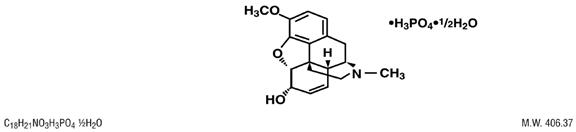
[image: CF0492A3-059D-4BB6-B342-E9E0591423C9]Codeine phosphate: 7,8-didehydro-4,5α-epoxy-3-methoxy-l7-methylmorphinan-6α-ol phosphate (1:1) (salt) hemihydrate, a white crystalline powder, is a narcotic analgesic and antitussive. It has the following structural formula:
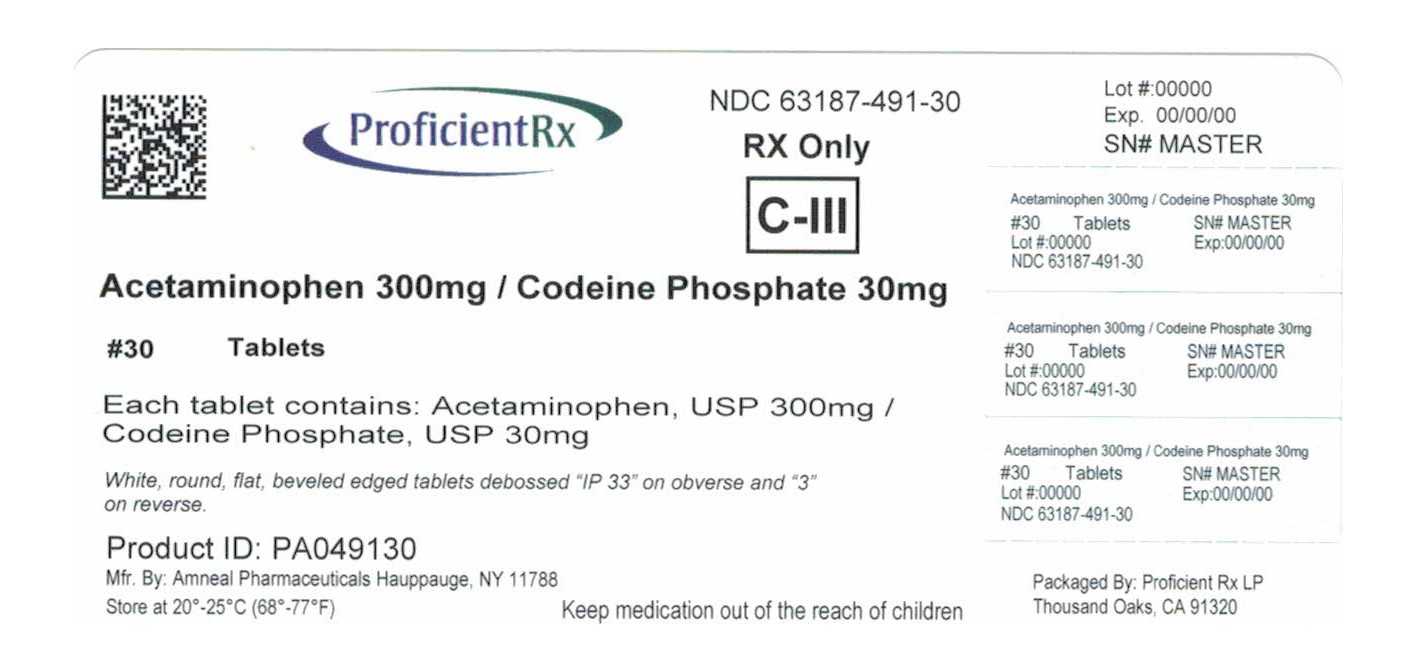
[image: B3983E38-FF14-4786-B34D-392124DB92E9]Acetaminophen and Codeine Phosphate Tablets, USP 300 mg /30 mg are white, round, flat, beveled edged tablets debossed “IP 33” on obverse and “3” on reverse.
They are available as follows:
Bottles of 20: NDC 63187-491-20
Bottles of 30: NDC 63187-491-30
Bottles of 60 : NDC 63187-491-60
Bottles of 90 : NDC 63187-491-90
Store Acetaminophen and Codeine Phosphate Tablets, USP 300 mg/30 mg at 20° to 25°C (68° to 77°F) [See USP Controlled Room Temperature].
Dispense in tight, light-resistant container as defined in the USP.
Questions or Comments?
Call 1-877-835-5472
Monday through Friday 9AM-5PM EST
Manufactured by:
Amneal Pharmaceuticals
Hauppauge, NY 11788
Repackaged by:
Proficient Rx LP
Thousand Oaks, CA 91320
Rev. 10-2013
Photos of the product and/or packaging supplied by the manufacturer.

Acetaminophen and Codeine Phosphate Tablets combines the analgesic effects of a centrally acting analgesic, codeine, with a peripherally acting analgesic, acetaminophen.
Pharmacokinetics
The behavior on the individual components is described below.
Codeine
Codeine is rapidly absorbed from the gastrointestinal tract. It is rapidly distributed from the intravascular spaces to the various body tissues, with preferential uptake by parenchymatous organs such as the liver, spleen and kidney. Codeine crosses the blood-brain barrier, and is found in fetal tissue and breast milk. The plasma concentration does not correlate with brain concentration or relief of pain: however, codeine is not bound to plasma proteins and does not accumulate in body tissues. The plasma half-life is about 2.9 hours. The elimination of codeine is primarily via the kidneys, and about 90% of an oral dose is excreted by the kidneys within 24 hours of dosing. The urinary secretion products consist of free and glucuronide (about 70%). free and conjugated morphine (about 10%), normorphine (4%) and hydrocodone (1%). The remainder of the dose is excreted in the feces.
At therapeutic doses, the analgesic effect reaches a peak within 2 hours and persists between 4 and 6 hours.
See OVERDOSAGE for toxicity information.
Acetaminophen
Acetaminophen is rapidly absorbed from the gastrointestinal tract and is distributed throughout most body tissues. The plasma half-life is 1.25 to 3 hours, but may be increased by liver damage and following overdosage. Elimination of acetaminophen is principally by liver metabolism (conjugation) and subsequent renal excretion of metabolites. Approximately 85% of an oral dose appears in the urine within 24 hours of administration, most as the glucuronide conjugate, with small amounts of other conjugates and unchanged drug.
See OVERDOSAGE for toxicity information.
Click here to enter Mechanism of Action
Click here to enter Pharmacodynamics
Click here to enter Pharmacokinetics
Click here to enter Nonclinical Toxicology
Click here to enter Carcinogenesis, Mutagenesis, Impairment of Fertility
Click here to enter Clinical Studies
Respiratory depression and death have occurred in children who received codeine in the post-operative period following tonsillectomy and/or adenoidectomy and had evidence of being ultra-rapid metabolizers of codeine (i.e., multiple copies of the gene for cytochrome P450 isoenzyme 2D6 of high morphine concentrations). Deaths have also occurred in nursing infants who were exposed to high levels of morphine in breast milk because their mothers were ultra-rapid metabolizers of codeine [see Precautions, Nursing Mothers ].
Some individuals may be ultra-rapid metabolizers because of a specific CYP2D6 genotype (gene duplications denoted as *1/*1xN or *1/*2xN). The prevalence of this CYP2D6 phenotype varies widely and has been estimated at 0.5 to 1% in Chinese and Japanese, 0.5 to 1% in Hispanics, 1 to 10% in Caucasians, 3% in African Americans, and 16 to 28% in North Africans, Ethiopians and Arabs. Data are not available for other ethnic groups. These individuals convert codeine into its active metabolite, morphine, more rapidly and completely than other people. This rapid conversion results in higher than expected serum morphine levels. Even at labeled dosage regimens, individuals who are ultra-rapid metabolizers may have life-threatening or fatal respiratory depression or experience signs of overdose (such as extreme sleepiness, confusion, or shallow breathing) [see Overdosage ].
Children with obstructive sleep apnea who are treated with codeine for post-tonsillectomy and/or adenoidectomy pain may be particularly sensitive to the respiratory depressant effects of codeine that has been rapidly metabolized to morphine. Codeine-containing products are contraindicated for post-operative pain management in all pediatric patients undergoing tonsillectomy and/or adenoidectomy [see Contraindications ].
When prescribing codeine-containing products, healthcare providers should choose the lowest effective dose for the shortest period of time and inform patients and caregivers about these risks and the signs of morphine overdose [see Overdosage ].
Hypersensitivity/ anaphylaxis
There have been post-marketing reports of hypersensitivity and anaphylaxis associated with use of acetaminophen. Clinical signs include swelling of the face, mouth and throat, respiratory distress, urticaria, rash, pruritus and vomiting. There were infrequent reports of life-threatening anaphylaxis requiring emergency medical attention. Instruct patients to discontinue Acetaminophen and Codeine Phosphate Tablets, USP immediately and seek medical care if they experience these symptoms. Do not prescribe Acetaminophen and Codeine Phosphate Tablets, USP for patients with acetaminophen allergy.
In the presence of head injury or other intracranial lesions, the respiratory depressant effects of codeine and other narcotics may be markedly enhanced, as well as their capacity for elevating cerebrospinal fluid pressure. Narcotics also produce other CNS depressant effects, such as drowsiness, that may further obscure the clinical course of the patients with head injuries.
Codeine or other narcotics may obscure signs on which to judge the diagnosis or clinical course of patients with acute abdominal conditions.
Codeine is habit forming and potentially abusable. Consequently, the extended use of this product is not recommended.
Acetaminophen is excreted in breast milk in small amounts, but the significance of its effect on nursing infants is not known. Because of the potential for serious adverse reactions in nursing infants from acetaminophen, a decision should be made whether to discontinue the drug, taking into account the importance of the drug to the mother.
Codeine is secreted into human milk. In women with normal codeine metabolism (normal CYP2D6 activity), the amount of codeine secreted into human milk is low and dose-dependent. Despite the common use of codeine products to manage postpartum pain, reports of adverse events in infants are rare. However, some women are ultra-rapid metabolizers of codeine. These women achieve higher-than-expected serum levels of codeine's active metabolite, morphine, leading to higher-than-expected levels of morphine in breast milk and potentially dangerously high serum morphine levels in their breastfed infants Therefore, maternal use of codeine can potentially lead to serious adverse reactions including death, in nursing infants.
The risk of infant exposure to codeine and morphine through breast milk should be weighed against the benefits of breastfeeding for both the mother and baby. Caution should be exercised when codeine is administered to a nursing woman. If a codeine containing product is selected, the lowest dose should be prescribed for the shortest period of time to achieve the desired clinical effect. Mothers using codeine should be
informed about when to seek immediate medical care, and how to identify the signs and symptoms of neonatal toxicity, such as drowsiness or sedation, difficulty breastfeeding, breathing difficulties, and decreased tone, in their baby. Nursing mothers who are ultra-rapid metabolizers may also experience overdose symptoms such as extreme sleepiness, confusion, or shallow breathing. Prescribers should closely monitor mother-infant pairs and notify treating pediatricians about the use of codeine during breastfeeding (See Warnings – Death Related to Ultra-Rapid Metabolism of Codeine to Morphine ).
Pediatric Use
Respiratory depression and death have occurred in children with obstructive sleep apnea who received codeine in the post-operative period following tonsillectomy and/or adenoidectomy and had evidence of being ultra-rapid metabolizers of codeine (i.e., multiple copies of the gene for cytochrome P450 isoenzyme CYP2D6 or high morphine concentrations). These children may be particularly sensitive to the respiratory depressant effects of codeine that has been rapidly metabolized to morphine. Codeine-containing products are contraindicated for post-operative pain management in all pediatric patients undergoing tonsillectomy and/or adenoidectomy [see Contraindications and Warnings ].
Create a free account to view complete drug information, save medications, and more.
Free forever · No credit card required