 MedLens
Loading…
Blenheim Pharmacal, Inc.
Dosage Form
N/A
Manufacturer
Blenheim Pharmacal, Inc.
This medication contains important usage instructions, warnings, and side effect information that you should review before use.
Metformin Hydrochloride
Lactic acidosis:
Lactic acidosis is a rare, but serious, metabolic complication that can occur due to metformin accumulation during treatment with Glyburide and Metformin Hydrochloride Tablets; when it occurs, it is fatal in approximately 50% of cases. Lactic acidosis may also occur in association with a number of pathophysiologic conditions, including diabetes mellitus, and whenever there is significant tissue hypoperfusion and hypoxemia. Lactic acidosis is characterized by elevated blood lactate levels (>5 mmol/L), decreased blood pH, electrolyte disturbances with an increased anion gap, and an increased lactate/pyruvate ratio. When metformin is implicated as the cause of lactic acidosis, metformin plasma levels >5 mcg/mL are generally found.
The reported incidence of lactic acidosis in patients receiving metformin hydrochloride is very low (approximately 0.03 cases/1000 patient-years, with approximately 0.015 fatal cases/1000 patient-years). In more than 20,000 patient-years exposure to metformin in clinical trials, there were no reports of lactic acidosis. Reported cases have occurred primarily in diabetic patients with significant renal insufficiency, including both intrinsic renal disease and renal hypoperfusion, often in the setting of multiple concomitant medical/surgical problems and multiple concomitant medications. Patients with congestive heart failure requiring pharmacologic management, in particular those with unstable or acute congestive heart failure who are at risk of hypoperfusion and hypoxemi a, are at increased risk of lactic acidosis. The risk of lactic acidosis increases with the degree of renal dysfunction and the patient's age. The risk of lactic acidosis may, therefore, be significantly decreased by regular monitoring of renal function in patients taking metformin and by use of the minimum effective dose of metformin. In particular, treatment of the elderly should be accompanied by careful monitoring of renal function. Glyburide and Metformin Hydrochloride Tablets treatment should not be initiated in patients ≥80 years of age unless measurement of creatinine clearance demonstrates that renal function is not reduced, as these patients are more susceptible to developing lactic acidosis. In addition, Glyburide and Metformin Hydrochloride Tablets should be promptly withheld in the presence of any condition associated with hypoxemia, dehydration, or sepsis. Because impaired hepatic function may significantly limit the ability to clear lactate, Glyburide and Metformin Hydrochloride Tablets should generally be avoided in patients with clinical or laboratory evidence of hepatic disease. Patients should be cautioned against excessive alcohol intake, either acute or chronic, when taking Glyburide and Metformin Hydrochloride Tablets, since alcohol potentiates the effects of metformin hydrochloride on lactate metabolism. In addition, Glyburide and Metformin Hydrochloride Tablets should be temporarily discontinued prior to any intravascular radiocontrast study and for any surgical procedure (see also PRECAUTIONS ).
T he onset of lactic acidosis often is subtle, and accompanied only by nonspecific symptoms such as malaise, myalgias, respiratory distress, increasing somnolence, and nonspecific abdominal distress. There may be associated hypothermia, hypotension, and resistant bradyarrhythmias with more marked acidosis. The patient and the patient's physician must be aware of the possible importance of such symptoms and the patient should be instructed to notify the physician immediately if they occur (see also PRECAUTIONS ). Glyburide and Metformin Hydrochloride Tablets should be withdrawn until the situation is clarified. Serum electrolytes, ketones, blood glucose, and if indicated, blood pH, lactate levels, and even blood metformin levels may be useful. Once a patient is stabilized on any dose level of Glyburide and Metformin Hydrochloride Tablets, gastrointestinal symptoms, which are common during initiation of therapy with metformin, are unlikely to be drug related. Later occurrence of gastrointestinal symptoms could be due to lactic acidosis or other serious disease.
Levels of fasting venous plasma lactate above the upper limit of normal but less than 5 mmol/L in patients taking Glyburide and Metformin Hydrochloride Tablets do not necessarily indicate impending lactic acidosis and may be explainable by other mechanisms, such as poorly controlled diabetes or obesity, vigorous physical activity, or technical problems in sample handling. (See also PRECAUTIONS .)
Lactic acidosis should be suspected in any diabetic patient with metabolic acidosis lacking evidence of ketoacidosis (ketonuria and ketonemia).
Lactic acidosis is a medical emergency that must be treated in a hospital setting. In a patient with lactic acidosis who is taking Glyburide and Metformin Hydrochloride Tablets, the drug should be discontinued immediately and general supportive measures promptly instituted. Because metformin hydrochloride is dialyzable (with a clearance of up to 170 mL/min under good hemodynamic conditions), prompt hemodialysis is recommended to correct the acidosis and remove the accumulated metformin. Such management often results in prompt reversal of symptoms and recovery. (See also CONTRAINDICATIONS and PRECAUTIONS .)
Glyburide and Metformin Hydrochloride Tablets is indicated as an adjunct to diet and exercise to improve glycemic control in adults with type 2 diabetes mellitus.
Glyburide and Metformin Hydrochloride Tablets is contraindicated in patients with :
Glyburide and Metformin Hydrochloride Tablets should be temporarily discontinued in patients undergoing radiologic studies involving intravascular administration of iodinated contrast materials, because use of such products may result in acute alteration of renal function. (See also PRECAUTIONS.)
Glyburide and Metformin Hydrochloride Tablets
Certain drugs tend to produce hyperglycemia and may lead to loss of blood glucose control. These drugs include the thiazides and other diuretics, corticosteroids, phenothiazines, thyroid products, estrogens, oral contraceptives, phenytoin, nicotinic acid, sympathomimetics, calcium channel blocking drugs, and isoniazid. When such drugs are administered to a patient receiving Glyburide and Metformin Hydrochloride Tablets, the patient should be closely observed for loss of blood glucose control. When such drugs are withdrawn from a patient receiving Glyburide and Metformin Hydrochloride Tablets, the patient should be observed closely for hypoglycemia. Metformin is negligibly bound to plasma proteins and is, therefore, less likely to interact with highly protein-bound drugs such as salicylates, sulfonamides, chloramphenicol, and probenecid as compared to sulfonylureas, which are extensively bound to serum proteins.
Glyburide and Metformin Hydrochloride Tablets
In double-blind clinical trials involving Glyburide and Metformin Hydrochloride Tablets as initial therapy or as second-line therapy, a total of 642 patients received Glyburide and Metformin Hydrochloride Tablets, 312 received metformin therapy, 324 received glyburide therapy, and 161 received placebo. The percent of patients reporting events and types of adverse events reported in clinical trials of Glyburide and Metformin Hydrochloride Tablets (all strengths) as initial therapy and second-line therapy are listed in Table 6.
| Adverse Event | Number (%) of Patients | |||
| Placebo N=161 | Glyburide N=324 | Metformin N=312 |
Glyburide and Metformin Hydrochloride Tablets
N=642 |
|
| Upper respiratory infection | 22 (13.7) | 57 (17.6) | 51 (16.3) | 111 (17.3) |
| Diarrhea | 9 (5.6) | 20 (6.2) | 64 (20.5) | 109 (17.0) |
| Headache | 17 (10.6) | 37 (11.4) | 29 (9.3) | 57 (8.9) |
| Nausea/vomiting | 10 (6.2) | 17 (5.2) | 38 (12.2) | 49 (7.6) |
| Abdominal pain | 6 (3.7) | 10 (3.1) | 25 (8.0) | 44 (6.9) |
| Dizziness | 7 (4.3) | 18 (5.6) | 12 (3.8) | 35 (5.5) |
In a controlled clinical trial of rosiglitazone versus placebo in patients treated with Glyburide and Metformin Hydrochloride Tablets (n=365), 181 patients received Glyburide and Metformin Hydrochloride Tablets with rosiglitazone and 184 received Glyburide and Metformin Hydrochloride Tablets with placebo.
Edema was reported in 7.7% (14/181) of patients treated with rosiglitazone compared to 2.2% (4/184) of patients treated with placebo. A mean weight gain of 3 kg was observed in rosiglitazone-treated patients.
Disulfiram-like reactions have very rarely been reported in patients treated with glyburide tablets.
Hypoglycemia
In controlled clinical trials of Glyburide and Metformin Hydrochloride Tablets there were no hypoglycemic episodes requiring medical intervention and/or pharmacologic therapy; all events were managed by the patients. The incidence of reported symptoms of hypoglycemia (such as dizziness, shakiness, sweating, and hunger), in the initial therapy trial of Glyburide and Metformin Hydrochloride Tablets are summarized in Table 7. The frequency of hypoglycemic symptoms in patients treated with Glyburide and Metformin Hydrochloride Tablets 1.25 mg/250 mg was highest in patients with a baseline HbA 1c <7%, lower in those with a baseline HbA 1c of between 7% and 8%, and was comparable to placebo and metformin in those with a baseline HbA 1c >8%. For patients with a baseline HbA 1c between 8% and 11% treated with Glyburide and Metformin Hydrochloride Tablets 2.5 mg/500 mg as initial therapy, the frequency of hypoglycemic symptoms was 30 to 35%. As second-line therapy in patients inadequately controlled on sulfonylurea alone, approximately 6.8% of all patients treated with Glyburide and Metformin Hydrochloride Tablets experienced hypoglycemic symptoms. When rosiglitazone was added to Glyburide and Metformin Hydrochloride Tablets therapy, 22% of patients reported one or more fingerstick glucose measurements ≤50 mg/dL compared to 3.3% of placebo-treated patients. All hypoglycemic events were managed by the patients and only one patient discontinued for hypoglycemia. (See PRECAUTIONS: General: Addition of Thiazolidinediones to Glyburide and Metformin Hydrochloride Tablets Therapy.)
Gastrointestinal Reactions
The incidence of gastrointestinal (GI) side effects (diarrhea, nausea/vomiting, and abdominal pain) in the initial therapy trial are summarized in Table 7. Across all Glyburide and Metformin Hydrochloride Tablets trials, GI symptoms were the most common adverse events with Glyburide and Metformin Hydrochloride Tablets and were more frequent at higher dose levels. In controlled trials, <2% of patients discontinued Glyburide and Metformin Hydrochloride Tablets therapy due to GI adverse events.
| Variable | Placebo N=161 | Glyburide Tablets N=160 | Metformin Tablets N=159 | Glyburide and Metformin Hydrochloride Tablets 1.25 mg/250 mg Tablets N=158 | Glyburide and Metformin Hydrochloride Tablets 2.5 mg/500 mg Tablets N=162 |
| Mean Final Dose | 0 mg | 5.3 mg | 1317 mg | 2.78 mg/557 mg | 4.1 mg/824 mg |
| Number (%) of patients with symptoms of hypoglycemia | 5 (3.1) | 34 (21.3) | 5 (3.1) | 18 (11.4) | 61 (37.7) |
| Number (%) of patients with gastrointestinal adverse events | 39 (24.2) | 38 (23.8) | 69 (43.3) | 50 (31.6) | 62 (38.3) |
In postmarketing reports cholestatic jaundice and hepatitis may occur rarely which may progress to liver failure; Glyburide and Metformin Hydrochloride Tablets should be discontinued if this occurs.
Although it is not known whether glyburide is excreted in human milk, some sulfonylurea drugs are known to be excreted in human milk. Studies in lactating rats show that metformin is excreted into milk and reaches levels comparable to those in plasma. Similar studies have not been conducted in nursing mothers. Because the potential for hypoglycemia in nursing infants may exist, a decision should be made whether to discontinue nursing or to discontinue Glyburide and Metformin Hydrochloride Tablets, taking into account the importance of the drug to the mother. If Glyburide and Metformin Hydrochloride Tablets is discontinued, and if diet alone is inadequate for controlling blood glucose, insulin therapy should be considered.
The safety and efficacy of Glyburide and Metformin Hydrochloride Tablets were evaluated in an active-controlled, double-blind, 26week randomized trial involving a total of 167 pediatric patients (ranging from 9 to 16 years of age) with type 2 diabetes. Glyburide and Metformin Hydrochloride Tablets was not shown statistically to be superior to either metformin or glyburide with respect to reducing HbA 1c from baseline (see Table 5). No unexpected safety findings were associated with Glyburide and Metformin Hydrochloride Tablets in this trial.
| Glyburide 2.5 mg tablets | Metformin 500 mg tablets | Glyburide and Metformin Hydrochloride Tablets 1.25 mg/250 mg | |
| Mean Final Dose | 6.5 mg | 1500 mg | 3.1 mg/623 mg |
| Hemoglobin A1c | N=49 | N=54 | N=57 |
| Baseline Mean (%) | 7.7 | 7.99 | 7.85 |
| Mean Change from Baseline | -0.96 | -0.48 | -0.8 |
| Difference from Metformin Difference from Glyburide | -0.32
+0.16 |
Of the 642 patients who received Glyburide and Metformin Hydrochloride Tablets in double-blind clinical studies, 23.8% were 65 and older while 2.8% were 75 and older. Of the 1302 patients who received Glyburide and Metformin Hydrochloride Tablets in open-label clinical studies, 20.7% were 65 and older while 2.5% were 75 and older. No overall differences in effectiveness or safety were observed between these patients and younger patients, and other reported clinical experience has not identified differences in response between the elderly and younger patients, but greater sensitivity of some older individuals cannot be ruled out.
Metformin hydrochloride is known to be substantially excreted by the kidney and because the risk of serious adverse reactions to the drug is greater in patients with impaired renal function, Glyburide and Metformin Hydrochloride Tablets should only be used in patients with normal renal function (see CONTRAINDICATIONS, WARNINGS, and CLINICAL PHARMACOLOGY: Pharmacokinetics). Because aging is associated with reduced renal function, Glyburide and Metformin Hydrochloride Tablets should be used with caution as age increases. Care should be taken in dose selection and should be based on careful and regular monitoring of renal function. Generally, elderly patients should not be titrated to the maximum dose of Glyburide and Metformin Hydrochloride Tablets (see also WARNINGS and DOSAGE AND ADMINISTRATION).
Glyburide
Overdosage of sulfonylureas, including glyburide tablets, can produce hypoglycemia. Mild hypoglycemic symptoms, without loss of consciousness or neurological findings, should be treated aggressively with oral glucose and adjustments in drug dosage and/or meal patterns. Close monitoring should continue until the physician is assured that the patient is out of danger. Severe hypoglycemic reactions with coma, seizure, or other neurological impairment occur infrequently, but constitute medical emergencies requiring immediate hospitalization. If hypoglycemic coma is diagnosed or suspected, the patient should be given a rapid intravenous injection of concentrated (50%) glucose solution. This should be followed by a continuous infusion of a more dilute (10%) glucose solution at a rate that will maintain the blood glucose at a level above 100 mg/dL. Patients should be closely monitored for a minimum of 24 to 48 hours, since hypoglycemia may recur after apparent clinical recovery.
Glyburide and Metformin Hydrochloride Tablets
Patients should be informed of the potential risks and benefits of Glyburide and Metformin Hydrochloride Tablets and of alternative modes of therapy. They should also be informed about the importance of adherence to dietary instructions, of a regular exercise program, and of regular testing of blood glucose, glycosylated hemoglobin, renal function, and hematologic parameters.
The risks of lactic acidosis associated with metformin therapy, its symptoms, and conditions that predispose to its development, as noted in the WARNINGS and PRECAUTIONS sections, should be explained to patients. Patients should be advised to discontinue Glyburide and Metformin Hydrochloride Tablets immediately and to promptly notify their health practitioner if unexplained hyperventilation, myalgia, malaise, unusual somnolence, or other nonspecific symptoms occur. Once a patient is stabilized on any dose level of Glyburide and Metformin Hydrochloride Tablets, gastrointestinal symptoms, which are common during initiation of metformin therapy, are unlikely to be drug related. Later occurrence of gastrointestinal symptoms could be due to lactic acidosis or other serious disease.
The risks of hypoglycemia, its symptoms and treatment, and conditions that predispose to its development should be explained to patients and responsible family members.
Patients should be counseled against excessive alcohol intake, either acute or chronic, while receiving Glyburide and Metformin Hydrochloride Tablets. (See Patient Information printed below.)
Glyburide and Metformin Hydrochloride Tablets USP contain 2 oral antihyperglycemic drugs used in the management of type 2 diabetes, glyburide and metformin hydrochloride.
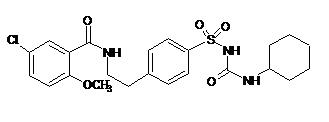
Glyburide is an oral antihyperglycemic drug of the sulfonylurea class. The chemical name for glyburide is 1-[[p-[2-(5-chloro-o-anisamido)ethyl]phenyl]sulfonyl]-3-cyclo-hexylurea. Glyburide is a white to off-white crystalline compound with a molecular formula of C 23H 28ClN 3O5S and a molecular weight of 494.01. Micronized glyburide is used in Glyburide and Metformin Hydrochloride Tablets. The structural formula is represented below.
[image: img_0f530fcd-0ac2-3885-e054-00144ff88e88]
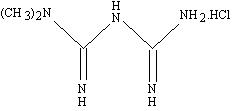
Metformin hydrochloride is an oral antihyperglycemic drug used in the management of type 2 diabetes. Metformin hydrochloride (N,N-dimethylimidodicarbonimidic diamide monohydrochloride) is not chemically or pharmacologically related to sulfonylureas, thiazolidinediones, or α-glucosidase inhibitors. It is a white to off-white crystalline compound with a molecular formula of C 4H 12ClN 5 (monohydrochloride) and a molecular weight of 165.63. Metformin hydrochloride is freely soluble in water and is practically insoluble in acetone, ether, and chloroform. The pKa of metformin is 12.4. The pH of a 1% aqueous solution of metformin hydrochloride is 6.68. The structural formula is as shown:
[image: img_0f530fcd-0ac3-3885-e054-00144ff88e88]
Glyburide and Metformin Hydrochloride Tablets is available for oral administration in tablets containing 1.25 mg glyburide with 250 mg metformin hydrochloride, 2.5 mg glyburide with 500 mg metformin hydrochloride, and 5 mg glyburide with 500 mg metformin hydrochloride. In addition, each tablet contains the following inactive ingredients: Sodium Starch Glycolate, Povidone, Colloidal Silicon Dioxide, Magnesium Stearate. The 1.25 mg/250 mg tablet contains Opadry Yellow which contains Hypromellose, Talc, Titanium Dioxide, Macrogol/PEG 6000, Propylene Glycol and Iron Oxide Yellow.
The tablets are film coated, which provides color differentiation. Additionally 2.5 mg/500 mg tablet contains Opadry Pink which contains Hypromellose, Talc, Titanium Dioxide, Macrogol/PEG 6000, Propylene Glycol, Iron Oxide Yellow and Iron Oxide Red. The 5 mg/500 mg tablet contains Opadry Yellow which contains Hypromellose, Talc, Titanium Dioxide, Macrogol/PEG 6000, Propylene Glycol, Iron Oxide Yellow and D & C Yellow #10 Aluminium Lake.
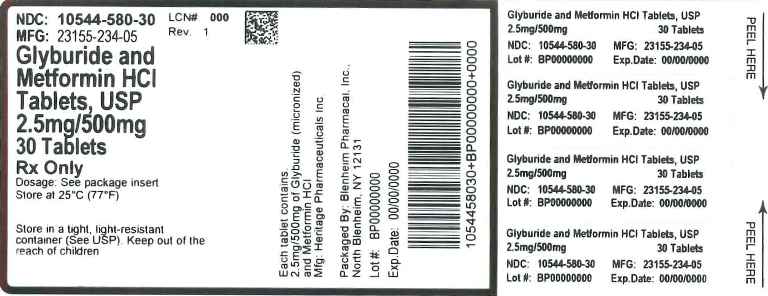
Glyburide and Metformin HCl Tablets, USP 2.5mg / 500mg
30 Tablets
NDC 10544-580-30
[image: img_0f5e4bb2-193f-3a95-e054-00144ff8d46c]
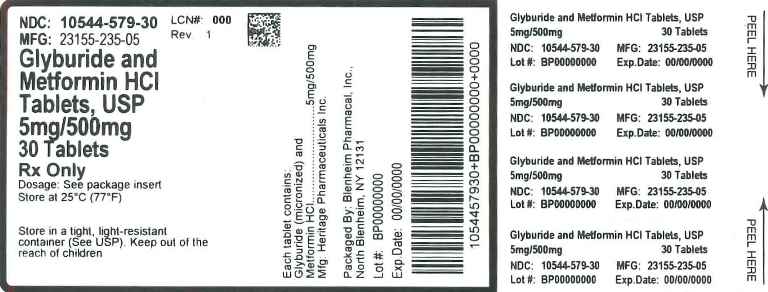
Glyburide and Metformin HCl Tablets, USP 5mg / 500mg
30 Tablets
NDC 10544-579-30
[image: img_0f5e4bb2-1943-3a95-e054-00144ff8d46c]
Glyburide and Metformin Hydrochloride Tablets USP
Glyburide and Metformin Hydrochloride Tablets 1.25 mg/250mg is a pale yellow, oval shaped, biconvex, film coated tablets with “I 25” debossed on one side and plain on the other side.
Glyburide and Metformin Hydrochloride Tablets 2.5 mg/500 mg is a pale orange, oval shaped, biconvex, film coated tablets with “I 23” debossed on one side and plain on the other side.
Glyburide and Metformin Hydrochloride Tablets 5 mg/500 mg is a yellow, oval shaped, biconvex, film coated tablets with “I 24” debossed on one side and plain on the other side.
| Glyburide and Metformin Hydrochloride Tablets USP | NDC 23155-XXX-XX for unit of use | |||
| Glyburide (mg) | Metformin hydrochloride (mg) | Bottle of | ||
| 100 | 500 | 1000 | ||
| 1.25 | 250 | 233-01 | 233-05 | 233-10 |
| 2.5 | 500 | 234-01 | 234-05 | 234-10 |
| 5 | 500 | 235-01 | 235-05 | 235-10 |
Photos of the product and/or packaging supplied by the manufacturer.
Glyburide and Metformin Hydrochloride Tablets combines glyburide and metformin hydrochloride, 2 antihyperglycemic agents with complementary mechanisms of action, to improve glycemic control in patients with type 2 diabetes.
Glyburide appears to lower blood glucose acutely by stimulating the release of insulin from the pancreas, an effect dependent upon functioning beta cells in the pancreatic islets. The mechanism by which glyburide lowers blood glucose during long-term administration has not been clearly established. With chronic administration in patients with type 2 diabetes, the blood glucose lowering effect persists despite a gradual decline in the insulin secretory response to the drug. Extrapancreatic effects may be involved in the mechanism of action of oral sulfonylurea hypoglycemic drugs.
Metformin hydrochloride is an antihyperglycemic agent that improves glucose tolerance in patients with type 2 diabetes, lowering both basal and postprandial plasma glucose. Metformin hydrochloride decreases hepatic glucose production, decreases intestinal absorption of glucose, and improves insulin sensitivity by increasing peripheral glucose uptake and utilization.
Absorption and Bioavailability
Glyburide and Metformin Hydrochloride Tablets
In bioavailability studies of Glyburide and Metformin Hydrochloride Tablets 2.5 mg/500 mg and 5 mg/500 mg, the mean area under the plasma concentration versus time curve (AUC) for the glyburide component was 18% and 7%, respectively, greater than that of the Micronase ® brand of glyburide coadministered with metformin. The glyburide component of Glyburide and Metformin Hydrochloride Tablets, therefore, is not bioequivalent to Micronase ®. The metformin component of Glyburide and Metformin Hydrochloride Tablets is bioequivalent to metformin coadministered with glyburide.
Following administration of a single Glyburide and Metformin Hydrochloride Tablets 5 mg/500 mg tablet with either a 20% glucose solution or a 20% glucose solution with food, there was no effect of food on the C max and a relatively small effect of food on the AUC of the glyburide component. The T max for the glyburide component was shortened from 7.5 hours to 2.75 hours with food compared to the same tablet strength administered fasting with a 20% glucose solution. The clinical significance of an earlier T max for glyburide after food is not known. The effect of food on the pharmacokinetics of the metformin component was indeterminate.
No animal studies have been conducted with the combined products in Glyburide and Metformin Hydrochloride Tablets. The following data are based on findings in studies performed with the individual products.
Create a free account to view complete drug information, save medications, and more.
Free forever · No credit card required